help with IR2110 chips

Maglatron

Jul 12, 2023
2,025
Joined
Jul 12, 2023
Messages
2,025
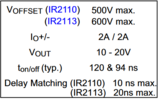
is that the ton/off or the delay matching or am I looking at the wrong part? what is another way of saying dead time because when I ctrl F "dead" nothing comes up!
1704971055517.png
 

Maglatron

Jul 12, 2023
2,025
Joined
Jul 12, 2023
Messages
2,025
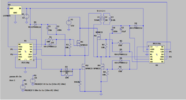
from my schematic (that works) I think it's 1u second but want to make sure I'm correct! actually the dead time in that schematic is 2u seconds
 

Attachments

  • h bridge schematic.png
    h bridge schematic.png
    229 KB · Views: 4
Last edited:

Maglatron

Jul 12, 2023
2,025
Joined
Jul 12, 2023
Messages
2,025
I think this will work, what do you recon?

C:
#include <TimerOne.h>

const int pwmPin1 = 9;   // PWM output for signal 1
const int pwmPin2 = 10;  // PWM output for signal 2

const long frequency = 50; // Frequency in Hz
const long period = 1000000 / frequency; // Period in microseconds
const long deadTime = 2;   // Dead time in microseconds

void setup() {
  pinMode(pwmPin1, OUTPUT);
  pinMode(pwmPin2, OUTPUT);

  // Initialize Timer1
  Timer1.initialize(period);

  // Set up PWM outputs with complementary signals and dead time
  Timer1.pwm(pwmPin1, 0);  // Initialize with 0% duty cycle
  Timer1.setPwmDuty(pwmPin2, 0);

  // Set up the ISR to control the PWM signals and add dead time
  Timer1.attachInterrupt(updatePWM);
}

void updatePWM() {
  static bool toggleState = false;

  // First half of the period (signal 1 is HIGH, signal 2 is LOW)
  if (!toggleState) {
    Timer1.setPwmDuty(pwmPin1, 511);  // 50% duty cycle for signal 1
    delayMicroseconds(deadTime);      // Dead time
    Timer1.setPwmDuty(pwmPin2, 511);  // 50% duty cycle for signal 2
  }
  // Second half of the period (signal 2 is HIGH, signal 1 is LOW)
  else {
    Timer1.setPwmDuty(pwmPin2, 511);  // 50% duty cycle for signal 2
    delayMicroseconds(deadTime);      // Dead time
    Timer1.setPwmDuty(pwmPin1, 511);  // 50% duty cycle for signal 1
  }

  toggleState = !toggleState; // Toggle between signal 1 and signal 2
}

void loop() {
  // No logic in the loop. PWM signals are handled in the ISR.
}
 
Last edited:

Maglatron

Jul 12, 2023
2,025
Joined
Jul 12, 2023
Messages
2,025
Look it up in the datasheet?

will this code suffice

I think this will work, what do you recon?

C:
#include <TimerOne.h>

const int pwmPin1 = 9;   // PWM output for signal 1
const int pwmPin2 = 10;  // PWM output for signal 2

const long frequency = 50; // Frequency in Hz
const long period = 1000000 / frequency; // Period in microseconds
const long deadTime = 2;   // Dead time in microseconds

void setup() {
  pinMode(pwmPin1, OUTPUT);
  pinMode(pwmPin2, OUTPUT);

  // Initialize Timer1
  Timer1.initialize(period);

  // Set up PWM outputs with complementary signals and dead time
  Timer1.pwm(pwmPin1, 0);  // Initialize with 0% duty cycle
  Timer1.setPwmDuty(pwmPin2, 0);

  // Set up the ISR to control the PWM signals and add dead time
  Timer1.attachInterrupt(updatePWM);
}

void updatePWM() {
  static bool toggleState = false;

  // First half of the period (signal 1 is HIGH, signal 2 is LOW)
  if (!toggleState) {
    Timer1.setPwmDuty(pwmPin1, 511);  // 50% duty cycle for signal 1
    delayMicroseconds(deadTime);      // Dead time
    Timer1.setPwmDuty(pwmPin2, 511);  // 50% duty cycle for signal 2
  }
  // Second half of the period (signal 2 is HIGH, signal 1 is LOW)
  else {
    Timer1.setPwmDuty(pwmPin2, 511);  // 50% duty cycle for signal 2
    delayMicroseconds(deadTime);      // Dead time
    Timer1.setPwmDuty(pwmPin1, 511);  // 50% duty cycle for signal 1
  }

  toggleState = !toggleState; // Toggle between signal 1 and signal 2
}

void loop() {
  // No logic in the loop. PWM signals are handled in the ISR.
}
 

Alec_t

Jul 7, 2015
3,817
Joined
Jul 7, 2015
Messages
3,817
I'm now programming the IR2110 pulses with arduino, and can't remember the dead time if it's 1 nano-second or micro-second
Is it even possible/practical to define a 1nS delay with an Arduino?
 

Maglatron

Jul 12, 2023
2,025
Joined
Jul 12, 2023
Messages
2,025
I don't know but I'm going with the 2uS, we'll soon find out weather or not it works out well.
 

Maglatron

Jul 12, 2023
2,025
Joined
Jul 12, 2023
Messages
2,025
so before I hook up the inverter I have a few questions,
which order do I put the signals into the inverter put the 12v that powers the circuit and also when do I put in the 55volt dc that needs inverting?
also do I ground the arduino with the IR2110 circuit setup, intuition tells me yes
thanks!
 

Maglatron

Jul 12, 2023
2,025
Joined
Jul 12, 2023
Messages
2,025
cool, thought it might, also do you know the order that I should connect tbe inverter to the voltage I want and the 12v to run the inverter and the arduino signals please
 

Alec_t

Jul 7, 2015
3,817
Joined
Jul 7, 2015
Messages
3,817
I don't know the order, but if I would be inclined to ensure the Arduino was running first, so that the FETs are controlled correctly.
 

Maglatron

Jul 12, 2023
2,025
Joined
Jul 12, 2023
Messages
2,025
ok noted thanks Alec_t. Any body else have the answer for when to turn on the IR2110 circuit (with 12volt) and when to turn on the dc voltage source 55volt (to be inverted)
 

Maglatron

Jul 12, 2023
2,025
Joined
Jul 12, 2023
Messages
2,025
also I have it in my head that you can change the polarity of a voltage source using an op-amp, is that right? if so how??
 

Maglatron

Jul 12, 2023
2,025
Joined
Jul 12, 2023
Messages
2,025
I got this from an exerpt
"You can convert positive voltage to negative voltage using an inverting amplifier circuit. This circuit uses an operational amplifier (op-amp) to invert the input voltage signal. By connecting the input signal to the inverting input of the op-amp and applying feedback from the output to the inverting input, the circuit can produce a negative voltage output that is the inverted version of the positive input voltage. This is a common technique used in electronic circuits and can be implemented using various configurations of resistors and capacitors."
but I would like to flip from negative to positive please any suggestions must handle at least 1.6Amps at 55volt!! thank you!
 

Maglatron

Jul 12, 2023
2,025
Joined
Jul 12, 2023
Messages
2,025
so I'm looking into my op-amp question and it goes on about inverting signals, can you invert the dc current from negative to positive without having a signal ie wave? so when I measure the stable voltage of -55, then I want it to be +55 stable voltage when measured after the opamp there is a valid reason for doing this other than flipping the wires round but I'm not going to get into that just want a strait answer, if you could be so kind!
 
Last edited:

Maglatron

Jul 12, 2023
2,025
Joined
Jul 12, 2023
Messages
2,025
so again
1) does anybody know the order to turn on the signal to the IR2110 inverter, turning on the inverter with the 12v and then turning on the voltage to be inverted,? I need to know because I don't want to blow anything!
2) can anybody tell me how to invert the positive and negative with op-amp or other means? I think op amp is the way to go to be honest how do I choose one for my application? I need some information please! as I said before it needs to handle -55volt to +55v and 1.6amps
thanks
 
Last edited:

Maglatron

Jul 12, 2023
2,025
Joined
Jul 12, 2023
Messages
2,025
I will be working on the project today please could I get a little help? thanks! I need 0 gain
 

Maglatron

Jul 12, 2023
2,025
Joined
Jul 12, 2023
Messages
2,025
I don't know the order, but if I would be inclined to ensure the Arduino was running first, so that the FETs are controlled correctly.
Hi there! Do you know how to invert the positive and negative with an op amp?
 

Alec_t

Jul 7, 2015
3,817
Joined
Jul 7, 2015
Messages
3,817
Opamps are for processing low-power signals, not for switching high current 55V supplies.
Check out the datasheets of typical opamps.
 
Top