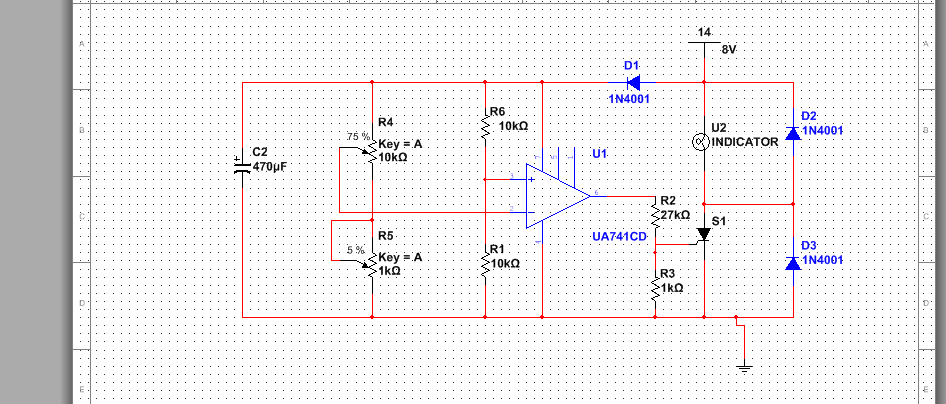
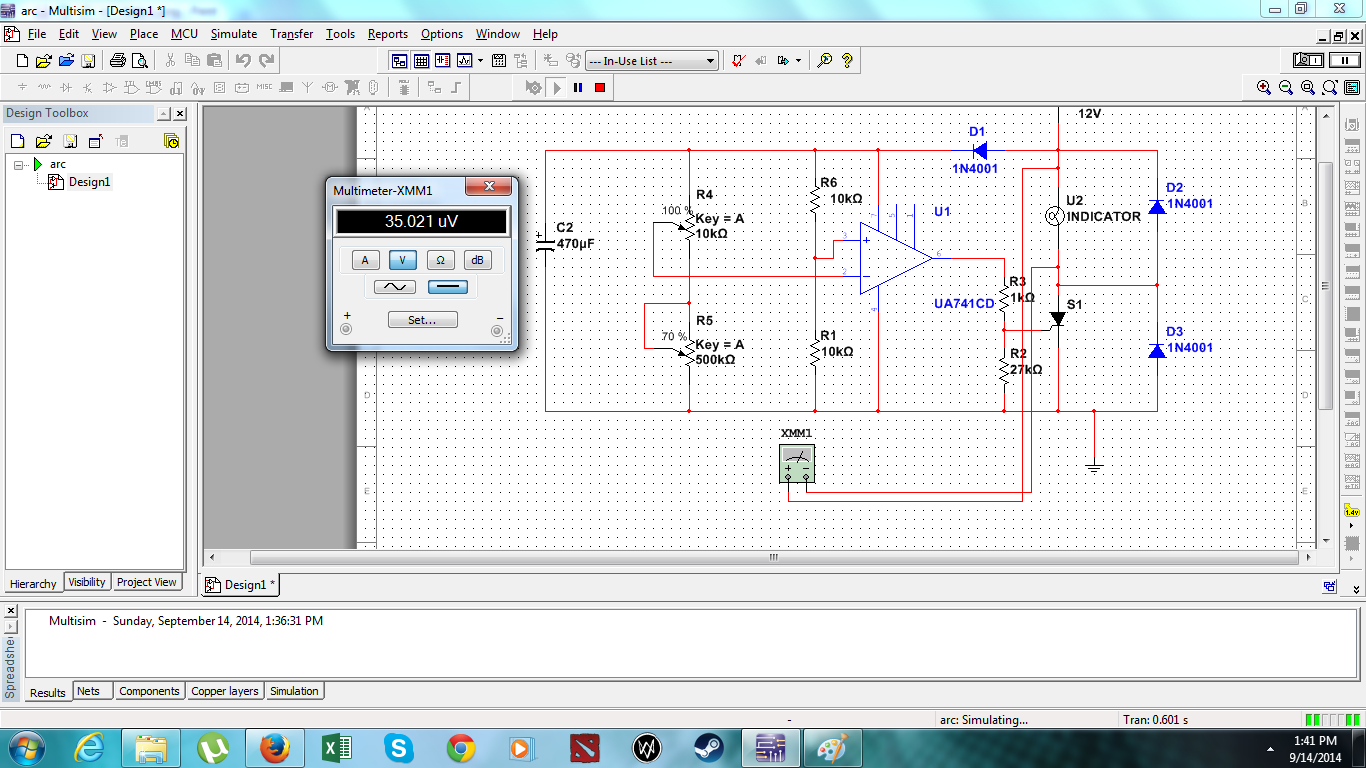
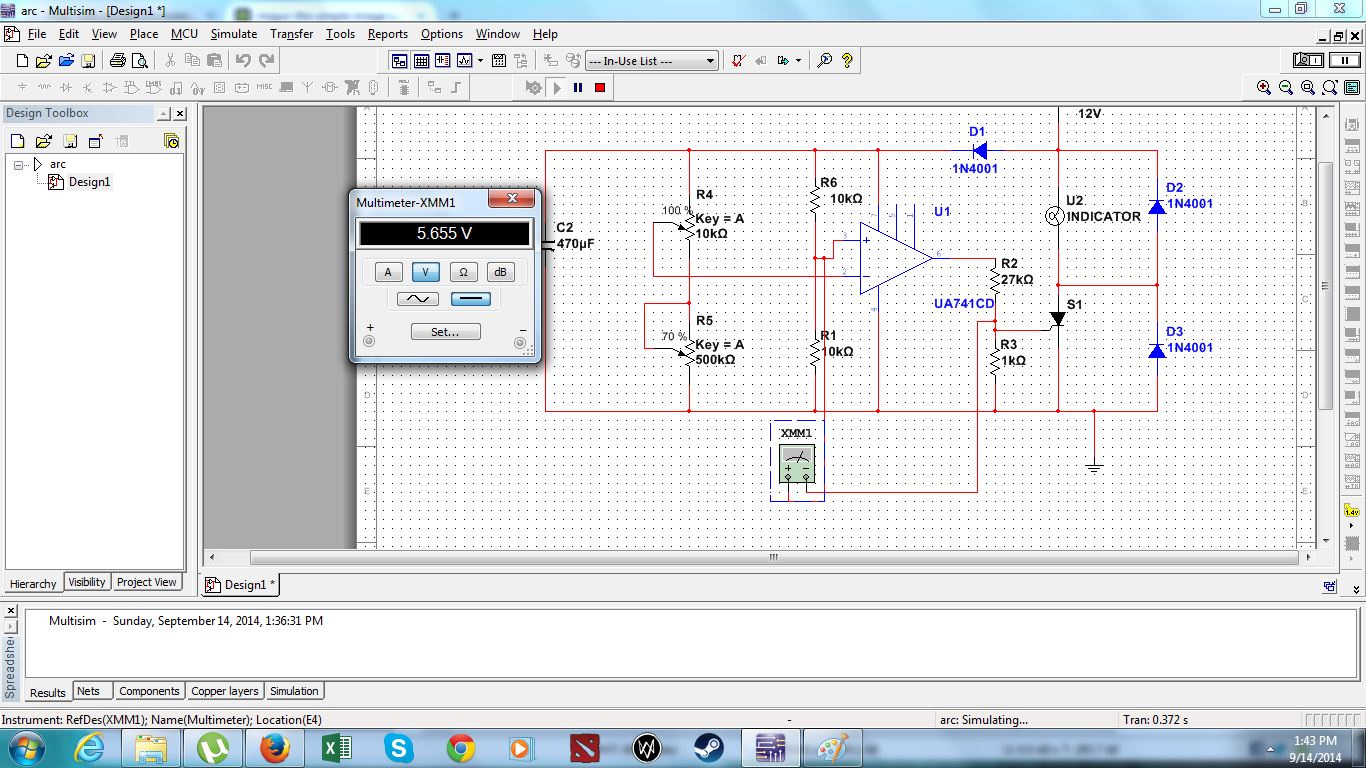
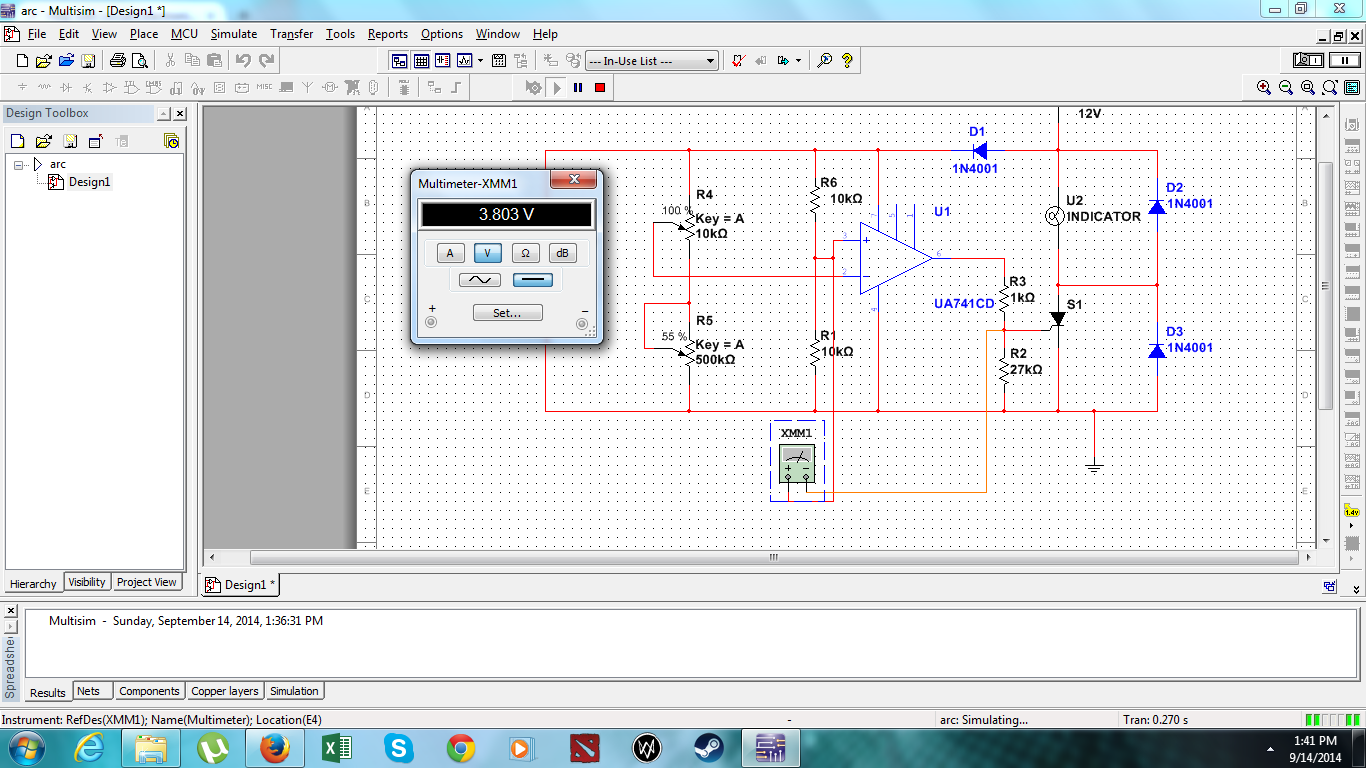
1. As Steve said, R5 is far too low. Something like 100 kΩ or 500 kΩ would be better.
2. The schematic does not make it clear whether the wire from pin 2 of the 741 to the wiper of R5 is supposed to connect to the junction of R5 and R6 but it IS supposed to connect there.
3. R3 and R4 are not an appropriate combination of values; the SCR gate will only see 1/28th of the voltage on pin 6 of the 741 and this will not be enough to trigger it. Change R3 to something between 3k3 and 6k8.
4. If a bell is used as the load, the SCR may not stay latched on, because a bell repeatedly interrupts its own current. An indicator such as a light bulb or an LED (assuming the current is high enough) will be OK.
5. This circuit will not behave cleanly around the transition point. There are multiple factors that will affect its behaviour. When a physical quantity is being compared in this way (i.e. ambient light compared with a threshold), the proper way to do it is using positive feedback, also called hysteresis.
This characteristic causes the threshold to change depending on the output state, so once the threshold is crossed in one direction (for example, ambient light increases past the "bright" threshold), the quantity must go further back in the other direction (ambient light must drop below a different threshold that is lower than the "bright" threshold) before the circuit will return to the opposite state. This creates a "deadband" within which no switching occurs, and ensures quick, clean switching at the threshold points.
Hysteresis is used in practial devices such as thermostats - the ON and OFF thresholds are different - because it ensures switching is clean and doesn't happen too often.
Hysteresis can be implemented easily in that circuit by adding a resistor between pins 6 and 3 of the 741. A value of around 100k would be a good starting point. Increase this resistance to reduce the hysteresis (bring the rising and falling trigger points closer together) or reduce it to make the trigger points further apart.