Latching relays in a control circuit

DogBark

Jun 11, 2026
10
Joined
Jun 11, 2026
Messages
10
Hi, im hoping someone can help- I wish to design what I thought would be a simple circuit but it turns out it isnt so easy

I wish to control 2 contactors- say C1 and C2. C1 is a NO and its default state will be that its coul is energised. C2 is a NC and its default state will be for the coil to be deenergised. On the sending of a 240v signal I want c1 to drop out for 10 seconds, and in the middle if that 10 seconds c2 should be energised. C2 will then remail energised when c1 returns to its original state of being energised.

Then, when the 240v signal disappears, I want c1 to again drop out for 10 seconds and in the middle of that period for c2 to be deenergised. C1 then returns to its default state.

I wish to do this without resorting to a plc- but is it possible?

TIA
 

Minder

Apr 24, 2015
3,561
Joined
Apr 24, 2015
Messages
3,561
I like Schnieder but there are a few choices out there, just compare the specs and functions
 

DogBark

Jun 11, 2026
10
Joined
Jun 11, 2026
Messages
10

crutschow

May 7, 2021
984
Joined
May 7, 2021
Messages
984
It can be done with some simple logic circuits if you are up to building that.

What are the relay-coil voltage and current requirements?
 

danadak

Feb 19, 2021
1,063
Joined
Feb 19, 2021
Messages
1,063
A basic simple approach to a multi triggerable timer, using GUI block programming.


DogBark

Jun 11, 2026
10
Joined
Jun 11, 2026
Messages
10
I think
A basic simple approach to a multi triggerable timer, using GUI block programming.

Hmmm this looks like it can solve my problem perfectly, thank you.

There is a lot of terms in that article which re unfamiliar to me- so here goes I down another series if rabbit holes on a Saturday night !
 

DogBark

Jun 11, 2026
10
Joined
Jun 11, 2026
Messages
10
It can be done with some simple logic circuits if you are up to building that.

What are the relay-coil voltage and current requirements?
I think i can work out the logic circuits ok, but i am an electrician rather than an electronics engineer so I dont even know where to start in terms of sourcing the right software/interface which would allow me to take electrical signals and process them via logic then output back again as electrical signals.

Have you any advice?
 

Minder

Apr 24, 2015
3,561
Joined
Apr 24, 2015
Messages
3,561
This is where the Smart Relay can come in, as it is programmed in relay logic, see the tutoriols out there, the zelio video can show it.
"Program Zelio Smart Relay Function A Timer in Ladder Logic"
 

danadak

Feb 19, 2021
1,063
Joined
Feb 19, 2021
Messages
1,063
I think

Hmmm this looks like it can solve my problem perfectly, thank you.

There is a lot of terms in that article which re unfamiliar to me- so here goes I down another series if rabbit holes on a Saturday night !

Let me know what terms in article you need further explanation in.
 

DogBark

Jun 11, 2026
10
Joined
Jun 11, 2026
Messages
10
Thank you, I really appreciate your help, I have something that is tripping out a seperat, critical piece of equipment in a business every day and it is having a financial effect so i really need to find this solution to just make it switch off/on while it is isolated from the rest of the system
 

DogBark

Jun 11, 2026
10
Joined
Jun 11, 2026
Messages
10
My question was whether you could wire and solder the parts on a vector board if given the circuit schematic and the parts required?
Yes I could solder, and could source a vector board, and i am more than willing to purchase whatever components and software is required and to spend the time necessary to construct the solution
 
Last edited:

DogBark

Jun 11, 2026
10
Joined
Jun 11, 2026
Messages
10
Thanks for continuing to engage with me- I really appreciate the help, i presume that the terms I will list are all software programs and actions that can be performed within the software

pulse streams of desired width and inter
pulse delay.

A trigger from an A/D value or a pin state.

compound qualified triggers.

And or frequency/pulsewith input qualifiers.

the ATTINY85
8 pin mini dip,

Can run on UNO, Nano and the like boards.

IDE is mBlock 5.0, freebee.

mBlock,
Arduino
 

danadak

Feb 19, 2021
1,063
Joined
Feb 19, 2021
Messages
1,063
pulse streams of desired width and inter
pulse delay.

Pulses are outputs to a pin to initiate an action like turn on a fan or light. So I make
a pin go high to turn something on, wait for a time delay I set, then make pin go low
to deactivate that specific task/job/event.

Yes, using blocks you decide what triggers a pulse (a logic level to turn something on),
its width (how long pin stays high to keep something on, and once your setting for time
expires to turn it off).


A trigger from an A/D value or a pin state.

You can initiate the pulse with a trigger. That can be a pin, button, sensor input. Also the
processor has an A to D converter, and you can trigger off its measured V, like a T
sensor, or a resistance measurement.


compound qualified triggers.

You can initiate the pulse to turn something on with a combination of triggers, like if switch is
closed AND T is > 100 degrees then turn on a fan, or light or whatever.


And or frequency/pulsewidth input qualifiers.

Say you are measuring a motor shaft RPM, which is a frequency in effect. Or have processor
look at how long something else has turned on, basically its pulse width or time a switch has
been closed, to generate a pulse. Or think frequency AC line disappears so do something with that.


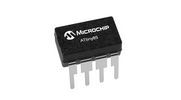
the ATTINY85
8 pin mini dip,

A atmega/arduino type processor.
1781388337724.png


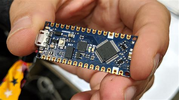
Can run on UNO, Nano and the like boards.


1781388449297.png


IDE is mBlock 5.0, freebee.

mBlock is the programming tool you use to program in blocks and when done it
converts the blocks to Atmega/Arduino code and you then click a button to
program that into the board. IDE = Integrated Development Environment, the tool
one uses to develop code and debug it and program into chips/boards.


mBlock,
Arduino

Arduino is an IDE and another tool you can use to program Arduino type boards.
And many others.

Note these boards and chips cannot drive big loads, like fans, motors, high power
leds, servos, whatever. You take the pulse output of the pin activated by program
and feed that to a relay or SSR (Solid State Relay) or a MOSFET or Power Transistor.

So you can do simple things, like one trigger to generate a pulse to a pin, keep the pin on
for your desired time, then turn it off. Or a complex sequence, Like turn on a fan, then wait
until a T trigger is met, turn pin off , the wait until a frequency is met and do something with that.
And start even more tasks.....

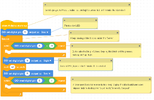
Simple program example :

1781390848386.png


The Nano board (~$4) excellent to start with, then for some projects just use the 8 pin minidip.
 
Last edited:
Top