Hi All, thanks for reading my post.
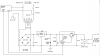
I had an old HO train transformer (power supply), that had failed. I decided to modernize the circuit components to make it safer, and more reliable. I used a solderless breadboard to make the circuit below. As designed, the operator would use the 10k Ω potentiometer as a throttle to control the voltage to the track (Vout). Ideally, I want to be able to control the voltage from 0-16 volts with a max current of 1 amp.
The circuit as shown works well from 2 volts to 16 volts, and the current is adequate. The problem is that when the potentiometer wiper is set to "0" volts, the output of the op amp pin 6 remains at about 2 volts. And the output of the transistor 2N3055 pin 2 (emitter) remains at about 1.9 volts.
The input at the left-hand side of the circuit is about 28 volts dc from a step-down transformer and the output of the L7818 is 18 volts.
Question: What is the simplest modification to make the circuit work as desired? I was considering using a "push-pull" transistor pair instead of just one as shown, but I'd also like to understand what is wrong with the circuit I've designed. I thought the op amp used as a follower would yield 0 volts when the input pin 3 was drawn to 0 volts or the common pin of the regulator voltage.
I had an old HO train transformer (power supply), that had failed. I decided to modernize the circuit components to make it safer, and more reliable. I used a solderless breadboard to make the circuit below. As designed, the operator would use the 10k Ω potentiometer as a throttle to control the voltage to the track (Vout). Ideally, I want to be able to control the voltage from 0-16 volts with a max current of 1 amp.
The circuit as shown works well from 2 volts to 16 volts, and the current is adequate. The problem is that when the potentiometer wiper is set to "0" volts, the output of the op amp pin 6 remains at about 2 volts. And the output of the transistor 2N3055 pin 2 (emitter) remains at about 1.9 volts.
The input at the left-hand side of the circuit is about 28 volts dc from a step-down transformer and the output of the L7818 is 18 volts.
Question: What is the simplest modification to make the circuit work as desired? I was considering using a "push-pull" transistor pair instead of just one as shown, but I'd also like to understand what is wrong with the circuit I've designed. I thought the op amp used as a follower would yield 0 volts when the input pin 3 was drawn to 0 volts or the common pin of the regulator voltage.