Does electron die?

Status
Not open for further replies.

RRITESH

Oct 10, 2010
85
Joined
Oct 10, 2010
Messages
85
Hello,
We generate electricity from Hydro power DAM /photovoltaci cell and then we get fan rotating.
there is circulation of electron after fan where it go?
 

Alec_t

Jul 7, 2015
3,817
Joined
Jul 7, 2015
Messages
3,817
Generating electricity doesn't actually create electrons; it just causes existing electrons in conductors to move around a circuit.
 

BobK

Jan 5, 2010
7,682
Joined
Jan 5, 2010
Messages
7,682
Yep, for each electron you put out, you have get take one back. Sort of like enforced recycling.

Bob
 

davenn

Moderator
Sep 5, 2009
14,470
Joined
Sep 5, 2009
Messages
14,470
Generating electricity doesn't actually create electrons; it just causes existing electrons in conductors to move around a circuit.
Yep, for each electron you put out, you have get take one back. Sort of like enforced recycling.

Bob

in a DC circuit, yes, they move VERY slowly around the circuit from the negative terminal to the positive terminal

but in an AC hydro generator system, the electrons never leave the generator, they just oscillate back and forward about a point in the wire
same with the ones in your AC house lighting and any other device


Dave
 

RRITESH

Oct 10, 2010
85
Joined
Oct 10, 2010
Messages
85
Generating electricity doesn't actually create electrons; it just causes existing electrons in conductors to move around a circuit.

So, we have lots of electron near us?
in a DC circuit, yes, they move VERY slowly around the circuit from the negative terminal to the positive terminal

but in an AC hydro generator system, the electrons never leave the generator, they just oscillate back and forward about a point in the wire
same with the ones in your AC house lighting and any other device

The electron move from negative to positive side.
why we say current in positive to negative?
So, why we say crisis of electricity if there is lot of present electrons?

In DC circuit the voltage is low so pressure is low they move slowly in AC they move very fastly due to high voltage pressure?
And in ac the oscillation is 50/60hz?
 

hevans1944

Hop - AC8NS
Jun 21, 2012
4,968
Joined
Jun 21, 2012
Messages
4,968
So, we have lots of electron near us? ...
Electrons surround every atom in everything. The electrons in your feet (or shoes) support you because they are repelled by electrons on the ground beneath your feet. We live on a sea of electrons that shield the positive nucleus of every atom.


...The electron move from negative to positive side.
why we say current in positive to negative? ...
You can blame Ben Franklin, an American statesman, philosopher, scientist, inventor, and lady's man for that. He had to pick a direction for current flow and he picked positive to negative. Ben didn't know about electrons and their negative charge. But as long as you are consistent, it doesn't matter which direction you pick for the direction of current flow. Get over it.

... So, why we say crisis of electricity if there is lot of present electrons? ...
What crisis of electricity? In Ohio they use a lot of coal, gas, oil, and nuclear fuel to make electricity. The electrons are just along for the ride. They don't create any energy by just being there. You have to create electrical energy from some other form of energy such as the momentum of falling water, or the heat from hot water, or the energy in photons of light collected on a solar voltaic cell.

In DC circuit the voltage is low so pressure is low they move slowly in AC they move very fastly due to high voltage pressure?...
No, the electrons move about as fast in DC circuits as they do in AC circuits. It's crowded inside those wires, and the electrons have to make their way through the crowd at about the same speed no matter which way they are moving. They move at about the same speed you can walk. The electric field that moves the electrons propagates much faster, nearly at the speed of light in a wire.

... And in ac the oscillation is 50/60hz?
Mostly. Aircraft may use 400 Hz (need smaller, lighter, transformers and alternators and motors at that frequency) and there are other industries (trains for example) that may generate AC at whatever frequency they deem appropriate. But for commercial power distribution it is mostly 50 Hz and 60 Hz.
 

davenn

Moderator
Sep 5, 2009
14,470
Joined
Sep 5, 2009
Messages
14,470
So, we have lots of electron near us?

more than you can count

do you know what an electron is ?

The electron move from negative to positive side.
why we say current in positive to negative?

it's an old thing, current flow direction was established long before the existence of electrons was known

So, why we say crisis of electricity if there is lot of present electrons?

elaborate on what you mean by that ??

In DC circuit the voltage is low so pressure is low they move slowly in AC they move very fast due to high voltage pressure?

not quite .... again google electrons and discover what they are about before we describe what happens in a circuit


And in ac the oscillation is 50/60hz?

for most mains power systems, yes ... some countries use 50Hz generation systems, some use 60 Hz
The country I'm in uses 50Hz

Also be aware the term AC (alternating current) isn't confined to mains power systems

an audio signal is an alternating current, the voltages and currents in a radio transmitter or receiver are also alternating
and usually much higher in frequency than the 50/60 Hz of mains power
FM radio, for example, works on 88MHz to 108MHz


Dave
 

RRITESH

Oct 10, 2010
85
Joined
Oct 10, 2010
Messages
85
Hello,

I know this electron is negatively charged.


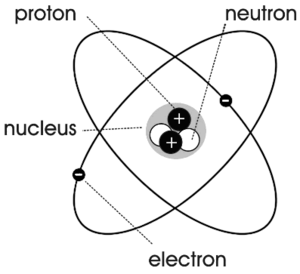
RTEmagicC_atom_diagram.png.png


ok,
What crisis of electricity? In Ohio they use a lot of coal, gas, oil, and nuclear fuel to make electricity.

I was talking of different country and news non renewable source are finishing.

It's crowded inside those wires, and the electrons have to make their way through the crowd at about the same speed no matter which way they are moving. They move at about the same speed you can walk. The electric field that moves the electrons propagates much faster, nearly at the speed of light in a wire.

The Electron are sitting between copper wire let say wire strands.
and it depends on type of cable.
 

RRITESH

Oct 10, 2010
85
Joined
Oct 10, 2010
Messages
85
Mostly. Aircraft may use 400 Hz
Is there alternator like we have in vehicles in aeroplane also?
why it is rated at 400hz they build AC
new term 787 li-ion battery in it from google.
what electrical engineer has to do job with aeroplane in it?
In AC the electron oscillates what happen at different current.
 

dorke

Jun 20, 2015
2,342
Joined
Jun 20, 2015
Messages
2,342
Hop,
"They[Electrons] move at about the same speed you can walk".
They actually move much much slower than a snail...;)

The drift velocity of electrons in a copper wire is in the order of 10E-5 m/S
(1Ampere in a 2mm diameter )
It is dependent on the current density,the higher the current ,the higher the velocity.
 

RRITESH

Oct 10, 2010
85
Joined
Oct 10, 2010
Messages
85
Hello,
new term drift velocity OK, i have studied about in class but was not sure with meaning at that time.
the higher the current ,the higher the velocity
higher voltage or current?


A calculation shows that the electron is traveling at about 2,200 kilometers per second. That's less than 1% of the speed of light, but it's fast enough to get it around the Earth in just over 18 seconds. Read up on what happens when nothing can go faster than the speed of light.
source
 

dorke

Jun 20, 2015
2,342
Joined
Jun 20, 2015
Messages
2,342
Hello,
new term drift velocity OK, i have studied about in class but was not sure with meaning at that time.
the higher the current ,the higher the velocity
higher voltage or current?


A calculation shows that the electron is traveling at about 2,200 kilometers per second. That's less than 1% of the speed of light, but it's fast enough to get it around the Earth in just over 18 seconds. Read up on what happens when nothing can go faster than the speed of light.
source

The current density for a given wire(fixed cross section), translates to current.
If you apply voltage to a wire with a known resistance, you can calculate the current, but that is not important.

That velocity of 2200Km/sec is not in a conducting wire, and not of a free electron.
 
Last edited by a moderator:

RRITESH

Oct 10, 2010
85
Joined
Oct 10, 2010
Messages
85
Then how to find Speed of electron in wire at different Voltage current?
 

Sadlercomfort

Ash
Feb 9, 2013
424
Joined
Feb 9, 2013
Messages
424
If you were to calculate the speed of the electron, for example to switch on a 240AC light. It would take like 7 minutes for the light to come on..

The electrons move slowly on a small scale, so what switches the light on instantly?

As the electrons move in the conductor it produces a electromagnetic field and its this disturbance which propagates through the conductor close to the speed of light.


It's convenient for us to understand a circuit where electrons are flowing.
 
Status
Not open for further replies.
Top