This will be the third time I tell you that the 555-based circuit is not a suitable starting point for a high-power boost converter. I have removed "555" from the thread title.
Thanks for posting those diagrams.
Forget your primary question. Forget the 555 circuit.
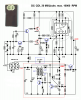
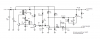
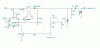
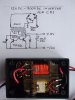
You're right, the boost converters in the first and second circuits are very similar. In the second circuit, D6 is a zener diode that sets the output voltage.
The big difference is in the driving of the SCR. In the first circuit, all of the circuitry in the top half does signal processing and drives the SCR. In the second circuit, the processing is simpler.
But you say you're only interested in the voltage converter section. In that case, either of those blocking oscillator circuits can be used, though the part numbers of some important components are missing - the main switching transistor, as you mentioned, and the core and wire details for the transformer.
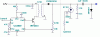
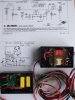
In the third circuit, pin 3 of the UC3845 is supposed to be connected to the MOSFET's source, and there is supposed to be a low-value resistor between the source and the 0V rail. I don't know why the designer didn't do this, and what kind of "control" signal is supposed to be fed into pin 3. You need to find the text associated with that diagram and post the URL.
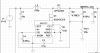
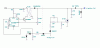
The fourth circuit may be a good topology (a standard current mode boost converter), but the MAX1771 data sheet suggests a maximum output power of 24W, not the 70W you say you need.
CDI is not a standard application for a boost converter, because the output capacitor is being repeatedly discharged. There is also a very harsh mechanical and electrical environment. In that kind of special case I think it's best to go with what has worked before, so your second design, reverse-engineered from an existing product, may be the best to work from.