help with IR2110 chips

Alec_t

Jul 7, 2015
3,817
Joined
Jul 7, 2015
Messages
3,817
I'm just guessing, but I'd think the high voltage winding of your transformer could well be in the order of 1 Henry. You can use that value for the sim, and calculate the inductance of the low-voltage winding.
This article may help with modelling the motor.
In post #56, the .tran 100m is a directive for LTSpice to do a 100ms duration sim. You right-click on the voltage source symbol to set its parameters. Run a sim of the post #56 schematic, then click on the P1 and P2 nodes to see plots of their waveforms. Zoom in on the waveforms to see the pulse edges.
 

Maglatron

Jul 12, 2023
2,025
Joined
Jul 12, 2023
Messages
2,025
now I'm confused if the high voltage side ie 230v side is equal to 1henry then the primary side would be sqrt of 1 which is one. this probably sounds super stupid

might it be roughly 31mH?

Okay lets do the signaling part first I'll tackle the motor after. the gate capacitance is 0.1850nf how do I calculate dead time from that?

can I have another example of the anti-phase so i can compare the two and might be able to work it out from two examples? please

The motor equivalent is great but how do I make It to be 15watt and 230volts and 0.0652amps
 

Alec_t

Jul 7, 2015
3,817
Joined
Jul 7, 2015
Messages
3,817
might it be roughly 31mH?
1H/(4.2)² = 57mH
the gate capacitance is 0.1850nf
1.8nF seems more likely for a power MOSFET. Multiply that by the sum of the drive circuit output impedance and any resistor in series with the FET gate to get the time constant.
An alternative calculation you can do is work out the time taken to charge the 'Total gate charge' (from the datasheet) up to 10V (the Vgs to turn a typical power MOSFET on fully). The dead-time would be a tad greater than that time.
I don't think a further example of anti-phase pulse generation would be helpful. Did you run the sim I suggested?
As for modelling the motor, run a tran sim using just the model values in the linked article and a 50Hz 230VRMS (340V peak) voltage source. You can then Alt+left-click on the voltage source to see the power used. Tweak the values and re-run the sim to get a clue as to values which would give you the result you want.
 

Maglatron

Jul 12, 2023
2,025
Joined
Jul 12, 2023
Messages
2,025
1H/(4.2)² = 57mH

1.8nF seems more likely for a power MOSFET. Multiply that by the sum of the drive circuit output impedance and any resistor in series with the FET gate to get the time constant.
An alternative calculation you can do is work out the time taken to charge the 'Total gate charge' (from the datasheet) up to 10V (the Vgs to turn a typical power MOSFET on fully). The dead-time would be a tad greater than that time.
I don't think a further example of anti-phase pulse generation would be helpful. Did you run the sim I suggested?
As for modelling the motor, run a tran sim using just the model values in the linked article and a 50Hz 230VRMS (340V peak) voltage source. You can then Alt+left-click on the voltage source to see the power used. Tweak the values and re-run the sim to get a clue as to values which would give you the result you want.
1850pf yes you are correct 1.85nf. I couldn't work out how to set up the voltage sources to give square waves and apply the anti phase and dead time. I'm not certain how. also i think that because its a sqare wave the rms equals peak voltage?
 

Alec_t

Jul 7, 2015
3,817
Joined
Jul 7, 2015
Messages
3,817
i think that because its a sqare wave the rms equals peak voltage?
Don't concern yourself with RMS. The PULSE source merely switches between two voltage levels (Vinitial and Von).
1692557125471.png
 

Maglatron

Jul 12, 2023
2,025
Joined
Jul 12, 2023
Messages
2,025
Okay thanks I appreciate what your saying but still dont understand doesn't the voltage switch between (V initial+55) and (Von+55v) or is it (V initial 0) and (Von 55v)

nevermind I get what your saying inital is 0v and on is 3.3v

so how do I set the other parameters
T delay
T rise
T fall
T on
T period
cycles I can do 100 cycles for 2 seconds
then i want to set up the anti-phase too?

1H/(4.2)² = 57mH

1.8nF seems more likely for a power MOSFET. Multiply that by the sum of the drive circuit output impedance and any resistor in series with the FET gate to get the time constant.
An alternative calculation you can do is work out the time taken to charge the 'Total gate charge' (from the datasheet) up to 10V (the Vgs to turn a typical power MOSFET on fully). The dead-time would be a tad greater than that time.
I don't think a further example of anti-phase pulse generation would be helpful. Did you run the sim I suggested?
As for modelling the motor, run a tran sim using just the model values in the linked article and a 50Hz 230VRMS (340V peak) voltage source. You can then Alt+left-click on the voltage source to see the power used. Tweak the values and re-run the sim to get a clue as to values which would give you the result you want.
Multiply that by the sum of the drive circuit output impedance and any resistor in series with the FET gate to get the time constant. How!!!

I found the turn on time constant for the IRF640 mosfet, the max values are 79ns to turn on and 196ns to turn off

1st PULSE(0 3.3 0 79ns 196ns 10ms 20ms 100)
2nd PULSE(0 3.3 10ms+196ns 79ns 196ns 10ms 20ms 100)
? is this correct

so I have done the pulses now for the last bit that I think is tricky, I need to model a single phase ac motor 230v 0.065amps 15watt
 

Attachments

  • motor values but practically finnished.asc
    9.8 KB · Views: 0

Maglatron

Jul 12, 2023
2,025
Joined
Jul 12, 2023
Messages
2,025
I know you given me this link
https://electronics.stackexchange.c...induction-motor-equivalent-circuit-in-ltspice
butI don't really understand it.
It's the final part of my circuit and I need to grasp it

I think the information I need is in this link but I can't access it on my internet connection can you have a look and see if it can be of some use?

please respond asap, it's a 15w fan oven motor, what are the digits that i need to model it?

Is it possible to modify this for my needss
 

Attachments

  • About_3-Phase_AC_Motor_Model_PSspice_open.pdf
    282.4 KB · Views: 1

Alec_t

Jul 7, 2015
3,817
Joined
Jul 7, 2015
Messages
3,817
I found the turn on time constant for the IRF640 mosfet, the max values are 79ns to turn on and 196ns to turn off
Ok. So dead-time needs to be greater than that. A practical value would be, say, 1us, providing some headroom to ensure no overlap between high and low sides conducting. Since your pulse period is 20ms, you can be a bit more generous with the dead-time if you wish. Pulse rise and fall times need to be brief so that the MOSFETS switch cleanly to avoid unnecessary heating.
The info in the post #74 link is very theoretical and any practical values relate mainly to multi-phase capacitor-start motors for 110V 60Hz of higher Wattage than yours.
The link in post #76 doesn't include the netlist needed to make the model work, but some of the values it quotes might guide you. Personally, for simulation purposes I would just model the motor as a simple inductor of 0.6H with an internal resistance of 10 Ohms (right-click on the inductor symbol to set its parameters). That will dissipate about 15W on a 240V RMS supply.
 

Maglatron

Jul 12, 2023
2,025
Joined
Jul 12, 2023
Messages
2,025
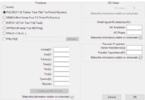
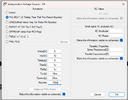
Okay you gave some numbers for pulses a while back should I just use those, I dont know how to set up the dt bit. In the picture is 0Vinitial 10 Von ?
 

Attachments

  • dead time.png
    dead time.png
    17.3 KB · Views: 1
Last edited:

Maglatron

Jul 12, 2023
2,025
Joined
Jul 12, 2023
Messages
2,025
I dont know how to set up the dt bit but I have done as you suggested and put a 0.6h inductor with 10R
 

Alec_t

Jul 7, 2015
3,817
Joined
Jul 7, 2015
Messages
3,817
Yes, you can use those numbers. They can be tweaked later if you like. A big advantage with simulation is the opportunity for "I wonder what will happen if I change this to ......", without the risk of letting the magic smoke out of real-world components.
 

Maglatron

Jul 12, 2023
2,025
Joined
Jul 12, 2023
Messages
2,025
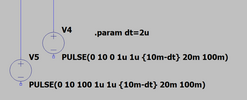
brilliant thanks just one last thing to get, what is the dt bit about how did you get it to say that away from the pulse sources up to the left on your picture you sent me, about the part in the curly brackets - something to do with that

So, for yourself, can you download the .asc file and try it for yourself or do you need to import the .lib files and not be able to? I'm just wondering.

I got this far, I put in 100m for cycles
 

Attachments

  • pulse setup.png
    pulse setup.png
    105.1 KB · Views: 2

Maglatron

Jul 12, 2023
2,025
Joined
Jul 12, 2023
Messages
2,025
I have learned about how you reached 15watts from 230v 10ohm internal resistance and frequency of 50hz and 0.6 henry's for the motor. And I am impressed with the working and so I would like to thank you again because you havn't got to help me, but still are, I appreciate your help.

Is this correct???
 

Attachments

  • is this correct.png
    is this correct.png
    54.6 KB · Views: 0

Maglatron

Jul 12, 2023
2,025
Joined
Jul 12, 2023
Messages
2,025
so i tested it, on first attempt I dont think it worked lol at least its doing something though that is good I suppose
 

Attachments

  • first try lol.png
    first try lol.png
    84 KB · Views: 0
  • complete but not working.asc
    9.9 KB · Views: 4

Maglatron

Jul 12, 2023
2,025
Joined
Jul 12, 2023
Messages
2,025
I think I have dont the pulses wrong because when I click to measure the pulses strait from the pulse sources it's flat-lining

any suggestions??

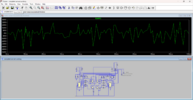
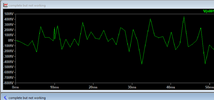
the outputs are at 9uV the, both of them and they're not fluctuating as desired and the wire connected to the inductor looks like this
 

Attachments

  • 50ms.png
    50ms.png
    51.1 KB · Views: 1

Alec_t

Jul 7, 2015
3,817
Joined
Jul 7, 2015
Messages
3,817
what is the dt bit about how did you get it to say that
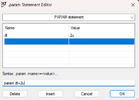
It's a Spice .param directive (command), entered as such directly on the schematic, using the .op tool at the end of the toolbar.
The curly brackets tell LTS to calculate the contents, using values and parameters which have already been defined.
Your post #86 defines the pulse parameters correctly, apart from limiting the simulation to 100m (i.e only a fraction of a pulse cycle) and without any dead-time. LTS will adjust the timing to allow for the finite rise and fall times.
For future reference, I suggest getting into the habit of using the 'Label Net' tool to give a more meaningful name to a node than 'N001'.
In your posted .asc file the two pulse generators should have ground attached at the bottom.
The param editing (post #94) is correct.
21V for V1 is too high. That will kill the gates on some MOSFETs. Never run components at their Absolute Maximum ratings if you want them to have a long and happy life.
 
Last edited:

Maglatron

Jul 12, 2023
2,025
Joined
Jul 12, 2023
Messages
2,025
I think the whole circuit is crap there's no fluctuatio on the signal lines and I don't know why there isn't any fluctuation on the input to the primary of the transformer

start from scratch?

as far as I can tell it should be correct to be fair I don't know why it doesn't work, could it be when I imported the .subnet files into the program perhaps? I cant even get a wave from the pulse generators!! now that is odd

It's a Spice .param directive (command), entered as such directly on the schematic, using the .op tool at the end of the toolbar.
The curly brackets tell LTS to calculate the contents, using values and parameters which have already been defined.
Your post #86 defines the pulse parameters correctly, apart from limiting the simulation to 100m (i.e only a fraction of a pulse cycle) and without any dead-time. LTS will adjust the timing to allow for the finite rise and fall times.
For future reference, I suggest getting into the habit of using the 'Label Net' tool to give a more meaningful name to a node than 'N001'.
In your posted .asc file the two pulse generators should have ground attached at the bottom.
The param editing (post #94) is correct.
21V for V1 is too high. That will kill the gates on some MOSFETs. Never run components at their Absolute Maximum ratings if you want them to have a long and happy life.
meant 12v
don't know how i missed the ground, stupid of me really. I don't know where you are on about the "N001" thing, Okay trying to run it now wish me luck!

Okay thats more like it now I have proper readings, so the part I wish to know now, is how to speed up the simulation, because right now its going like 20ms per second (very slow) but your top bloke for helping me out very nice of you im now generating a square wave on pulse generator 5 but no fluctuation on pulse gen 4 i have ring on the inductor thats in place of the motor which is good reacting properly but its at very slow sampling rate how to increase sample rate and i just clocked on to what you were saying about N001 thats the name of the signals on the graph ok getting there. going to eat food il be back on in about 45 mins but take your time mate no rush!

v5 no pulse coming out?

sussed it! needed to put delay 10m, and i forgot the m

not sure what I'm looking at and how to change the label net option but things are happening so I'm happy at the moment!

how do I change the rate that thee simulation runs?

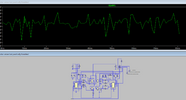
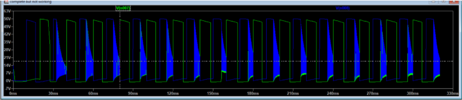
is this looking correct to you? why is the ringing is the dead time working correctly?
 

Attachments

  • H.png
    H.png
    98.9 KB · Views: 1
Top