0-30V Stabilized Power Supply

Status
Not open for further replies.

audioguru2

Apr 6, 2004
12,026
Joined
Apr 6, 2004
Messages
12,026
If the resistance of R7 or its connections is intermittent then opamp U3 will have an input voltage high enough to destroy U3 and reduce the output voltage. 


James Bond

Sep 6, 2015
2
Joined
Sep 6, 2015
Messages
2
hi James Bond O ,

you may have to indicate the  error image and  to members.

Otherwise, getting some error message doesn't appear a good way of reporting.

you can capture the screen and  upload as  .png.

it helps  proteous gurus to study and comment.
Hi everyone

Sorry my bad.

There go the schematic and the error. 

I joined the Proteus file too, so you can test it if you have Proteus. 

Best regards 

P.S::

Can i change TLE2141 by MC34071 without any problem?

My goal is controll the PSU using arduino, but need put its to work first :)


View attachment Final.pdsprj

erro1.jpg

Schematic.jpg

 
Last edited by a moderator:

James Bond

Sep 6, 2015
2
Joined
Sep 6, 2015
Messages
2
Hi, thanks by you reply but this ins't the problem, the circuit works with 10pF.

I found how fixate this, this is a setting problem.

Original configuration was:

System -> Set simulations options -> Tolerances (left down corner) -> Default Settings.

I changed to:

System -> Set simulations options -> Tolerances (left down corner) -> "Settings for better convergence" (and load it).

Now work fine.

Best regards.
 
Last edited by a moderator:

liquibyte

Aug 27, 2015
23
Joined
Aug 27, 2015
Messages
23
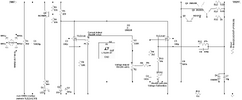
Many, many questions keep getting asked about this thing and people keep attempting to build it without even knowing the basics, why I don't know.  The power supply suffers from a couple of issues that have never really been adequately addressed so this is going to be my attempt at bringing this thing into the modern age.  What follows is just preliminary work to right several wrongs I've noticed with the design.  It's not complete but I'm posting it to get opinions and suggestions.

This paragraph is for the newbies:  DO NOT ATTEMPT TO BUILD THIS YET.  If you don't know what you're doing, do not even try and breadboard this.  Once I have a final design, I promise that I'll post it.

Now, onward.  I'm posting my spice simulation for anyone that wants to try and give this a go.  One of the things that concerns me is the power dissipation in the op amps but I'm not sure how to get this down to a more acceptable level because I don't think 150mW at load is very good so suggestions are most welcome.

First, the voltage reference in the old version was an extremely odd thing to me so what I wanted to do was get a precision reference in there to work with.  10V seemed like a nice round number so that's what I went with and I actually have one on hand to use.

Second, the sense resistor.  0.47 ohms?  Once again, odd.  Plus, it suffers from extreme power dissipation as well.  My idea is to have a nice 0.1 ohm 3W 4 wire resistor in there to hook a meter to so I adjusted things around the reference to get me to where I wanted to be and I also have some of these.

What I'd like to eventually do is design the meters along with the supply so that what we end up with is a relatively complete project with all the nice bits people seem to be after.  No one, I repeat, no one ever offers a suggestion as to what to build to replace this, not one single engineer.  They will, however, be the first people to tell you how bad the design is but never offer any sort of advice as to why.  I know, I've asked and so have many other people.

View attachment 0-30V-0-3A-redesign.zip
0-30V-0-3A-redesign.png


liquibyte

Aug 27, 2015
23
Joined
Aug 27, 2015
Messages
23
The opamps will be cooler if they are TLE2141 singles.
Yeah, I know.  I did the math from the datasheet and given what the simulation is giving me, I'd say the device can probably handle it.  I don't have the equipment to lay this out and test in the real world but PD from both amps only total around 300mW and if I'm reading things right, the 2142 can probably handle it.

It turns out that I was under a wrong assumption about the power handling capabilities of op amps in general.


kollin

Dec 20, 2015
5
Joined
Dec 20, 2015
Messages
5
Hi. I think I read somewhere that I could use a voltmeter as a makeshift ammeter for this project. 

Can I use this type of voltmeter?

http://www.ebay.com/itm/2pcs-Mini-DC-0-100V-Red-LED-3-Digital-Display-Voltage-Voltmeter-Panel-Motor-/381374425176?hash=item58cbafe858:g:dtcAAOSwo8hTmvxX

How will I hook it up to the unit? 

I haven't built the power supply yet. I am still waiting for the parts. 

Also, I saw the original circuit in a kit form that is sold on banggood.com (link) Most of the reviews are good. The transistors were modified, and the two zeners, if I remember correctly.

Q2 = 2SD882 (2N2219 in the original)

Q4 = 2SD1047 (2N3055 in the original)

D7, D8 = 5V1 Zener (5V6 in the original)

Any insights about this? 


audioguru2

Apr 6, 2004
12,026
Joined
Apr 6, 2004
Messages
12,026
ebay cannot even spell the word "meter" correctly, they say it is a motor. Their very cheap meter might not be able to measure its own supply, instead it might need a separate power supply or battery like most meters.

The Greek kit and the Chinese one cannot produce 30VDC at 3A and its main filter capacitor is much too small. Its TL081 opamps will have a total supply higher than they are allowed to have when the load current is low. Many parts are overloaded.


kollin

Dec 20, 2015
5
Joined
Dec 20, 2015
Messages
5
Thanks for the reply audioguru! 

Yes, I will supply them with a separate supply. I added a 7812 regulator after the capacitor. I reversed engineered the PCB from banggood because I'm too lazy to make my own. 

I will change the parts according to your parts list, mr audioguru. I cannot find the MC34071 in my place, can I use the LM741 instead?

And I think they don't have 24-0/28-0 single transformers here, so how would I go about editing the rectifier circuit into accommodating a center tap trafo? (14-0-14 or 12-0-12)

The 30V  doesn't really matter much to me, though. 

Thank you so much.


audioguru2

Apr 6, 2004
12,026
Joined
Apr 6, 2004
Messages
12,026
Your meter might need a completely separate supply with its own power transformer and filtering.

A 741 opamp has a design that is 47 years old and it will not work in the improved circuit. It might work in the original Greek circuit or the Chinese copy of the circuit if the transformer voltage is lower than about 20V-0-20V. If the transformer voltage is as low as 12v-0-12v then many resistor values might need to be changed.

MC34071 or TL2141 opamps can be used in the improved circuit or in the original circuit. The MC34071 is no longer made in the through holes DIP case, it is in a surface-mount case now.

 
Last edited by a moderator:

kollin

Dec 20, 2015
5
Joined
Dec 20, 2015
Messages
5
Okay sir, I will add an external power supply for the meter.

1. I really can't get a hold of these new op amps. I searched online, and found uA741CP Op amps, is it a good sub?

2. Also, I was thinking of connecting the center tap like the attached image, since it's easier to get a hold of a center tap transformer in our area. Would this work? 

3. Did anything change from the original schematic? I am trying to redesign the board to accommodate the updated parts list. 

Thanks. 

CT.JPG


audioguru2

Apr 6, 2004
12,026
Joined
Apr 6, 2004
Messages
12,026
Motorola/ON Semiconductor and Texas Instruments opamps are available everywhere. I buy them from Digikey and Newark. Newark has recently been bought by Farnell who have warehouses all over the world. Go to their website and click on the flag of your country or a neighbouring country.

The very old LM741 is the same as a very old uA741 and they will not work with the updated parts list.

if your meter needs a completely separate power supply then your idea using a center tap will not work. 


kollin

Dec 20, 2015
5
Joined
Dec 20, 2015
Messages
5
I will try to look at those suppliers. Thanks.

I will follow the schematic posted from the first page. 

Thank you for your help, audioguru! I will probably come again when I build my own in the future. I'm just researching and sourcing out components at the moment. :)  


lmester

Oct 26, 2015
6
Joined
Oct 26, 2015
Messages
6
I've built a power supply using this circuit. I noticed that it is noisy/oscillating when in constant current mode. When probing the circuit I see this oscillation on the current sense op-amp. Has anyone else seen this? Not a big problem for me as I'll probably only use CC to keep from letting the smoke out while testing a project :) It'd still be nice if I could fix this problem. I've mostly worked with digital electronics & embedded programming. My analog circuit skills are not the best. Any help would be appreciated.

Attached are two scope captures of the supply output. One in CC and the other in CV mode.

View attachment PS-CC.bmp

View attachment PS-CV.bmp


audioguru2

Apr 6, 2004
12,026
Joined
Apr 6, 2004
Messages
12,026
I've built a power supply using this circuit. I noticed that it is noisy/oscillating when in constant current mode.
It is 60Hz from your electricity supply, not oscillation. Maybe you built the defective original circuit that has errors and many overloaded parts? The fixed and improved version is at the beginning of this thread. Maybe the tiny overloaded rectifier diodes failed or the transformer has burnt. The main filter capacitor has a value much too low. The original project cannot produce regulated 30V at 3A but maybe 25V at 3A instead or 30V at 1.5A. The original opamps are operating at a total supply voltage higher than their maximum allowed voltage and are noisy.  
 

lmester

Oct 26, 2015
6
Joined
Oct 26, 2015
Messages
6
It is 60Hz from your electricity supply, not oscillation. Maybe you built the defective original circuit that has errors and many overloaded parts? The fixed and improved version is at the beginning of this thread. Maybe the tiny overloaded rectifier diodes failed or the transformer has burnt. The main filter capacitor has a value much too low. The original project cannot produce regulated 30V at 3A but maybe 25V at 3A instead or 30V at 1.5A. The original opamps are operating at a total supply voltage higher than their maximum allowed voltage and are noisy.  
I should have provided more information. I built the revised circuit that uses the TLE2141 op amps.

Also, the noise only occurs when in constant current mode. It happens regardless of the voltage or current settings.  I put a 100 ohm load on it with the voltage set to 10V. (100mA load). As I adjust the current set pot the noise increases as soon as it goes into constant current mode. Very similar to the scope traces I posted before. These were with the supply running at almost full load current. Also, I had 24VAC transformers available. With this transformer it will only maintain voltage regulation at full load up to a little more than 24VDC. I don't think this will cause any problem. I just set that maximum voltage adjust pot for 24V. So, I really only have a 0-24V supply. And finally the currennt regulation is working. It will maintain constant current. It's just noisy.

It'd be interesting to know if anyone else has scoped the output of their supply. Is there any difference in noise from CC to CV mode. If not then I need to find out what's causing the problem with mine.


audioguru2

Apr 6, 2004
12,026
Joined
Apr 6, 2004
Messages
12,026
Your interference is 60Hz but the fullwave rectifiers produce 120Hz so maybe your rectifiers are defective?

60Hz hum pickup from the wiring in your home? 60Hz picked up by a see-through diode (like a 1N4148) in the circuit being shined on by an AC light and acting like a photo-diode?

You know what? The current regulator opamp is the only one using the -1.3V supply that is half-wave rectified so if C3 is defective or is upside down then it produces 60Hz interference. 'scope the -1.3V supply to see.


lmester

Oct 26, 2015
6
Joined
Oct 26, 2015
Messages
6
You know what? The current regulator opamp is the only one using the -1.3V supply that is half-wave rectified so if C3 is defective or is upside down then it produces 60Hz interference. 'scope the -1.3V supply to see.
Great job! I'd checked the positive supply and it's ripple was low. I forgot to check the negative supply. The negative supply has a lot of ripple. Now to troubleshoot that problem & get it fixed.

Thanks a bunch!


wkt

May 19, 2016
2
Joined
May 19, 2016
Messages
2
Hi there. I assembled a kit of the v1 of this power supply and did a stupid mistake: I wasn't paying attention and I powered the board through the output, so 24VAC went trough the protection diode and smoke came out, I disconnected as fast as I could but damage was done. First I thought that only the diode broke so I replaced it and powered it properly but it doesn't work properly.

The voltage adjust works fine all  the way from 0 to the top range. The problem arises when I connect a load to the output. then the voltage drops to under 2V

I started troubleshooting the circuit with U1 and I get the output voltage of 2x5V1 which is  the zenner diode used by this kit. Also on the negative rail uses the same zenner diode and the voltage is 5V1. Then I removed U3 and disconnected the reverse series diode D9 that makes the connection from the current regulator side to the voltage regulator side so that only voltage regulation is active. The problem remains the same, loading the output with significant load (1R / 10R) makes i drop to under 1V. I then proceed to replace the transistors and even let only one of them, the 2N30055 in place to eliminate more components.

I have gotten to no result. I can't think of anything else that the op-amps to be damaged.

Any thoughts? Thanks

 
Status
Not open for further replies.
Top