
Why PVC Remains a Go-To Material for Electronics Enclosures and Equipment Mounts
For electronics system developers and DIY hobbyists, PVC is a cost-effective material that is easy to machine and resistant to chemicals and moisture.
When building enclosures for electronics projects or when fabricating custom equipment mounts, material choice matters more than many people realize. While 3D printing gets a lot of attention these days and metal fabrication has its obvious merits, polyvinyl chloride keeps showing up in workshops and labs for good reasons.
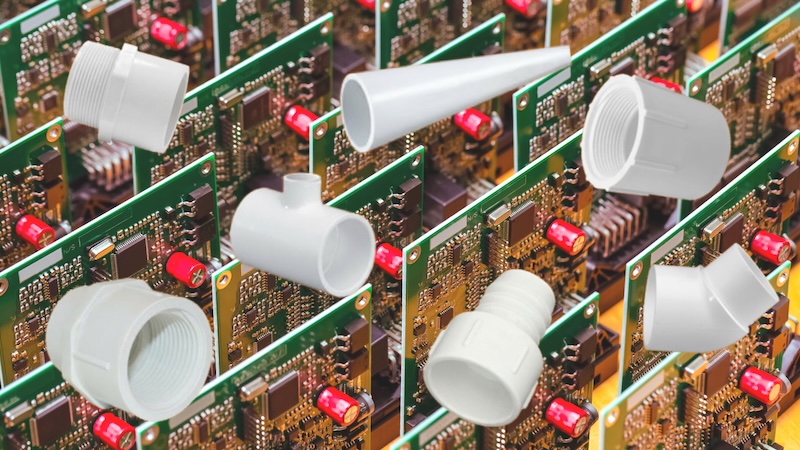
PVC is an excellent material for electronics enclosures and wiring. Composite image used courtesy of Maxx Supply and Adobe Stock
PVC combines electrical safety, low cost, easy machining, and strong chemical and moisture resistance in a way that’s hard to beat for prototype work and DIY builds.
Electrical Safety Built In
PVC’s dielectric strength among its key advantages for electronics applications. It blocks electrical current on its own, providing inherent safety when working around powered circuits. You won’t need to worry about adding insulation layers or creating accidental shorts, as you might with metals or other conductive options.

PVC enclosures can protect sensitive electronics. Image used courtesy of Digikey
This characteristic becomes especially valuable during prototype development, when circuits operate in confined spaces or components are positioned close to each other. PVC creates physical separation between circuit sections, helping prevent unintended electrical contact and accidental shorts. While PVC does not provide electromagnetic shielding like a grounded metal enclosure, this physical isolation adds an extra layer of safety during testing and iteration.
Affordable Without Cutting Corners
Project budgets drive material decisions in most DIY and prototype scenarios. PVC addresses this constraint directly through genuine affordability while maintaining solid performance. Visit any hardware store, and you’ll find PVC sheets, pipes, and various fittings priced reasonably enough that material costs won’t dominate your budget.
The economics improve further when design iteration is factored in. When an initial design falls short and requires rebuilding, the material investment loss stays minimal. This economic freedom enables experimentation. Testing multiple approaches and learning from unsuccessful attempts becomes financially practical rather than prohibitively expensive.
Off-the-shelf PVC components arrive in numerous useful configurations. Flat sheets work well for panel-based enclosure construction. Pipes and connectors, such as Schedule 40 PVC elbows, facilitate angular mounting structures or systematic cable routing without requiring custom fabrication. Ready availability of these standard components reduces both construction time and overall costs.
Easy to Work With
PVC’s machining characteristics stand out as a major practical advantage. Standard woodworking tools handle the material effectively, meaning most makers already possess the necessary equipment. Table saws produce clean cuts through PVC sheets. Conventional drill bits create precise holes without specialized techniques. Files and sanders smooth rough edges efficiently.

PVC is easy to machine with low-cost tools. Image used courtesy of Adobe Stock
This straightforward fabrication significantly accelerates the build timeline. Design adjustments, such as incorporating additional mounting points or modifying enclosure dimensions, can be made in minutes instead of requiring professional machining services. Rapid modifications enable quick design refinement without delays from external fabrication dependencies.
Heat forming expands design possibilities considerably. Controlled heat application allows PVC to bend and conform to curves or intricate geometries. This flexibility lets you build custom enclosure shapes that would get expensive or become impractical with materials that don’t bend. People with little fabrication background can still achieve good results once they practice the techniques a bit. Proper temperature control and ventilation are important during heat forming, as overheated PVC can cause deformation and release irritating fumes.
Assembling PVC components offers multiple reliable approaches. PVC cement produces durable, permanent joints between pieces. Applications requiring future disassembly accommodate mechanical fasteners effectively. The material retains threads well and resists cracking around fastener holes when appropriate sizing and installation methods are followed.
Stands Up to Chemicals and Moisture
Electronics equipment frequently operates where contact with various substances occurs. PVC’s chemical makeup gives it real protection in these scenarios. Exposure to solvents, oils, and cleaning products that regularly appear in workshops and labs won’t cause breakdown or loss of strength. PVC resists many common workshop chemicals, including oils, alcohols such as isopropyl alcohol, and mild acids, though strong solvents like acetone or chlorinated solvents can damage it.
Industrial and laboratory spaces see spills and airborne contaminants as routine occurrences. When enclosures take hits from isopropyl alcohol, get exposed to dilute acids, or encounter petroleum-based fluids, PVC keeps doing its job protecting what’s inside.
Moisture resistance represents another significant benefit for equipment housings. PVC repels water naturally, unlike certain alternative materials, which absorb it. Other materials can swell up and lose integrity when humidity climbs. Electronics housed in PVC enclosures stay protected from condensation and ambient humidity that might otherwise compromise connections or circuit boards.
Temperature performance proves adequate across typical operating ranges. PVC has its limits when things get extremely hot or cold, but it holds up fine across the temperature conditions most electronics projects encounter during normal use and storage.
Things to Keep in Mind
Knowing PVC’s strengths and weaknesses helps you decide when it’s a good fit for your needs. It performs best when temperatures remain moderate. Too much heat can cause softening or warping, so high-power components that generate substantial heat might require additional thermal management strategies or switching to a different material.
Structural loads need consideration as well. PVC delivers enough strength for many common applications, though it can’t match what you get from metal. When mounting heavier equipment, consider how to properly distribute weight across your support structure—concentrate loads at single points, and you risk flexing or failure.
UV exposure matters for outdoor applications. Regular PVC gets brittle over time in direct sunlight. UV-stabilized versions solve this problem and should be your choice when enclosures will spend time outside. Protective coatings or paint can also help extend service life in outdoor environments.
Why It Still Works
PVC maintains its position in electronics workshops by addressing practical requirements without unnecessary complexity. It won’t suit every single application, but it handles the territory where most DIY projects and prototypes actually live. Combining electrical safety with reasonable pricing, straightforward machining, and good environmental resistance gives you reliable building blocks for enclosures and mounting hardware.
For technologists bridging the gap between initial ideas and functional prototypes, these attributes clear away common roadblocks. Wrestling with problematic materials or waiting extended periods for costly custom fabrication pulls focus away from refining circuits and improving functionality. PVC gets out of the way and lets you concentrate on the electronics work itself.
New materials and fabrication methods continue to emerge, but PVC stays relevant by tackling everyday challenges effectively. It deals with typical problems well, stays within modest budgets, and works with equipment most makers already own. The right choice for your project doesn’t necessarily mean picking the latest innovation or fanciest option. Often, the winner is whoever handles the job dependably without creating new problems along the way.


