
The Approach to AI Infrastructure Is the Real Bubble
What if the AI bubble isn't the technology—it's the assumption that frontier-scale training infrastructure is what enterprises will need to actually deploy AI.
The artificial intelligence industry is in the middle of one of the largest infrastructure buildouts in modern history. Across North America, developers are proposing massive AI campuses, utilities are expanding generating capacity, and governments are offering incentives in the belief that these projects will power the next generation of economic growth. AI is already creating value in software development, engineering, manufacturing, healthcare, scientific research, and countless other industries. Its long-term impact is no longer an open question.
What deserves far more scrutiny is the assumption driving much of today’s investment. The prevailing view is that AI’s future depends on an ever-expanding network of giant centralized data centers.
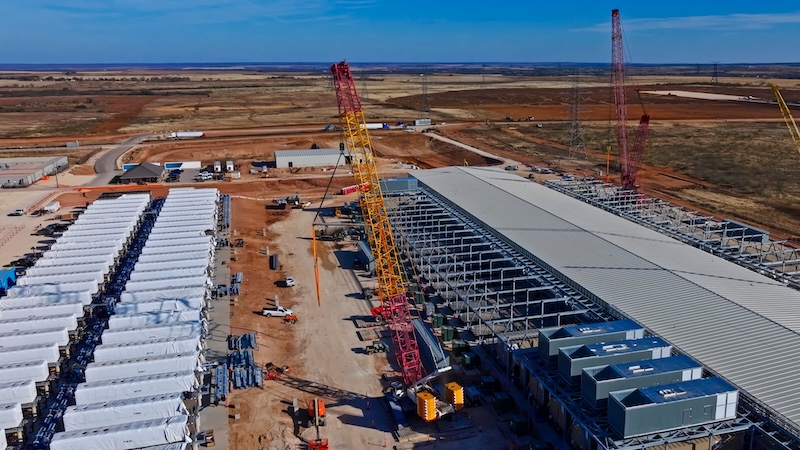
The prevailing view is that the future of AI requires continuous investment in giant centralized data centers. Image used courtesy of Adobe Stock
Larger models require more GPUs. More GPUs require larger facilities, more electricity, more water, and more capital. Many have come to equate AI’s future with an endless race to build more infrastructure.
The Real Bubble Isn’t AI — It’s the Assumption Behind It
If there is an investment bubble in the AI infrastructure boom, I do not believe it is AI itself. AI is already proving indispensable across virtually every sector of the economy, and its influence will only continue to grow. The greater risk is that investors, developers, utilities, and policymakers are projecting today’s infrastructure requirements far into the future before the technology has matured. They are assuming the infrastructure required to train today’s most advanced AI models will be the same infrastructure businesses will need to deploy AI tomorrow. I don’t believe that will be the case.
Transformational technologies have repeatedly inspired infrastructure booms that outpaced long-term demand. Railroads reshaped commerce, but investors financed far more track than the market ultimately required. During the dot-com era, telecommunications companies laid enormous amounts of fiber before demand caught up. More recently, cryptocurrency fueled billions of dollars in mining infrastructure before changing economics reshaped the market. In every case, the technology endured. The assumptions surrounding the supporting infrastructure did not.
Confusing Infrastructure to Create AI with Infrastructure to Use It
The lesson is not that those investments were irrational. Many proved essential. The lesson is that markets consistently overestimate how much infrastructure emerging technologies will ultimately require before efficiency, competition, and innovation reshape the economics.
The market is making a similar mistake by confusing the infrastructure required to create AI with the infrastructure required to use it.
Training frontier models is one of the most compute-intensive tasks ever undertaken. Advancing the state of the art requires enormous GPU clusters, vast amounts of electricity, and billions of dollars in capital. That work will continue, and the companies pushing the boundaries of AI will need infrastructure on a scale few organizations can match.
What Most Businesses Actually Need
Most businesses, however, are not trying to build the next frontier model. They want to automate repetitive work, improve customer service, strengthen fraud detection, accelerate software development, optimize manufacturing, and help employees make better decisions. Those are specific operational challenges, not attempts to build systems capable of answering every question on the internet.
Businesses increasingly need AI systems that understand their operations, data, customers, and workflows. Those systems are often smaller, faster, less expensive to operate, and easier to secure. They can run inside private infrastructure, at the edge, or wherever a company’s data already resides, giving organizations greater control over security, compliance, performance, and cost while reducing the need to send every workload to a distant centralized facility.
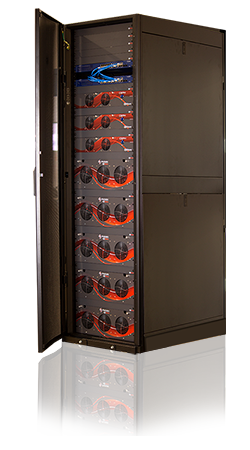
On-site storage clustering systems allow businesses to scale seamlessly as processing and storage needs grow. Image used courtesy of 45Drives
Large AI campuses will remain essential because foundation models and frontier research depend on them. The mistake is assuming enterprise AI will follow the same infrastructure model. As AI becomes another business tool rather than a scientific breakthrough, competitive advantage will come less from access to the world’s largest model and more from applying the right AI to the right business problem.
The Stakes Beyond Enterprise IT
The implications extend well beyond enterprise IT. Hundreds of billions of dollars are flowing into AI infrastructure. Utilities are investing in new generating capacity, and communities are approving projects that will shape regional power demand for decades. Those investments may prove worthwhile, but they are increasingly being justified by forecasts that assume tomorrow’s enterprise AI will look much like today’s frontier AI.
The risk is not that AI fails to meet expectations. Quite the opposite. AI is likely to exceed them because it will become another indispensable business tool. The greater risk is that it succeeds differently than investors expect. If enterprise AI becomes smaller, more specialized, more efficient, and increasingly distributed, businesses could adopt AI at an extraordinary pace while relying far less on centralized infrastructure than today’s projections assume.
AI Will Follow the Same Path as Every Computing Revolution
Every major computing revolution has followed a similar trajectory. Hardware becomes more capable, software becomes more efficient, costs decline, and technologies that once demanded extraordinary computing resources become widely accessible. AI is already moving in that direction. Open-source models continue improving, inference is becoming more efficient, and businesses are discovering that many valuable applications do not require the largest models available.
None of this argues against continued investment in frontier AI or the infrastructure required to support it. The world’s leading models will continue demanding enormous computing resources, and breakthroughs at the frontier will benefit the entire ecosystem. The mistake is assuming those requirements define how most businesses will use AI over the next decade. Most companies will evaluate AI the same way they evaluate every technology investment: by whether it improves productivity, reduces costs, and helps people make better decisions.
Building Infrastructure Around the Workload
I have spent years helping organizations build infrastructure around their workloads instead of forcing workloads to fit someone else’s infrastructure strategy. That philosophy applies just as much to AI. Some workloads will always belong in large centralized facilities, while others will deliver greater value running inside private infrastructure or at the edge, where businesses can optimize for security, performance, compliance, cost, and control. The future of enterprise AI is unlikely to be defined by a single architecture because enterprise computing never has been.
AI will transform virtually every industry. I have little doubt about that. The more important question is whether we are building infrastructure for the AI businesses will actually use or for the AI we assume they will use ten years from now. History suggests those are rarely the same thing.
Feature image used courtesy of Adobe Stock


