
Silicon Labs Delivers World’s First PSA Level 4 SoC
The SiXG301 is claimed to be the first SoC to achieve PSA Level 4 security certification, providing a robust security foundation for next-generation IoT devices.
In a significant advancement for embedded system design, Silicon Labs has introduced the SiXG301, a system-on-a-chip (SoC) that has achieved the world’s first PSA Certified Level 4 security certification. This designation, the highest level of security validation from PSA Certified, establishes a new benchmark for protecting IoT devices against increasingly sophisticated physical attacks. For electrical engineers working on connected device applications, this development signals a shift toward a more robust, hardware-based security foundation designed to withstand threats that are growing in prevalence.
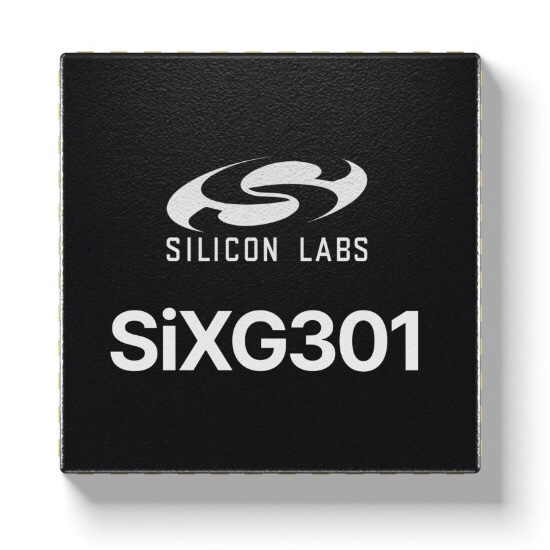
The SiXG301 includes PSA Certification Level 4 which is designed to protect high-value chip assets. Image used courtesy of Silicon Labs.
The SiXG301, the inaugural device in the company’s Series 3 portfolio, is a 22nm multi-core SoC engineered with the Series 3 Secure Vault subsystem. At its core, the device features an ARM Cortex-M33 controller capable of running up to 150 MHz, supported by dedicated cores for radio and security functions. This architecture is designed to manage complex tasks while offloading critical security operations to a specialized engine. Memory options include up to 4MB of Flash and 512kB of RAM, providing ample resources for a wide range of IoT applications. The SoC also supports concurrent multiprotocol (CMP), enabling simultaneous operation of Zigbee and Matter over Thread, which is a key requirement for interoperable smart home and building automation systems.
Rigorous Testing Against a Variety of Threats
The core of this announcement, however, is the PSA Level 4 certification. This certification validates the SoC’s resistance to a variety of invasive physical attacks that go beyond traditional software-based exploits. The testing, conducted in collaboration with Keysight Technologies, scrutinized the device’s resilience against:
- Laser Fault Injection: A technique used to induce errors in the chip’s operations by targeting specific areas with a laser.
- Side-Channel Attacks: Methods that exploit unintended information leakage, such as power consumption or electromagnetic emissions, to deduce cryptographic keys and other sensitive data.
- Microprobing: The use of fine probes to physically tap into the chip’s internal circuitry to read or manipulate data.
- Voltage Manipulation: Altering the supply voltage to disrupt normal chip operation and trigger unintended behavior, a common method for bypassing security protections.
The certification confirms that the SiXG301 can effectively defend against these advanced threats, a capability that is becoming essential as IoT devices are deployed in increasingly exposed environments.

The PSA Level 4 security certification of the SiXG301 provides enhanced protection in home and business automation. Image used courtesy of Silicon Labs.
The Secure Vault element within the SoC is a critical component of this defense, providing a hardware-isolated security domain that protects cryptographic operations and sensitive data. This approach is instrumental in helping device manufacturers comply with emerging international security standards, such as the EU’s Radio Equipment Directive (RED) and the US Cyber Trust Mark.
Summary
While the SiXG301 is initially targeted at specific applications, such as LED lighting with its integrated PIXELRZ single-wire communication interface and LED pre-driver, the underlying security platform is set to be a standard feature across all future Series 3 devices. This suggests a strategic move to standardize high-level hardware security as a fundamental requirement for a broad spectrum of IoT solutions. The SiXG301, which is expected to be commercially available in Q3 2025, not only enhances the security posture of individual products but also establishes a framework for securing the next decade of IoT innovation.