
AutoML for Embedded: A New Tool for Resource-Constrained Devices
Analog Devices’ new open-source AutoML tool integrates with CodeFusion Studio, automating machine learning model creation for resource-constrained microcontrollers.
The proliferation of artificial intelligence—a paradigm known as “Edge AI”—has introduced new complexities for embedded systems engineers. Developing machine learning (ML) models that are both performant and compact enough to run on resource-constrained microcontrollers (MCUs) is a specialized task, often requiring deep expertise in data science and model optimization. To address this, Analog Devices has announced the general availability of its new AutoML for Embedded tool, co-developed with Antmicro. This open-source solution is designed to automate the end-to-end ML pipeline, making Edge AI more accessible to developers without extensive data science backgrounds.
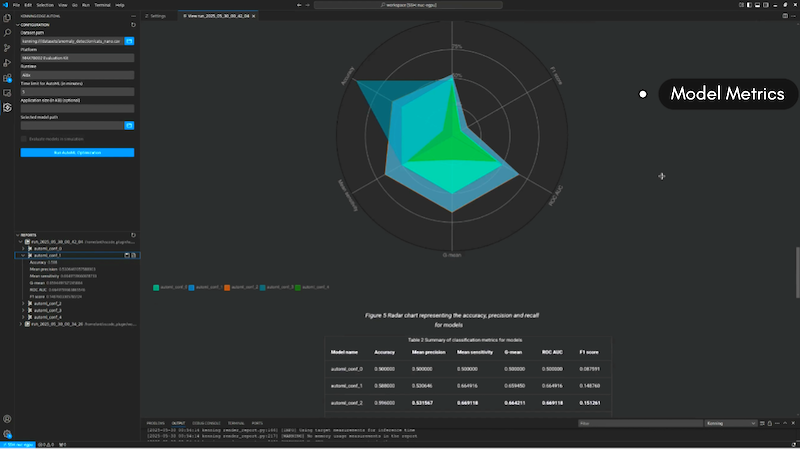
As a hardware-agnostic platform, AutoML is designed to be implemented with few adaptations or modifications. Image courtesy of ADI Developer.
Utilizing Open Source Solutions for Seamless Workflows
AutoML for Embedded is a Visual Studio Code plugin built on the open-source Kenning library. It integrates with Analog Devices’ own embedded software development environment, CodeFusion Studio™, providing a seamless workflow for engineers. The tool’s primary function is to automate the search and optimization of ML models, a process that is typically time-consuming and manual. It leverages advanced algorithms like Sequential Model-based Algorithm Configuration (SMAC) to efficiently explore various model architectures and training parameters. This is coupled with a Hyperband with Successive Halving approach, which allocates more resources to the most promising models, accelerating the discovery of an optimal solution.
A key feature of the tool is its ability to verify model size against the target device’s available RAM, preventing the creation of models that are too large to deploy. This is a critical consideration for embedded systems, where memory is a finite and expensive resource. The resulting candidate models can then be further evaluated and benchmarked using Kenning, providing detailed reports on size, speed, and accuracy to help guide the final deployment decision. This automated process significantly reduces the iterative “trial and error” cycles that often plague embedded ML development.
Improved Model Performance Visiblity for Developers
The integration with Analog Devices’ hardware is a central part of the solution’s value proposition. AutoML for Embedded supports direct model deployment to Analog Devices’ AI accelerator MCUs, such as the MAX78002 and MAX32690. The tool also supports Renode-based simulation and the Zephyr RTOS, which allows for rapid prototyping and testing without requiring physical hardware. This creates a flexible and transparent development environment, giving engineers a clear view of how their models will perform on the target device.
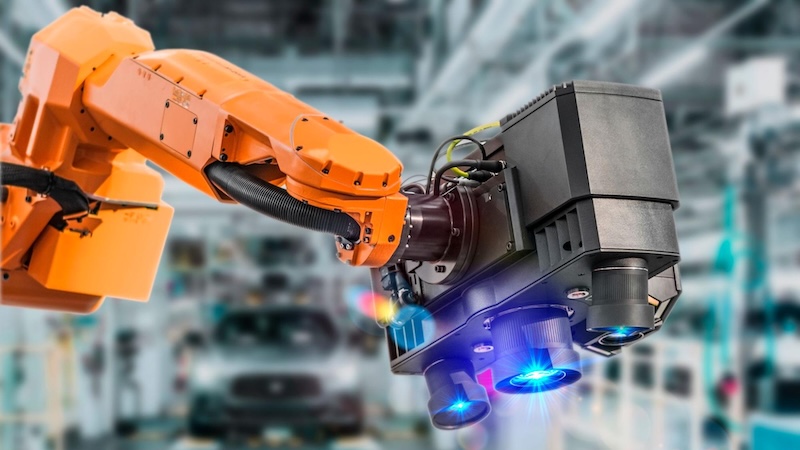
AutoML has a wide breadth of use cases, including action recognition in robotics, object detection, image classification, and anomaly detection in industrial sensors. Image courtesy of Adobe Stock.
The need for such a tool is illustrated by a recent demonstration where AutoML for Embedded was used to create an anomaly detection model for sensory time-series data on the Analog Devices MAX32690 MCU. The model was successfully deployed on both the physical hardware and its digital twin in the Renode simulation environment, showcasing the tool’s seamless integration and real-time performance monitoring capabilities. This demonstrates how the solution can be applied to a variety of real-world use cases, including industrial, medical, and IoT applications.
Summary
By making the end-to-end ML pipeline more accessible, Analog Devices and Antmicro are lowering the barrier to entry for Edge AI. The open-source nature of the Kenning library and the Visual Studio Code plugin prevents platform lock-in and fosters a more collaborative development ecosystem. This is particularly important as the demand for intelligent edge devices continues to grow, and engineers are increasingly expected to incorporate AI functionalities into their designs. With AutoML for Embedded, the focus shifts from the low-level complexities of model optimization to the application-level problem-solving, enabling faster time-to-market and more efficient use of engineering resources.


This is a meaningful step toward making Edge AI practical for embedded engineers without deep ML expertise. Automating model search while enforcing memory and performance constraints fits real MCU development needs. The open-source, hardware-agnostic approach and tight integration with Code Fusion Studio should significantly reduce development time for resource-constrained applications.