Building High-Performance Gaming Gear With TDK’s New TMR Sensors
The new tunnel magnetoresistance (TMR) sensor technology offers enhanced precision, accuracy, and speed for gaming peripherals like mice, keyboards, and controllers.
In the rapidly evolving landscape of competitive gaming, the demand for ever-increasing precision and responsiveness in peripheral devices has driven a shift towards more advanced sensing technologies. The recent announcement from TDK Corporation, a key player in the electronics components sector, introduces a new line of tunnel magnetoresistance (TMR) sensors to meet these stringent demands.
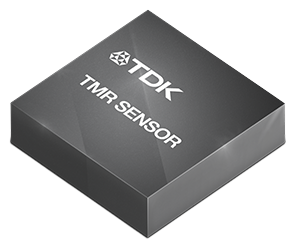
TDK’s new TMR sensors enable ultra-low power and high precision in gaming peripherals. Image used courtesy of TDK Corporation
TDK TMR Sensors
Traditional gaming peripherals, particularly mice and keyboards, have long relied on mechanical switches or Hall effect sensors to detect input. While effective, these technologies present inherent limitations in terms of speed, accuracy, and longevity. Mechanical switches suffer from debounce issues and eventual wear and tear, while Hall effect sensors, which measure a change in magnetic field strength, can lack the fine-grained resolution needed for professional-grade performance.
TDK’s new TMR sensors represent a technological leap. Unlike Hall sensors, which detect a change in a perpendicular magnetic field, TMR sensors leverage the quantum mechanical effect of tunneling magnetoresistance. These sensors consist of a magnetic tunnel junction with two ferromagnetic layers separated by a thin insulating barrier. When a voltage is applied, electrons tunnel through the barrier. The resistance of this junction changes depending on the relative orientation of the magnetization in the two ferromagnetic layers. This resistance is at its lowest when the layers’ magnetization is parallel and highest when it is antiparallel.
TDK has built its TMR sensors to deliver greater sensitivity than traditional Hall sensors. Video used courtesy of InvenSense, A TDK Group Company
Enhancing Gaming Hardware Design
The key advantage of TMR technology is its high sensitivity. According to TDK, its new sensors are up to 10 times more sensitive than conventional Hall sensors. This increased sensitivity allows for the detection of much smaller changes in magnetic fields, translating directly into higher resolution and faster response times for the end-user. This means a more robust and precise signal output for a given magnetic input, simplifying the design of high-accuracy systems. The enhanced sensitivity also allows for a wider air gap between the magnet and the sensor, which can simplify mechanical design and reduce manufacturing costs.
The integration of TDK’s TMR sensors into high-performance gaming gear unlocks new possibilities for designers. In gaming mice, the higher resolution allows for more accurate tracking and finer control, a critical factor for first-person shooter games. For mechanical keyboards, TMR sensors could replace traditional mechanical or optical switches, offering a silent, contactless, and infinitely more durable key switch. The contactless nature of the sensor eliminates mechanical wear, thereby extending the lifespan of the peripheral. The speed and precision are also well-suited for applications in racing wheels and pedals, where nuanced control over steering and throttle is essential for a realistic and competitive experience.
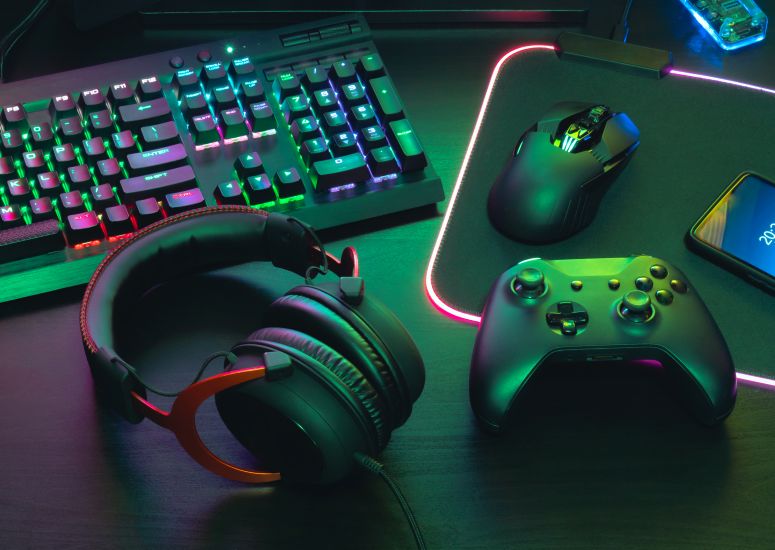
The TDK TMR sensor is built to enhance gaming gear like keyboards, controllers, and driving wheels/pedals. Image used courtesy of Adobe Stock
High-Precision Gaming Peripherals
The introduction of TDK’s TMR sensors provides designers with a new component option for building gaming peripherals. These sensors offer greater sensitivity and speed compared to traditional Hall sensors, which can improve precision and responsiveness in device operation. This technology can be applied in several areas, including gaming mice to increase accuracy, contactless keyboards to enhance longevity, and controllers and racing peripherals to improve response time for competitive use. These advancements aim to empower designers to create more reliable, accurate, and high-performance gaming devices.