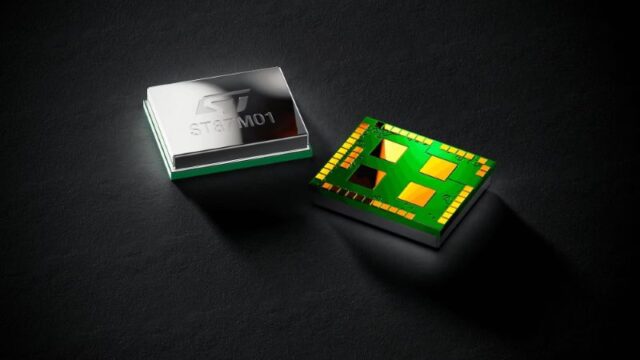
Microchip Technology Introduces Single-Chip Multiprotocol Wireless Platform
The new PIC32-BZ6 wireless MCU family is a single-chip platform built to simplify the development of multiprotocol products in automotive, consumer, and industrial applications.
The increasing complexity of connected systems in the industrial IoT and automotive sectors frequently necessitates the simultaneous handling of multiple communication standards. Historically, managing wired, short-range wireless, and mesh network protocols within a single application has required a multichip architecture, which increases the bill of materials, complicates PCB layout, and adds firmware overhead.
Microchip Technology’s release of the PIC32-BZ6 microcontroller (MCU) platform directly addresses this fragmentation.
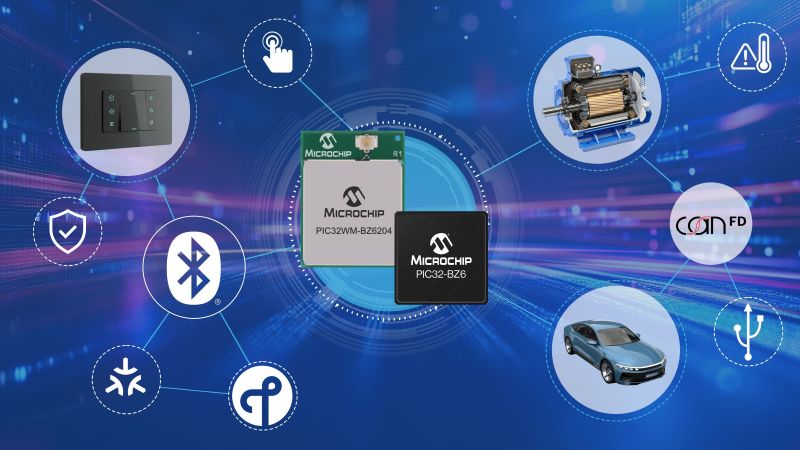
Microchip’s PIC32-BZ6 family of wireless MCUs brings wired and wireless connectivity to automotive, industrial, and consumer applications. Image used courtesy of Microchip Technology
PIC32-BZ6 Wireless Microcontrollers (MCUs)
The PIC32-BZ6 wireless MCU is a single-chip solution designed to serve as a unified hardware foundation, consolidating high-performance computing, substantial memory, advanced RF capabilities, and a range of robust physical interfaces into one device. The platform is designed to ease the burden of frequent redesigns that are often required to support evolving standards and protocols, such as new Bluetooth specifications or mesh topologies like Matter.
The PIC32-BZ6 integrates a high-performance microcontroller core with substantial on-chip memory. The device features 2 MB of flash memory and 512 KB of RAM. This memory capacity is engineered to support complex application stacks, manage heavy data processing, and facilitate over-the-air (OTA) firmware updates. The base SoC, the PIC32CX2051BZ62132, is available in a 132-pin IC package, with an RF-certified module variant, the PIC32WM-BZ6204UE, also available for designs where regulatory compliance and accelerated time-to-market are critical.
Wired and Wireless Multiprotocol Connectivity
The key technical advantage of the PIC32-BZ6 MCU platform is the comprehensive integration of both RF and wired communication stacks, often eliminating the need for external bridge or communication interface ICs. On the wireless side, the platform is qualified for the latest Bluetooth Core Specification 6.0. The platform also incorporates support for 802.15.4-based protocols, including Thread and Matter. This multiprotocol capability enables the MCU to handle simultaneous connections, serving as a primary node in a network or a gateway bridging different standards.
For industrial and automotive wired connectivity, the integration is equally detailed. The device includes two dedicated CAN-FD ports for high-speed, reliable bus communication in vehicle networks and factory automation systems. Furthermore, an on-chip 10/100 Mbps Ethernet MAC allows for integration into standard IP-based networks without requiring an external PHY. A USB 2.0 full-speed transceiver is also included for host integration, diagnostics, and data transfer.
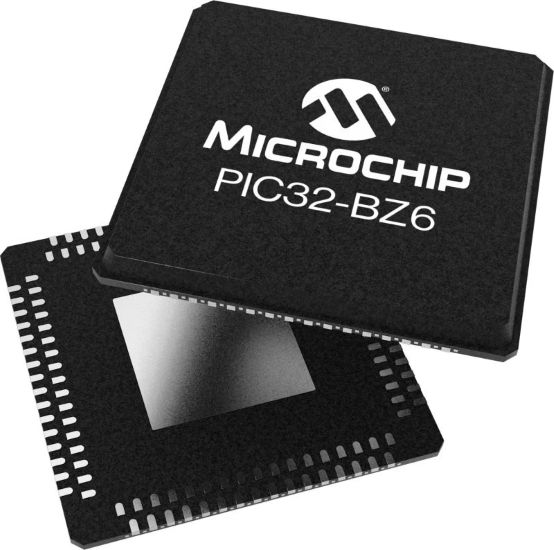
Microchip’s PIC32-BZ6 MCU is qualified to AEC-Q100 Grade 1, making it durable in harsh conditions. Image used courtesy of Microchip Technology
Motor Control and Analog Peripherals
The MCU includes motor control and analog peripherals to support physical control applications, particularly those involving motion. This integration simplifies system development by providing high-resolution data conversion and precise control interfaces.
The analog section includes 12-bit analog-to-digital converters for accurate current and voltage feedback, a 7-bit digital-to-analog converter for control signal generation, and dedicated peripherals such as pulse width modulation and a quadrature encoder interface.
These peripherals within the same IC simplify the implementation of closed-loop control algorithms, such as field-oriented control, for precise motor position and speed management. Beyond motor control, the device also integrates capacitive voltage divider-based peripherals, supporting up to 18 channels for modern, gesture-enabled touch interfaces and HMI design.
Reliable Performance and Embedded Security
Microchip has designed the PIC32-BZ6 for demanding conditions. The MCU is AEC-Q100 Grade 1 qualified, ensuring reliable performance in harsh automotive and industrial environments up to 125 °C.
Additionally, security is addressed at the hardware level with an immutable secure boot process embedded in ROM. The device also has an advanced hardware-based security engine that supports common cryptographic standards, including AES, SHA, ECC, and TRNG. This hardware acceleration for security functions protects the application’s intellectual property and ensures secure, authenticated communication.
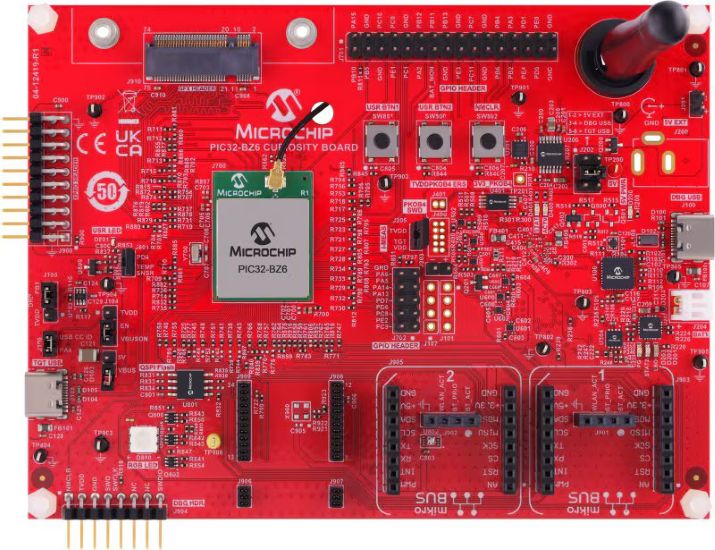
Evaluation and prototyping for the PIC32-BZ6 can be done with the PIC32-BZ6 Curiosity Board development platform. Image used courtesy of Microchip Technology
Advanced Connectivity Applications
The PIC32-BZ6 represents a significant integration effort, consolidating a high-performance MCU, multiprotocol wireless capabilities, and critical wired interfaces into a single, AEC-Q100-qualified chip. By incorporating dedicated analog and motor control peripherals, the platform reduces the component count and design complexity of modern embedded systems. This robust, feature-rich device is well-suited for high-reliability applications such as automotive connectivity modules, industrial automation controllers, precision wireless motor control units, and resilient smart building/home gateways requiring seamless, unified handling of diverse communication protocols.