What is a DIAC and TRIAC? And, how do they work?
A DIAC (Diode for Alternating Current) and a TRIAC (Triode for Alternating Current) are semiconductor devices commonly used in electronic circuits to control the flow of alternating current (AC). A DIAC is a two-terminal device that conducts electricity when a certain voltage threshold is reached. It's often used in trigger circuits for devices like thyristors […]

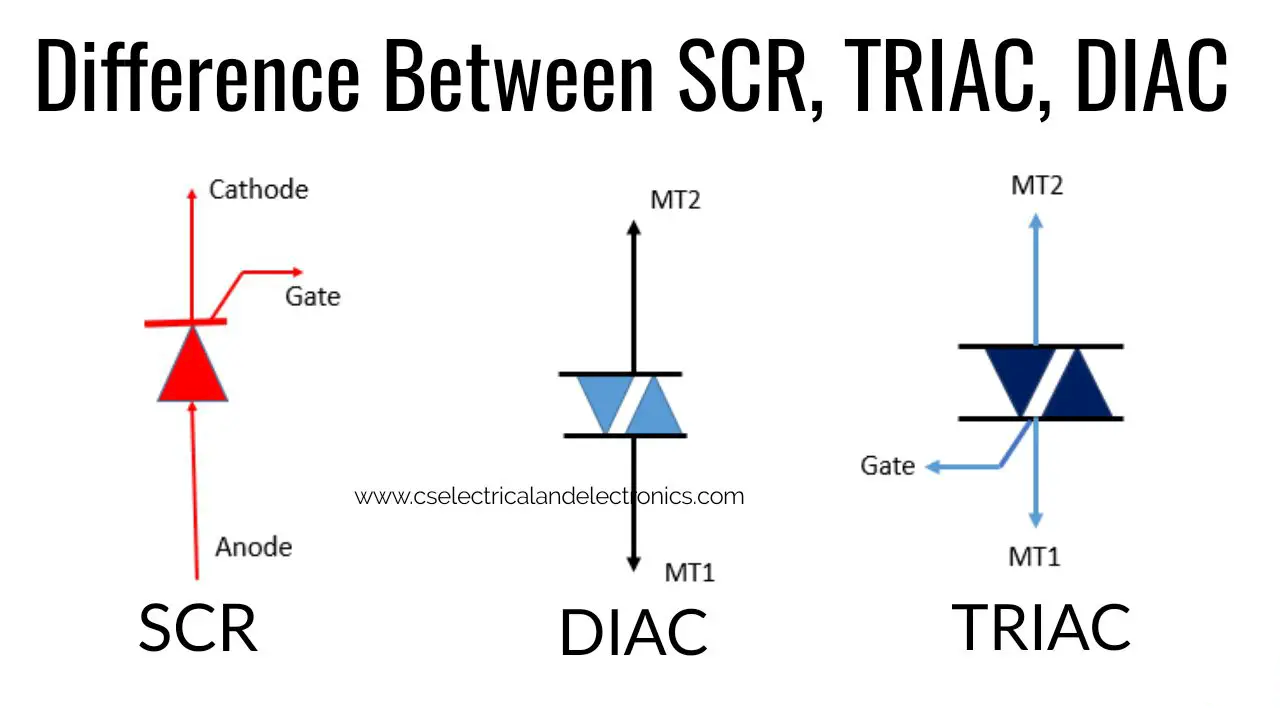
A DIAC (Diode for Alternating Current) and a TRIAC (Triode for Alternating Current) are electronic components used in AC (alternating current) circuits for controlling power to devices.
- DIAC: A DIAC is a two-terminal device that conducts electric current when the voltage across it exceeds a certain threshold level. It is commonly used for triggering TRIACs and other devices in electronic circuits. The DIAC is a bidirectional device, meaning it can conduct current in either direction when triggered. It is often used in applications such as phase control, triggering of thyristors, and light dimming circuits. The working principle of a DIAC is based on the phenomenon of avalanche breakdown. It consists of two layers of semiconductor material (commonly silicon) with a layer of insulating material in between. When the voltage across the DIAC exceeds its breakdown voltage (also called the firing voltage), the insulating layer breaks down and allows current to flow through the device. Once triggered, the DIAC remains conducting until the current through it falls below a certain holding current value. After that, the DIAC switches off and becomes non-conductive until the voltage across it reaches the breakdown voltage again.
- TRIAC: A TRIAC is a three-terminal device used for controlling power to AC loads. It is commonly used in applications such as light dimmers, motor speed control, and AC power control circuits. The TRIAC is a bidirectional device, meaning it can conduct current in either direction when triggered. The working principle of a TRIAC is based on the combination of two thyristors connected in parallel in opposite directions. Thyristors are solid-state switches that allow current flow in one direction only until they are triggered. The TRIAC is capable of controlling the flow of current in both directions. It can be triggered to conduct when a small current pulse is applied to its gate terminal. When a gate current is applied to the TRIAC, it triggers the device and allows current to flow through it. The TRIAC remains conducting even after the gate current is removed until the current through it falls below a certain holding current value or the voltage across it reverses direction. At that point, the TRIAC turns off and becomes non-conductive until triggered again.
In summary, a DIAC is a two-terminal device that conducts current when the voltage across it exceeds a threshold, while a TRIAC is a three-terminal device used for controlling power to AC loads in both directions.

A DIAC (Diode for Alternating Current) and a TRIAC (Triode for Alternating Current) are semiconductor devices commonly used in electronic circuits to control the flow of alternating current (AC).
A DIAC is a two-terminal device that conducts electricity when a certain voltage threshold is reached. It’s often used in trigger circuits for devices like thyristors and TRIACs. When the voltage across the DIAC exceeds its threshold, it enters a low-resistance state, allowing current to flow through it. This behavior is bidirectional, meaning it works for both positive and negative voltage cycles of AC.
On the other hand, a TRIAC is a three-terminal device that functions as a switch for AC. It can control the flow of current in both directions, enabling it to regulate power to AC loads like motors, lamps, and heaters. The TRIAC operates based on the principles of thyristors but can control both halves of the AC waveform. It triggers when a gate signal is applied, allowing current to flow through it until the AC current drops to zero.
Both DIACs and TRIACs are widely used in applications requiring AC power control, such as dimmers, motor speed control, and temperature regulation. Their ability to manage AC current direction and intensity makes them valuable components in a variety of electronic and electrical systems.
