
Waveshare ESP32-P4-Module Development Board Supports WiFi 6, Bluetooth 5, DSI Display, and Ethernet
If you're into building advanced IoT or embedded systems, the ESP32-P4-Module Development Board might just be what you need. It’s built on the ESP32-P4 with an integrated ESP32-C6, meaning it supports the latest Wi-Fi 6 and Bluetooth 5/BLE over an SDIO 3.0 interface—super handy for fast and reliable wireless connections.
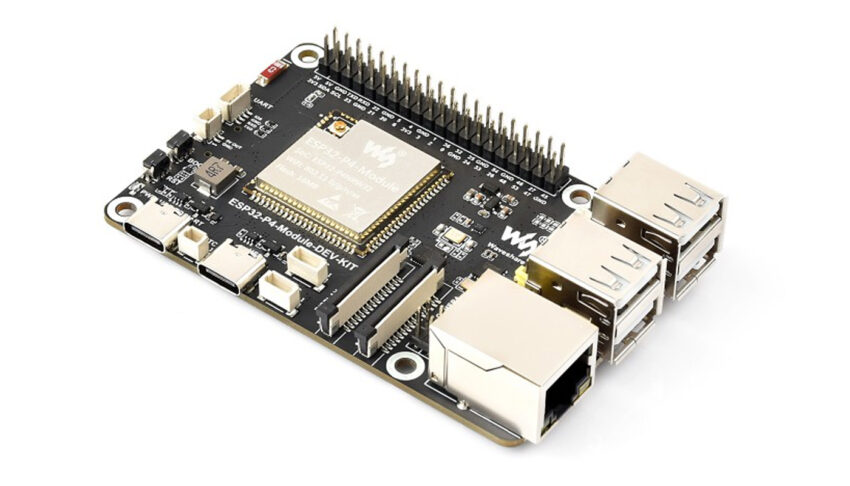
If you’re into building advanced IoT or embedded systems, the ESP32-P4-Module Development Board might just be what you need. It’s built on the ESP32-P4 with an integrated ESP32-C6, meaning it supports the latest Wi-Fi 6 and Bluetooth 5/BLE over an SDIO 3.0 interface—super handy for fast and reliable wireless connections.
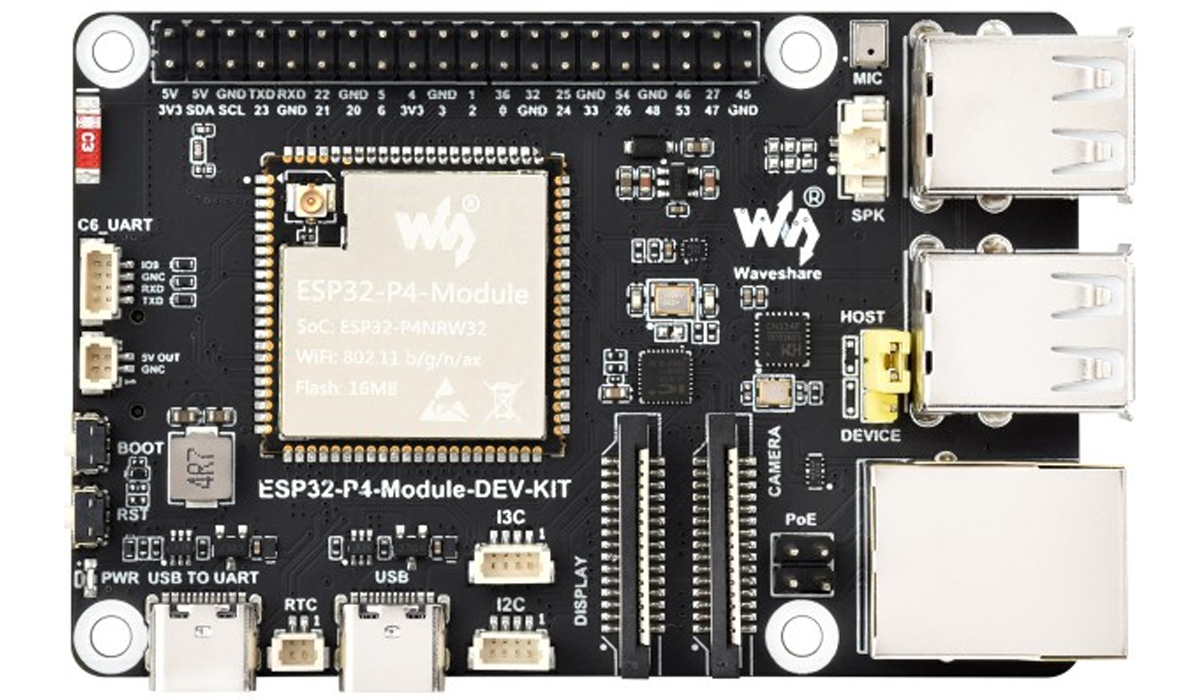
A wide range of interfaces, like MIPI-CSI, DSI, I2S, I2C, UART, PWM, and more, are also featured by the board, making it perfect for handling displays, sensors, and other peripherals. It even has a USB OTG 2.0, RJ45 Ethernet port, and a 40-pin GPIO header that’s Raspberry Pi HAT compatible. The board comes with 32MB of stacked PSRAM and 16MB of NOR flash, along with 128KB of fast-access ROM, 768KB of L2 memory, 32KB of low-power SRAM, and 8KB of tightly coupled memory. These memory resources support advanced image and audio processing, with hardware acceleration from a built-in JPEG codec, H.264 encoder, pixel processing unit, and image signal processor.
Previously, we have written about ESP32-P4-Function-EV-Board, a development board for handling multimedia tasks. It is based on the ESP32-P4 module, which was introduced in April 2024.
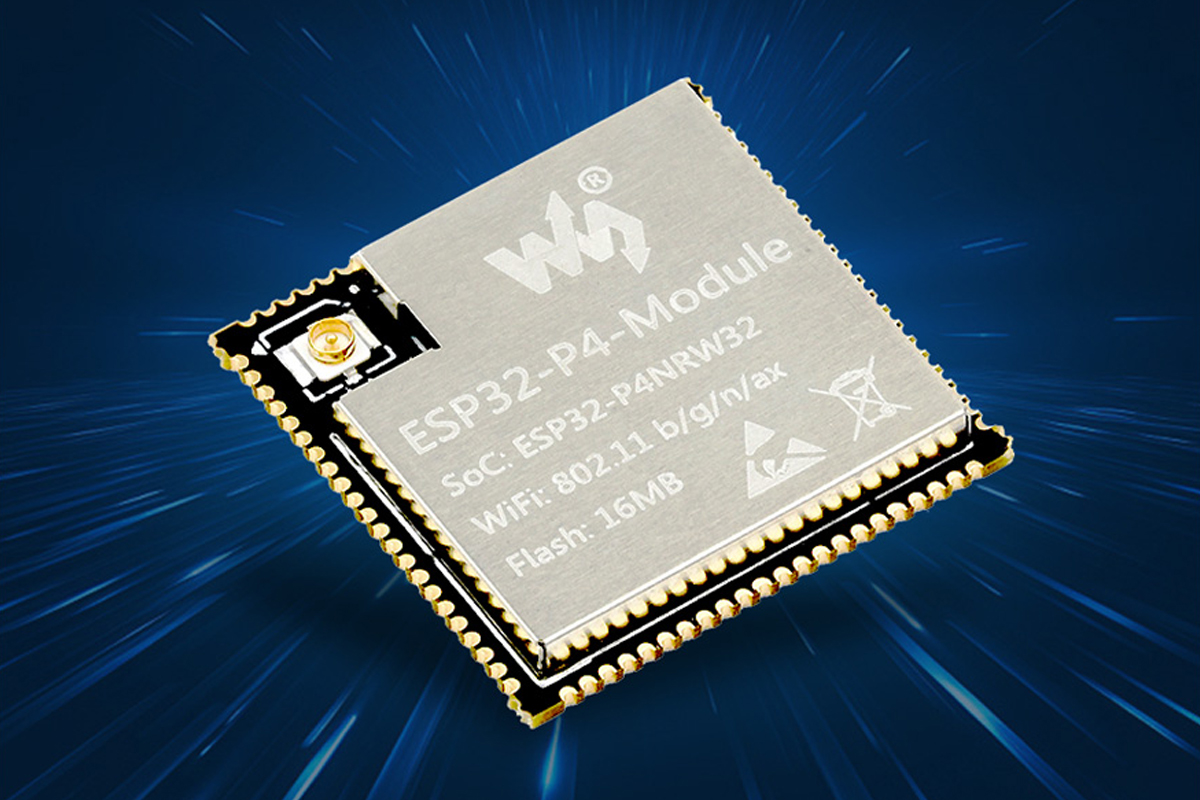
ESP32-P4-Module Development Board Specifications:
- SoC:
- MCU: ESP32-P4
- 400MHz RISC-V dual core with rich peripherals
- 40MHz RISC-V single core LP (Low-power)
- GPU: 2D Pixel Processing Accelerator
- VPU: H.264 and JPEG codecs
- Memory: 768 KB HP L2MEM, 32 KB LP SRAM, 8 KB TCM, 32MB PSRAM
- Storage: 128 KB HP ROM, 16 KB LP ROM
- ESP32-C6 (for WiFi 6 and Bluetooth 5/BLE)
- MCU: ESP32-P4
- Memory: 32MB PSRAM (stacked)
- Storage:
- 16MB NOR Flash
- MicroSD card slot (SDIO 3.0 protocol)
- Display:
- MIPI DSI interface
- Supports optional 7-inch and 10.1-inch capacitive touch displays
- 10-point touch, IPS, optical bonding, 178° viewing angle
- 450cd/m² brightness (supports customization for 1000cd/m² high brightness)
- Camera Interface:
- MIPI CSI with integrated Image Signal Processor (ISP)
- Audio:
- Onboard MEMS microphone
- Speaker header (MX1.25 2P connector with 8Ω 2W speaker)
- Wireless Connectivity:
- WiFi 6 (802.11ax)
- Bluetooth 5 / BLE
- Ethernet:
- 100Mbps RJ45 Ethernet port
- PoE header (Power over Ethernet support via add-on)
- USB:
- USB 2.0 OTG High-Speed (HS)
- Type-C UART connector
- Type-C connector for power and programming
- I/O:
- I2S, LED PWM, MCPWM, RMT
- Expansion:
- 40-pin GPIO header (Raspberry Pi HAT-compatible)
- SPI, I2C, ADC, UART, TWAI, and more
- Misc:
- Capacitive touch display (DSI)
- 5MP Raspberry Pi-compatible camera (manual focus)
- BOOT button
- RESET button
- 1x Status LED
- Rechargeable RTC battery header
- Ceramic antenna for WiFi and Bluetooth
- Power:
- 5V DC via USB Type-C port
- 5V header
- PoE module header for external power
- Dimension: 85 x 56mm
- Operating Temprature: 0℃~60℃
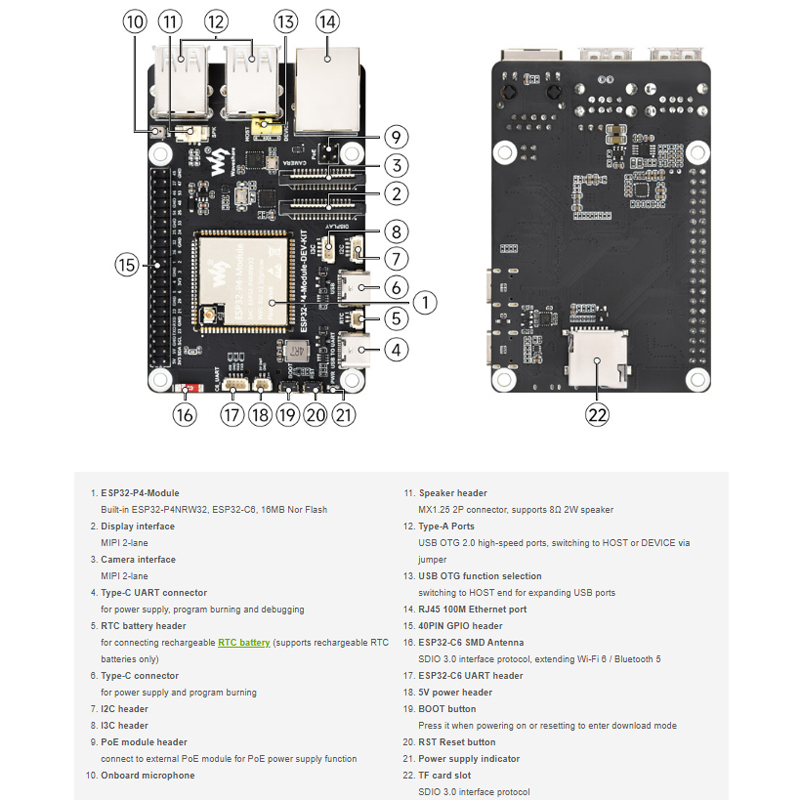
Currently, the wiki only provides setup guides and demo source code for ESP-IDF. Available demos include an ESP-Phone example built on ESP_Brookesia, showcasing an Android-style interface with various apps, an LVGL user interface demo, an Ethernet-to-WiFi gateway, and several others.
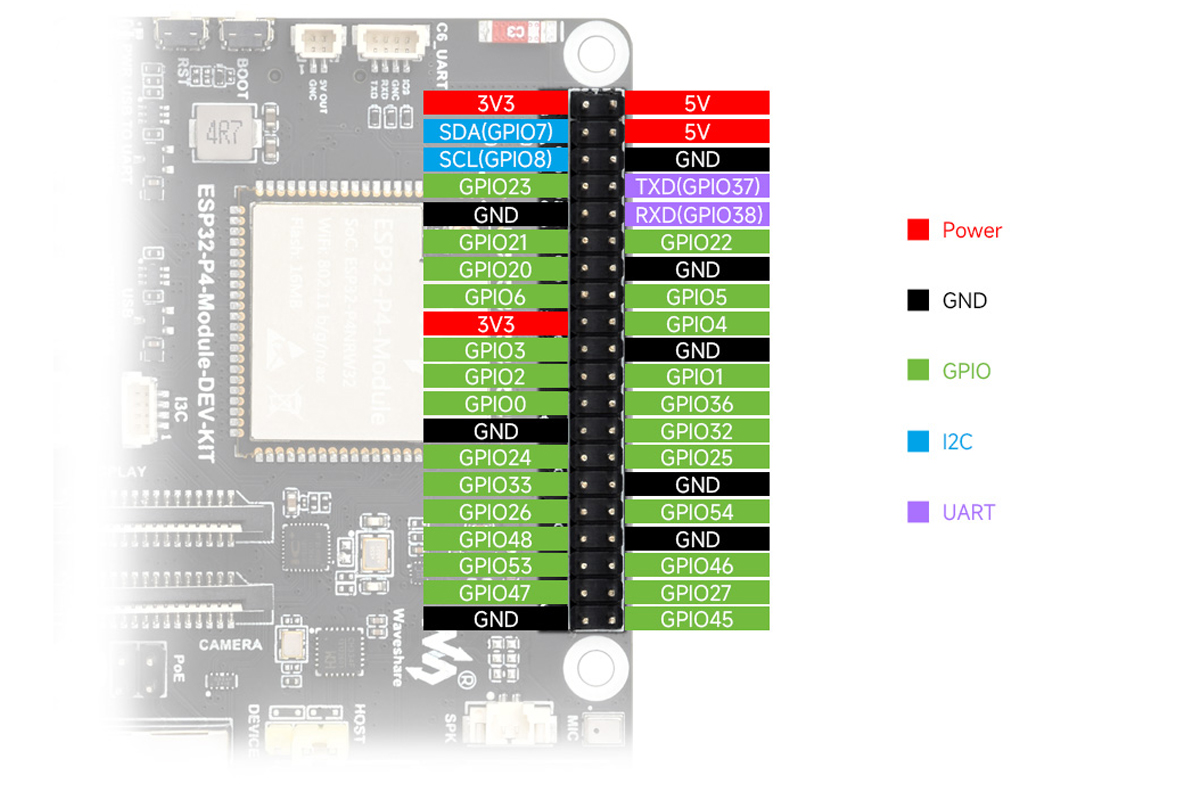
This is Waveshare’s second ESP32-P4 development board, following the launch of the ESP32-P4-NANO in late 2024. Like its predecessor, the ESP32-P4-Module development board currently supports development through the ESP-IDF framework only. Although the team has experimented with Arduino, PlatformIO, and MicroPython, those options aren’t stable enough for general use just yet.
Additionally, Waveshare offers the board on its own, as well as in bundles that include extras like a speaker, a 7-inch touchscreen, or even a 10-inch display. There are different kits (Basic, A, B, C), and the B and C versions include a bright DSI capacitive touch screen, ideal for interactive projects. You can also add a 5MP RPi camera module with manual focus. The MIPI-DSI interface enables high-definition display support, offering JPEG decoding and 2D graphics acceleration for smooth visuals.
- ESP32-P4-Module Basic Kit – Includes the board and an 8Ω 2W speaker.
- ESP32-P4-Module-DEV-KIT-A – Adds a Raspberry Pi-style camera (B) and 15-pin FFC cable along with the speaker.
- ESP32-P4-Module-DEV-KIT-B – Everything in Kit A, plus a 7-inch touchscreen, screw pack, and extra cables.
- ESP32-P4-Module-DEV-KIT-C – Same as Kit A, but with a larger 10-inch touchscreen, screw pack, and extra cables.
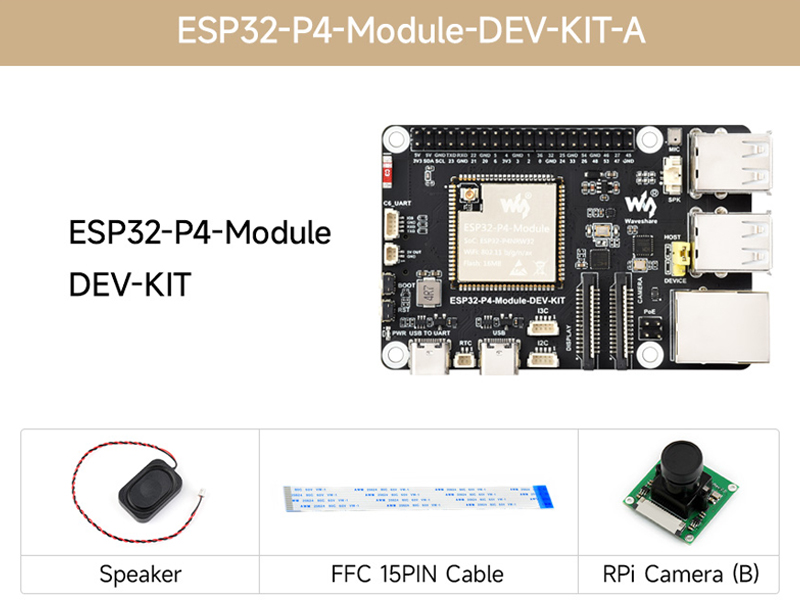
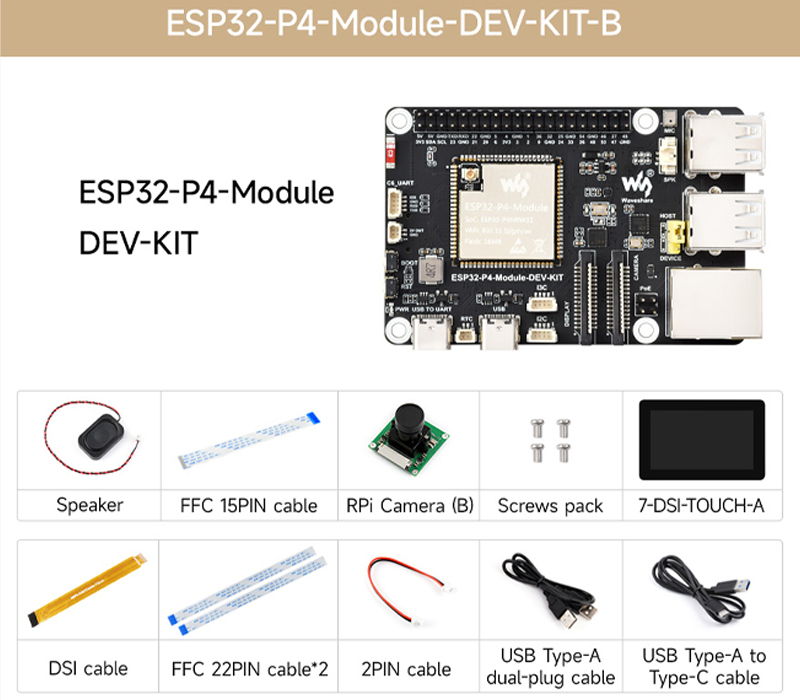
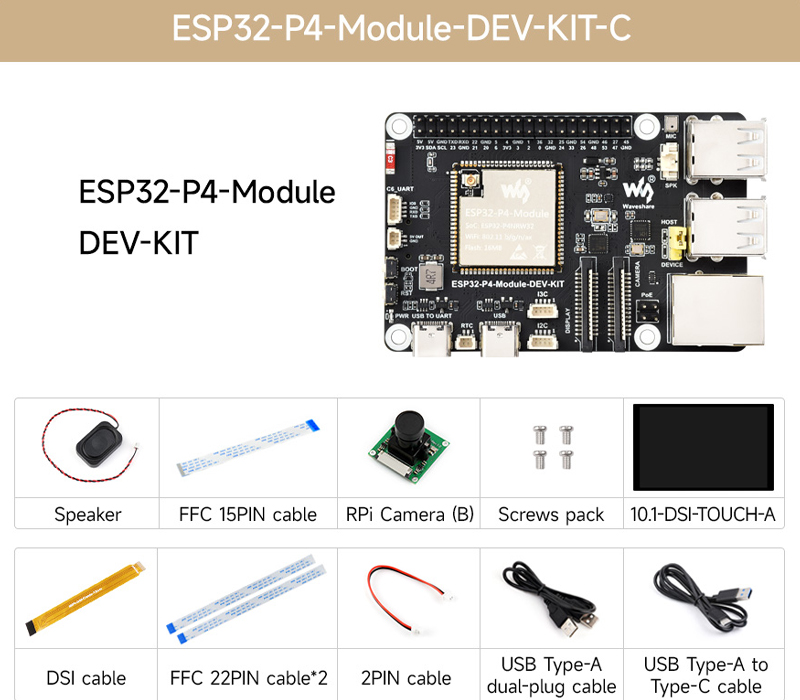
At the time of writing, the Waveshare ESP32-P4-Module Development Board and its related bundles are available on AliExpress, with prices ranging from $28.73 to $108.46 depending on the kit and regional taxes. You can also find a complete bundle starting at $19.99 along with a DSI touchscreen, speaker, Raspberry Pi Camera B, and various cables are available for $77.99 on the official Waveshare store. While Waveshare has an Amazon storefront, this new ESP32-P4 board hasn’t appeared there yet.


