Join the Community
Main Menu
Infineon Debuts 7 nA TMR Magnetic Switch for Wearables and Patches
Sipeed SLogic32U3 - A 10 Gbps USB 3.2 Logic Analyzer
Tektronix 1 Series Digital Phosphor Oscilloscopes Offer 200 MHz Bandwidth from $450
Silanna Folds a DSP Into Its Compact Plural Nano Converter Family
Polyimide Tape for PCB Masking: Avoiding Edge Lift and Residue
Prevent Post-Launch Application Failures with Real-World Network Simulation
The Approach to AI Infrastructure Is the Real Bubble
Mastering the Curve: Layout Strategies for FPC Bend Radius and Reliability
What Is DECT NR+? Examining the New 5G Non-Cellular Mesh Standard
Single Pair Ethernet: One Twisted Pair, Full Ethernet Performance
Analog To Digital Conversion - Sampling and Quantization
Positive Feedback in Electronic Circuits
High Current Half Bridge with Over-Current Shutdown
3-Wire Electret Microphone Pre-Amplifier
12W Step Up DC-DC Converter using MAX1771
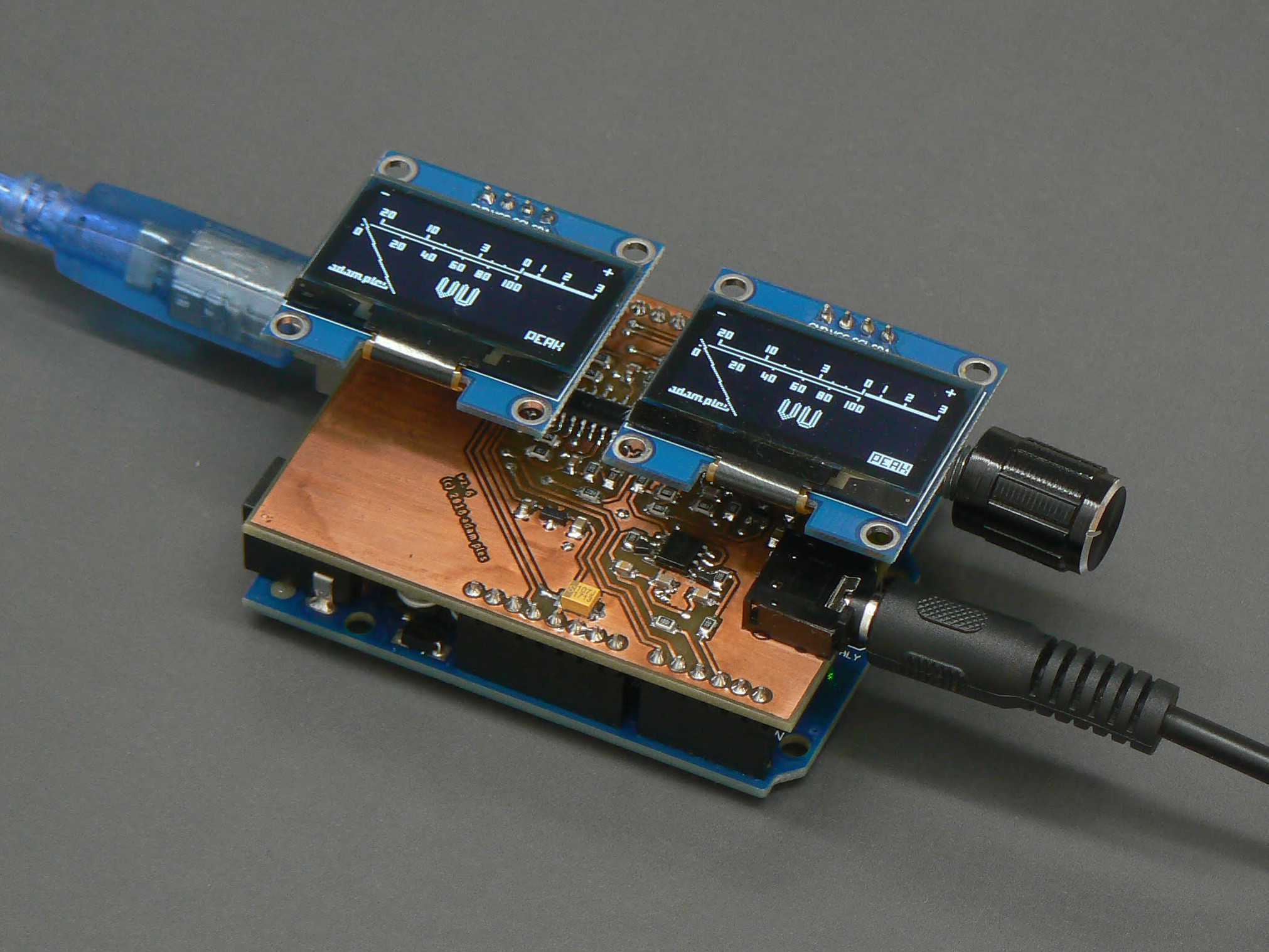
Sound to Light Color Shield for OLEDUINO v2
An Introduction to RF Theory, Practices, and Components: The Ins and Outs of RF
The Growing Decentralization of Power Grids
20×4 character alphanumeric I2C OLED shield for Arduino MKR series.
David Johnson-Davies published another great tiny project.
Sasa Karanovic build an analog monitoring system that is able to show your computer’s resources on 4x beautiful dials.
Definitely, Arduino has made it easy for anyone to learn electronics and programming of modern microcontrollers.
This article describes a set of minimal I2C routines for the new 0-series and 1-series ATtiny and ATmega microcontrollers.
A volume unit (VU) meter or standard volume indicator (SVI) as it’s sometimes called, is a device which displays the audio signal ...
The SparkFun BME280 Atmospheric Sensor Breakout is the easy way to measure barometric pressure, humidity, and temperature...
Andy C @ burningimage.net build a tiny board that is able to monitor possible activity on your hotel’s safe, so to be sure that n...
David Johnson-Davies introduces us to the new ATtiny series microcontrollers and shows us how to program then with Arduino IDE.
“attiny85-spectrum” is a 32 band audio visualizer using an ATTiny85 and an SSD1306 OLED display.
On previous tutorials on our website, we have covered the use of several displays, LCDs, and TFTs, with diverse Arduino boards.
This is a small board that plugs into one of the headers on an Arduino Uno or other board to provide 4Mbytes of non-volatile...