Join the Community
Main Menu
ST Combines Gyroscopes and Accelerometers in Automotive Safety Sensors
Industrial Desktop CNC ToolDance X1 Offers 5-Axis Machining Capability
ZOTAC ZBOX PRO CM5-PICO Packs Dual 4K HDMI into a Fanless Industrial PC
IBM Plans Early Nanostack PDK for 3D Transistor Chip Design
Polyimide Tape for PCB Masking: Avoiding Edge Lift and Residue
Prevent Post-Launch Application Failures with Real-World Network Simulation
The Approach to AI Infrastructure Is the Real Bubble
Mastering the Curve: Layout Strategies for FPC Bend Radius and Reliability
Single Pair Ethernet: One Twisted Pair, Full Ethernet Performance
Analog To Digital Conversion - Sampling and Quantization
Positive Feedback in Electronic Circuits
Temperature Sensors
High Current Half Bridge with Over-Current Shutdown
3-Wire Electret Microphone Pre-Amplifier
12W Step Up DC-DC Converter using MAX1771
Sound to Light Color Shield for OLEDUINO v2
An Introduction to RF Theory, Practices, and Components: The Ins and Outs of RF
The Growing Decentralization of Power Grids
Gustavo Reynaga shows us how to you can flash your ESP-01 and esp-201 with Arduino IDE and upload any other firmware with ESP...
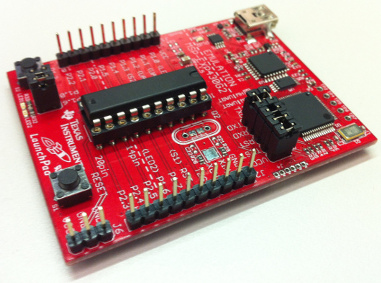
Rahul Sreedharan introduces us to TI’s MSP430 microcontroller using LaunchPad board.
A self-igniting candle implemented using AVR and PIC microcontrollers.
This instructable shows how to test an ESP board on bread board without soldering, especially for ESP-07 and ESP-12(E) and may be...
Shawon Shahryiar @ embedded-lab.com introduces us to Tiva C series microcontrollers from TI.
A Basic board to test the Atmel SAMD09.
HackPOD is a fast and powerful electronics development platform in a portable smartphone form factor.
Microchip announced MPLAB® Harmony Graphics Composer (MHGC), a modern and flexible graphical user interface (GUI) composer tool.
Raj over at Embedded Lab has designed a development board for PIC16F1938: The PIC16F1938 is a versatile 28-pin MCU belonging to...
Yahya tipped us with his latest tutorial about flashing EFM32 MCUs with OpenOCD using FT2232H adapter.
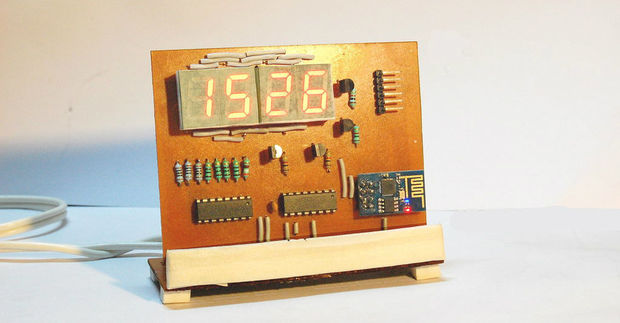
This project is a wifi synchronised desktop clock using 7-segment displays.
educ8s.tv uploaded a new video comparing the performance of ESP8266 Arduino board with the most popular Arduino boards.