
Grapple Probe – An Isolated USB CMSIS-DAP Debug Probe with UART and I2C
Built for embedded development, the probe combines CMSIS-DAP debugging with UART and I2C interfaces while electrically isolating the target from the host computer.
Vermont-based Grapple Control Systems is preparing to launch the Grapple Probe, an open-source isolated CMSIS-DAP debug probe with built-in 2,500 V RMS galvanic isolation. Designed to protect your host computer and debugging equipment from the dreaded “magic smoke” caused by power supply mistakes, the probe supports standard SWD, SWO, JTAG, I2C, and UART interfaces.
The idea for the Grapple Probe was born out of a catastrophic hardware failure. The creators were prototyping a 24V stepper driver prototype when a reverse-polarity power connection damaged the breadboarded circuit and debugger. To prevent ground loops and avoid similar electrical-fault mistakes, they designed a probe that completely isolates the USB port from the target electronics.
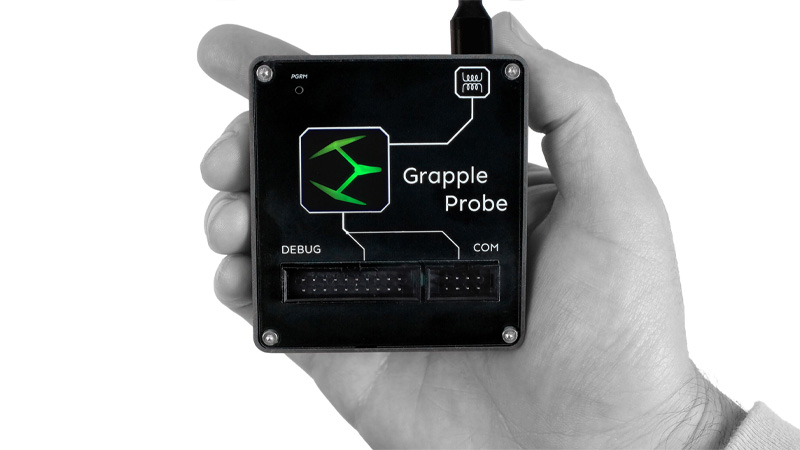
Grapple Probe – A debug probe that keeps the magic smoke where it belongs
Grapple Probe Specifications:
- Isolation: 400 V RMS continuous / 2,500 V RMS temporary galvanic isolation between the USB and debug/COM ports
- Debug Interfaces: SWD, SWO, and JTAG via a standard ARM 20-pin connector; up to 50 MHz SWD/JTAG clocks
- COM Port: UART (up to 12 Mbps) and I2C (Fast and Standard speeds) via standard 2.54 mm pitch header pins
- Target Voltage & Power:
- Signal voltage autosensing or manual adjustment from 1.8 V to 3.3 V
- Target detection and voltage following
- Switchable 5V, 400 mA power available on both the debug and COM ports to power the target board
- USB: USB Type-C acting as a compound device (CMSIS-DAP, USB serial port, and I2C)
- Dimensions: 71.5 x 66.4 x 18.1 mm
- Weight: 60 grams
- Enclosure: High-quality ABS injection-molded case
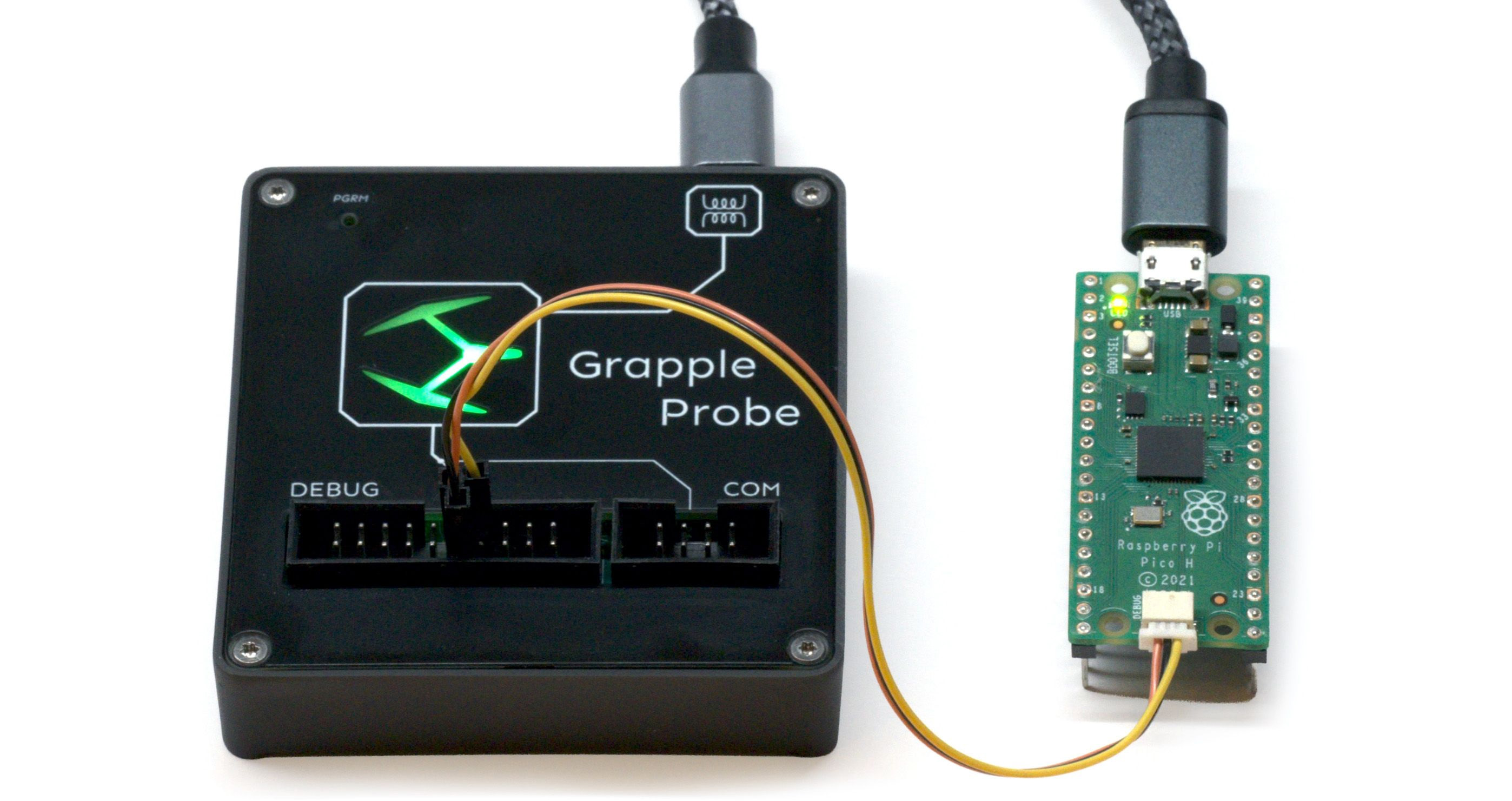
Grapple Probe connected to a Raspberry Pi Pico for microcontroller debugging.
This isolated CMSIS-DAP debug probe uses the CMSIS-DAP protocol for debugging and programming, which is supported by common embedded development tools. Its UART interface appears as a standard USB serial port, while the I2C interface operates as a USB bulk device in controller/master mode and can be configured through the provided software library. A command-line interface is also available for configuring power options.
The Grapple Probe software is open source, with the bulk of the probe firmware, CMSIS-DAP code, and Grapple Probe host tools licensed under GPL-3.0+, while other components use MIT and Apache-2.0 licenses. The GitHub repository currently includes the probe firmware, CMSIS-DAP library, host library and tools, USB-I2C library and tools, device information and packet-generation libraries, and testing tools. A Grapple Probe CLI 0.1.0 release is also available. The PCB schematics and case drawings are not included in the current repository and are listed separately as planned CC-BY-SA-4.0 releases.
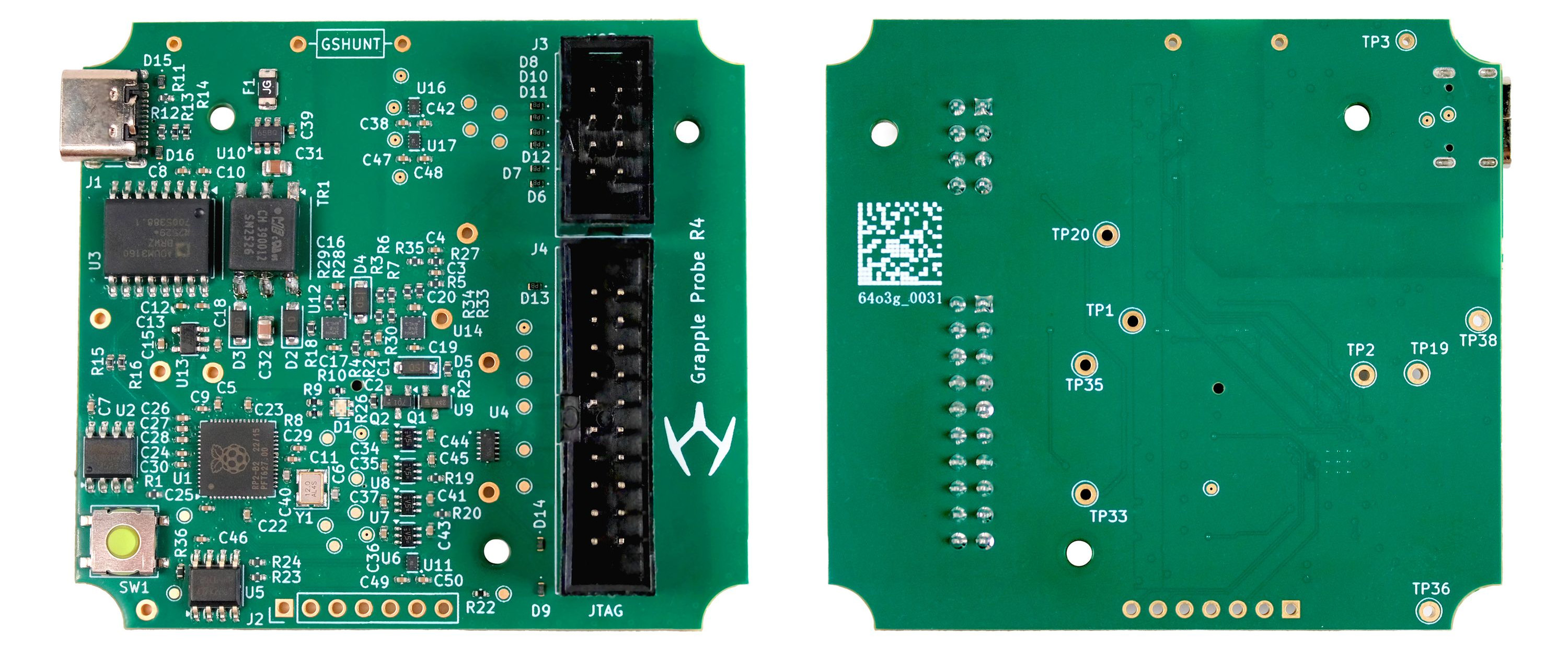
Grapple Probe PCB – Top (Left) and bottom (Right): Showing the main components, connectors, and test points.
We have previously covered several ARM debugging and programming tools, including the ULINKplus, Black Magic Probe, ctxLink, and Raspberry Pi Debug Probe, offering features such as SWD/JTAG debugging, UART connectivity, and CMSIS-DAP support. The new Grapple Probe adds galvanic isolation to this category, providing up to 2,500VRMS temporary isolation between the USB host and target electronics.
At the time of writing, the Grapple Probe is listed as Coming Soon on Crowd Supply.
Pricing details have not been announced yet, but interested users can register their email address on the project page to be notified when the crowdfunding campaign officially launches.
Images used courtesy of Crowdsupply.com


