
Hitachi Energy and Pakal Technologies Produce High-Voltage Power Modules
Hitachi will integrate Pakal’s insulated gate turn-off (thyristor) silicon power switch into ≥3.3 kV modules, aiming for 30% lower conduction losses than IGBTs for rail, renewables, and data centers.
Hitachi Energy and Pakal Technologies have announced a collaboration to bring Pakal’s insulated gate turn-off thyristor, the IGTO(t), into Hitachi’s high-voltage power module portfolio. The target voltage class is ≥3.3 kV, covering demanding applications such as rail traction, renewable energy converters, grid-scale energy storage, and data center power infrastructure.
Hitachi brings an established semiconductor manufacturing presence to the collaboration. The company has over a century of experience in power electronics and operates its own semiconductor fabrication facility. Pakal operates as a fabless power semiconductor designer, so the partnership pairs device innovation with an established manufacturing and module integration capability.
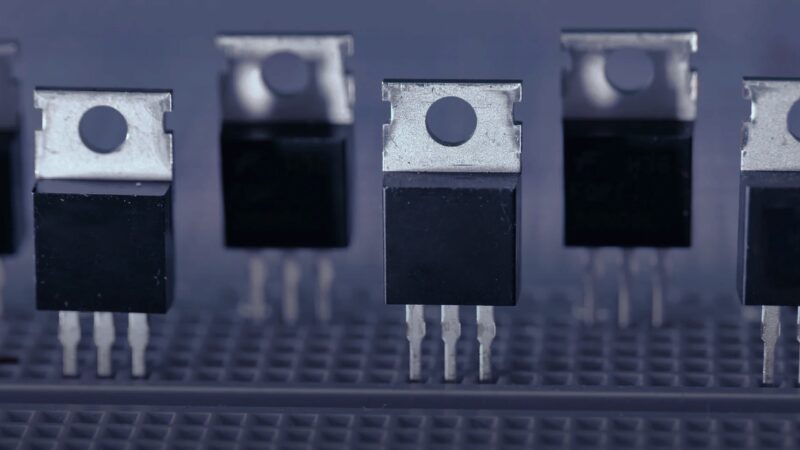
Pakal’s IGTO(t) high-voltage silicon power switch functions as a direct replacement for IGBTs. Image used courtesy of Pakal Technologies
The IGTO(t) Silicon Power Switch
The IGTO(t) is a fabless silicon power switch designed by Pakal. According to Hitachi, the IGTO(t) offers a 30% reduction in conduction losses at high current and temperature compared to the insulated gate bipolar transistor (IGBT). Conduction losses are typically the dominant loss mechanism in high-voltage, high-current applications where devices spend significant time in the on-state, so a 30% improvement in that regime is a meaningful number for system designers calculating thermal budgets and efficiency targets.
Importantly, Hitachi claims the IGTO(t) maintains compatibility with existing module architectures. That compatibility is a practical consideration that matters considerably in the power module market, where customers have established converter topologies, gate driver designs, and packaging standards. A device that requires wholesale redesign of surrounding hardware faces a much steeper adoption path than one that fits more directly into existing platforms.
At the system level, higher switching device efficiency reduces heat generation, which in turn can enable smaller or simpler cooling systems, higher power density within the same module footprint, or longer operating lifetimes at a given thermal limit. All of these are relevant in the high-voltage module market, where the cost of ownership over decades-long infrastructure lifetimes is often as important as the upfront module price.

Hitachi will integrate Pakal’s IGTO(t) platform into its power semiconductor modules to improve efficiency in high-voltage power conversion. Image used courtesy of Hitachi Energy
High-Voltage Power Conversion
Hitachi identifies applications where Pakal’s IGTO(t) platform integrated into its power modules will be of use. These applications share a common characteristic: they all involve large-scale power conversion at high voltages, where even small percentage efficiency improvements accumulate significantly over time.
Rail traction converters, for example, run continuously and at scale. Grid-tied converters for wind and solar installations operate for thousands of hours per year. Energy storage systems in grid applications cycle frequently. In each case, a 30% reduction in conduction losses in the switching device, assuming it holds at the system level after integration into a module, represents a meaningful operating cost reduction over an asset’s working life.
Data centers are a newer addition to this application mix for high-voltage power semiconductors, reflecting the growing scale of AI infrastructure and the increasing interest in medium-voltage power distribution within large facilities to reduce distribution losses.
No specific timeline for product availability has been announced, but the companies frame the collaboration as a long-term commercial partnership with production scale as an explicit goal.


