
Toshiba’s Switched Mode Power Supply Library: A Tool for Power Supply Circuit Design
With the Switched Mode Power Supply Library, you can select and download various circuit designs based on your actual requirements to verify the behavior of MOSFETs in your simulation environment.
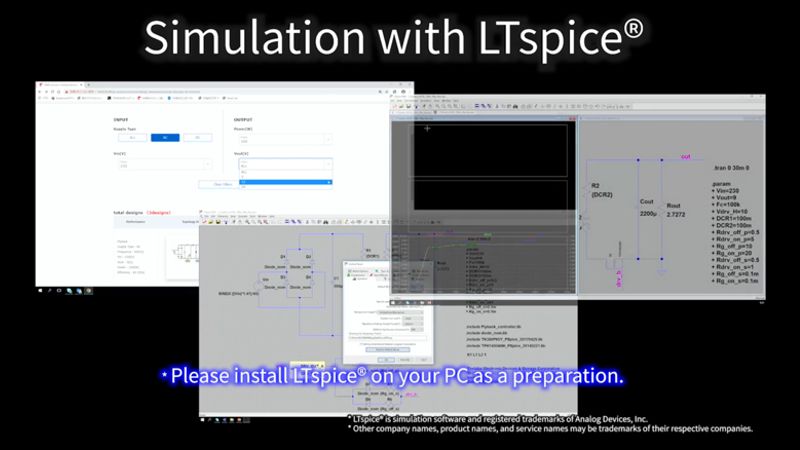
The Switched Mode Power Supply Library (SMPS Lib) by Toshiba is a tool for customizing power supply circuits based on user requirements. As parent company states, it is a highly convenient power MOSFET selection tool with a simple interface (only power supply specification input is necessary).
Toshiba’s SMPS Circuit Selection
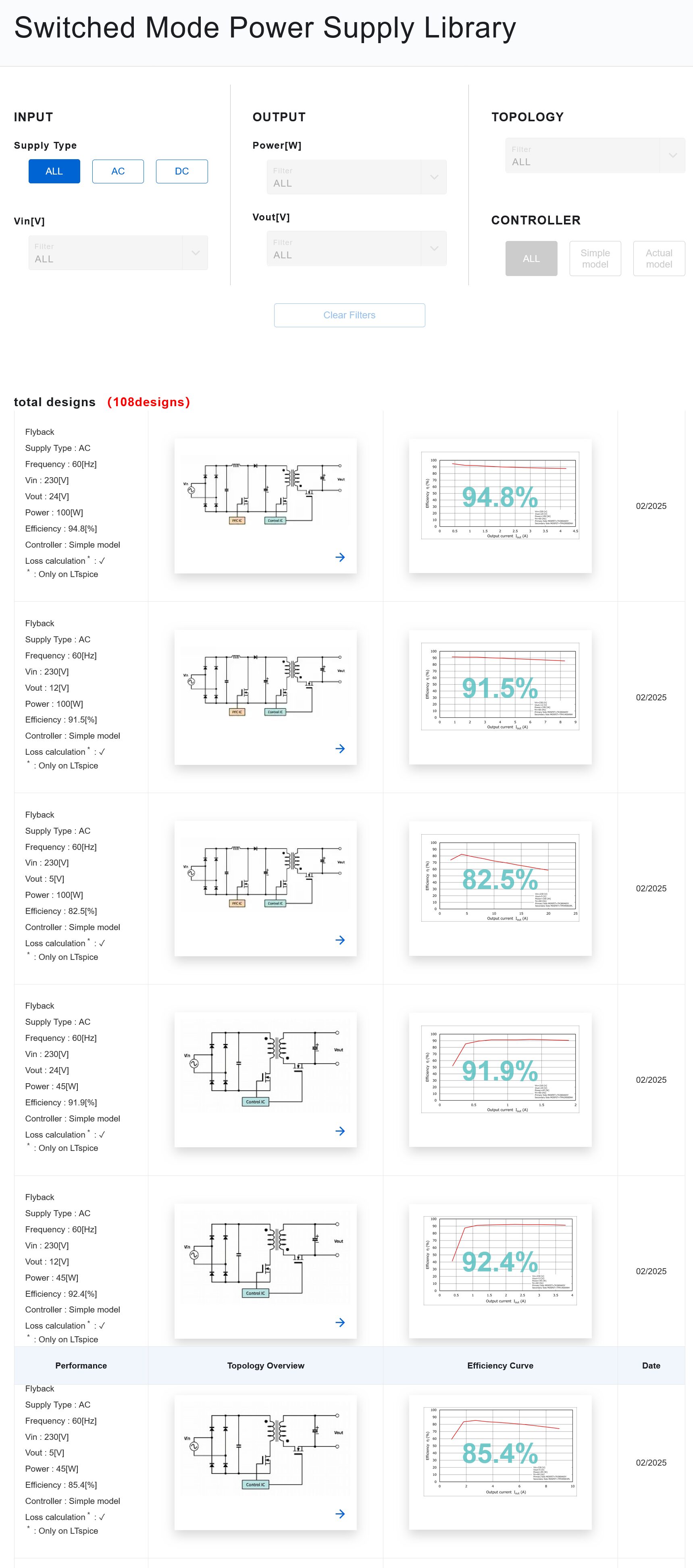
We can narrow the topology by voltage type and input-output conditions, adjust MOSFET selection and circuit constants, and check the relevant characteristics.
Convenience
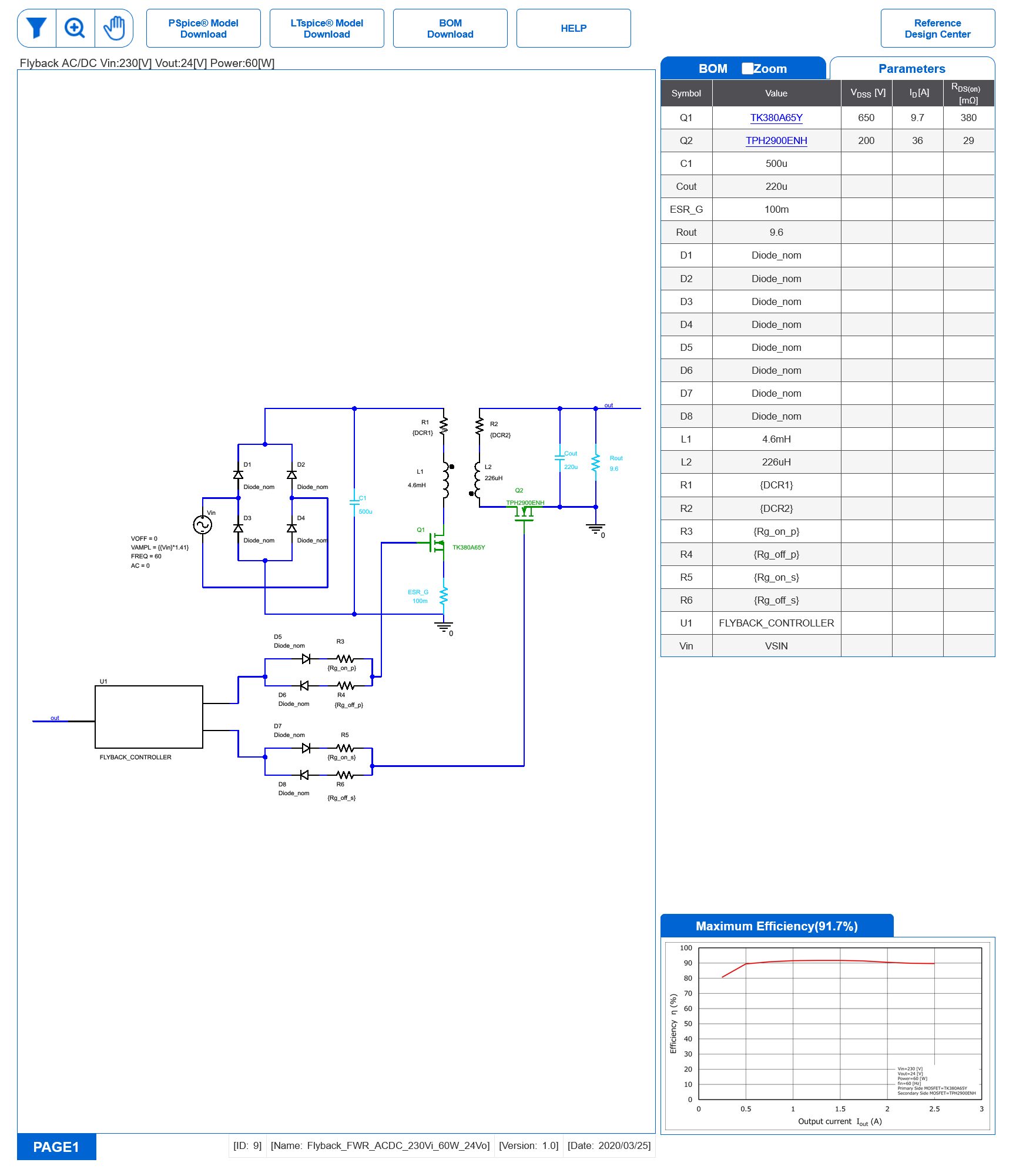
Additionally, the Simulation Files can be downloaded in a zip file. Users can select 4 criteria from the drop-down menu of the filtering function to choose an appropriate power supply circuit diagram for their application, incorporating compatible Toshiba components for the required specifications, and adjust circuit parameters freely based on operational conditions before downloading the necessary simulation file.
Specifications
- Design Selection (Users can select and download various basic power supply unit designs based on their actual requirements)
- The MOSFET Selection Tool allows users to input power supply specifications through a simple interface. (It allows users to change power MOSFETs and circuit constants)
- Degeneration Control Circuit (Many designs include a degeneration control circuit that simplifies the power supply control IC by extracting only necessary functions, saving verification time)
- Simulation Compatibility (Supports integration with simulation tools like LTspice and Cadence OrCAD for verifying MOSFET behavior)
- New Designs (Recently added designs include DC 400V output/500W and 750W class single output designs)
Additionally, for a design-specific outlook, we see the following specifications:
- Supply Type
- Frequency
- Input Voltage (optional)
- Output Voltage (optional)
- Input Current (optional)
- Output Current (optional)
- Power
- Efficiency
- Controller
Simulation Support through the SMPS Library
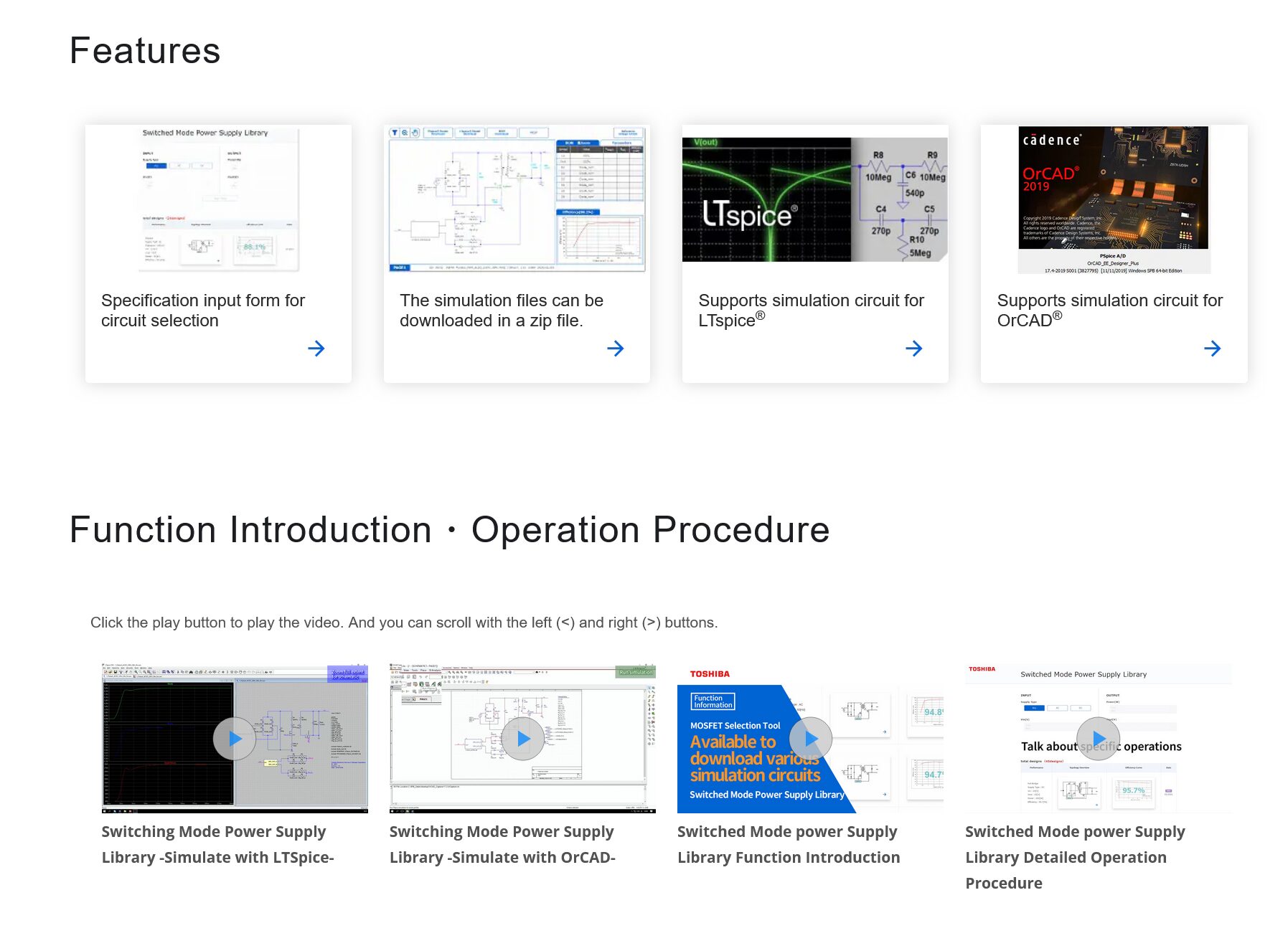
The SMPS Lib also supports simulation circuits for LTspice XVII or later iterations for basic topologies like Half Bridges, Buck Converters, Flybacks, and PFCs. Each circuit can be downloaded based on its convenience for the simulation environment.
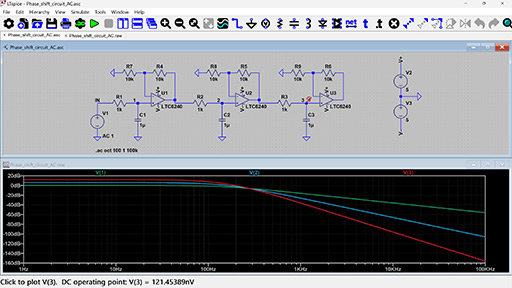
Supports simulation circuit for LTSpice
Similarly, simulation circuits are also provided for the OrCAD 17.4-2019 or later versions.
Supports simulation circuit for OrCAD
Apart from basic circuit design, customization, and simulation compatibility, many designs in the SMPS Lib contain Degeneration Control Circuits. They simplify the control and regulation of output parameters. This in turn reduces the verification time.
What the Future holds for this Toshiba’s SMPS Library
All-in-all the Toshiba SMPS LIbrary is an effective mode of circuit design. Its user-friendly nature is suited for beginners and convenient for seasoned professionals. The design library itself streamlines efficiency, as a lot of circuit topologies are present. This also streamlines the design process. Users input their specifications and receive complete designs, including a bill of materials (BOM) for necessary components.
The SMPS Lib finds use in the hands of Engineers working on power supply unit design, prototyping of compact and efficient power supply solutions, and MOSFET performance verification.
We can get more information about the Toshiba SMPS Lib at the Toshiba Site
Images used courtesy of toshiba.semicon-storage.com


Toshiba’s SMPS Library is a practical design aid that speeds up power supply development by providing ready-to-simulate reference circuits with matched MOSFETs and adjustable parameters. Its LTspice and OrCAD compatibility, along with built-in control concepts, makes it useful for both quick prototyping and validating MOSFET behaviour under real-world conditions.