
Microchip PIC64GX1000 Curiosity Kit: RISC-V Linux Dev Board with HDMI, mikroBUS, and Secure Boot Support
Microchip's Curiosity PIC64GX1000 Kit is a development platform built around the PIC64GX MPU family. It integrates a 64-bit RISC-V quad-core application-class processor designed to support Linux-based systems and real-time applications.
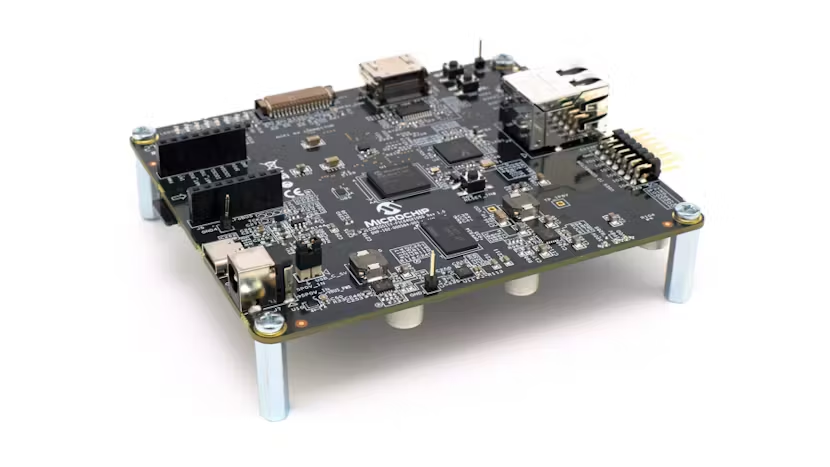
Microchip’s Curiosity PIC64GX1000 Kit is a development platform built around the PIC64GX MPU family. It integrates a 64-bit RISC-V quad-core application-class processor designed to support Linux-based systems and real-time applications. The processor features a five-stage in-order pipeline architecture that is not affected by Meltdown and Spectre vulnerabilities. It supports asymmetric multiprocessing and deterministic latencies, making it suitable for mid-range intelligent edge compute applications.
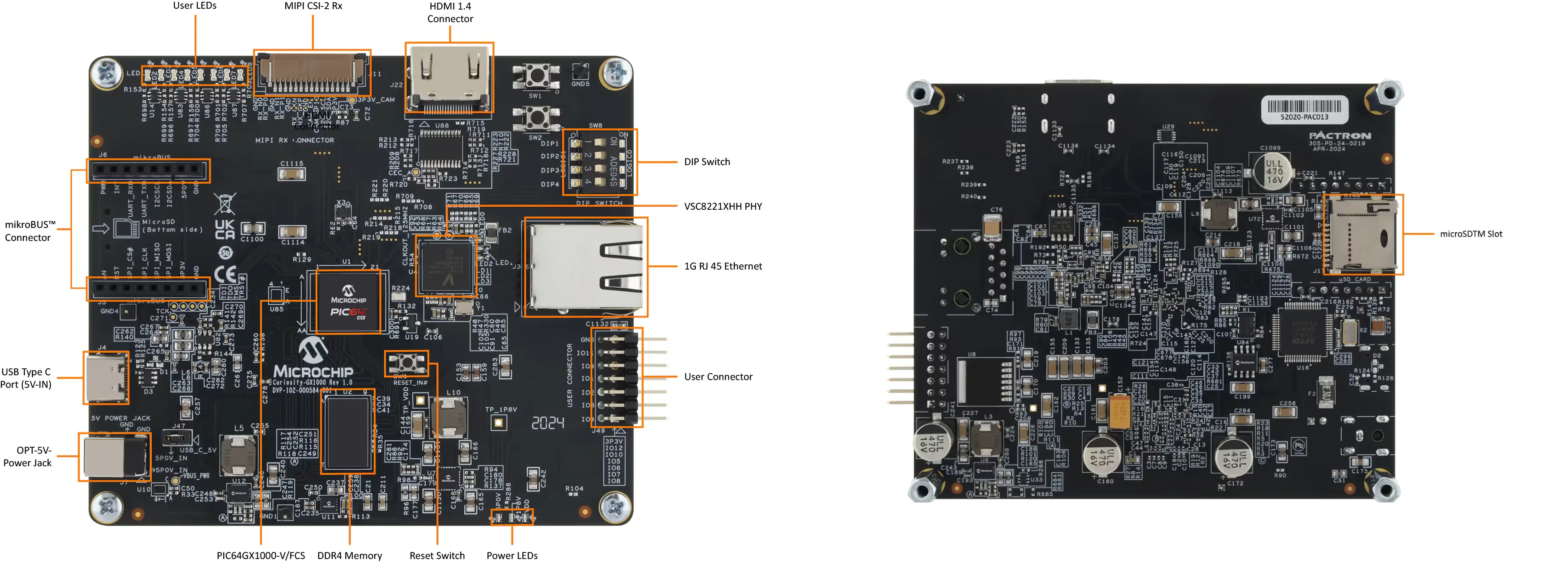
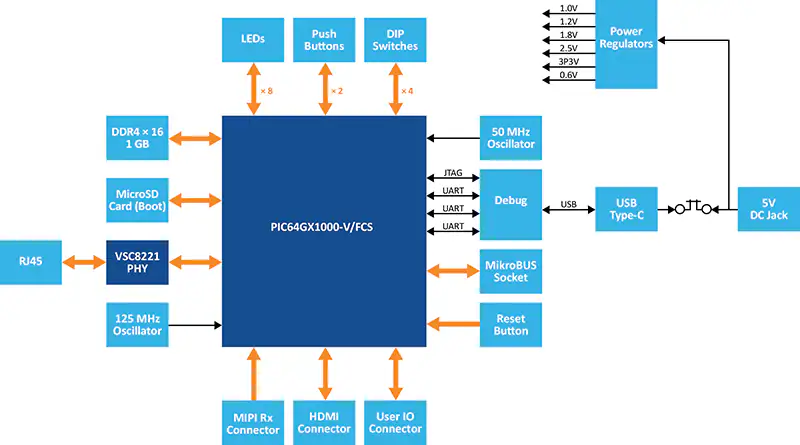
The kit includes 1GB DDR4 memory and a microSD card slot for Linux boot. It offers a Gigabit Ethernet interface, three UARTs accessible via USB Type-C, and a USB-to-JTAG interface for debugging. Peripheral expansion is supported via a MikroBUS header for Click boards, a MIPI CSI-2 Rx camera connector, and HDMI output. Communication with expansion boards is supported using standard protocols like I2C and SPI.
The PIC64GX MPU features a configurable processor and memory subsystem with secure boot and hardware key management features for secure operation. It is pin-compatible with Microchip’s PolarFire SoC FPGAs, allowing the reuse of existing designs and offering a path for system scalability. This kit is targeted for low-power, embedded compute systems requiring Linux support and secure operation.
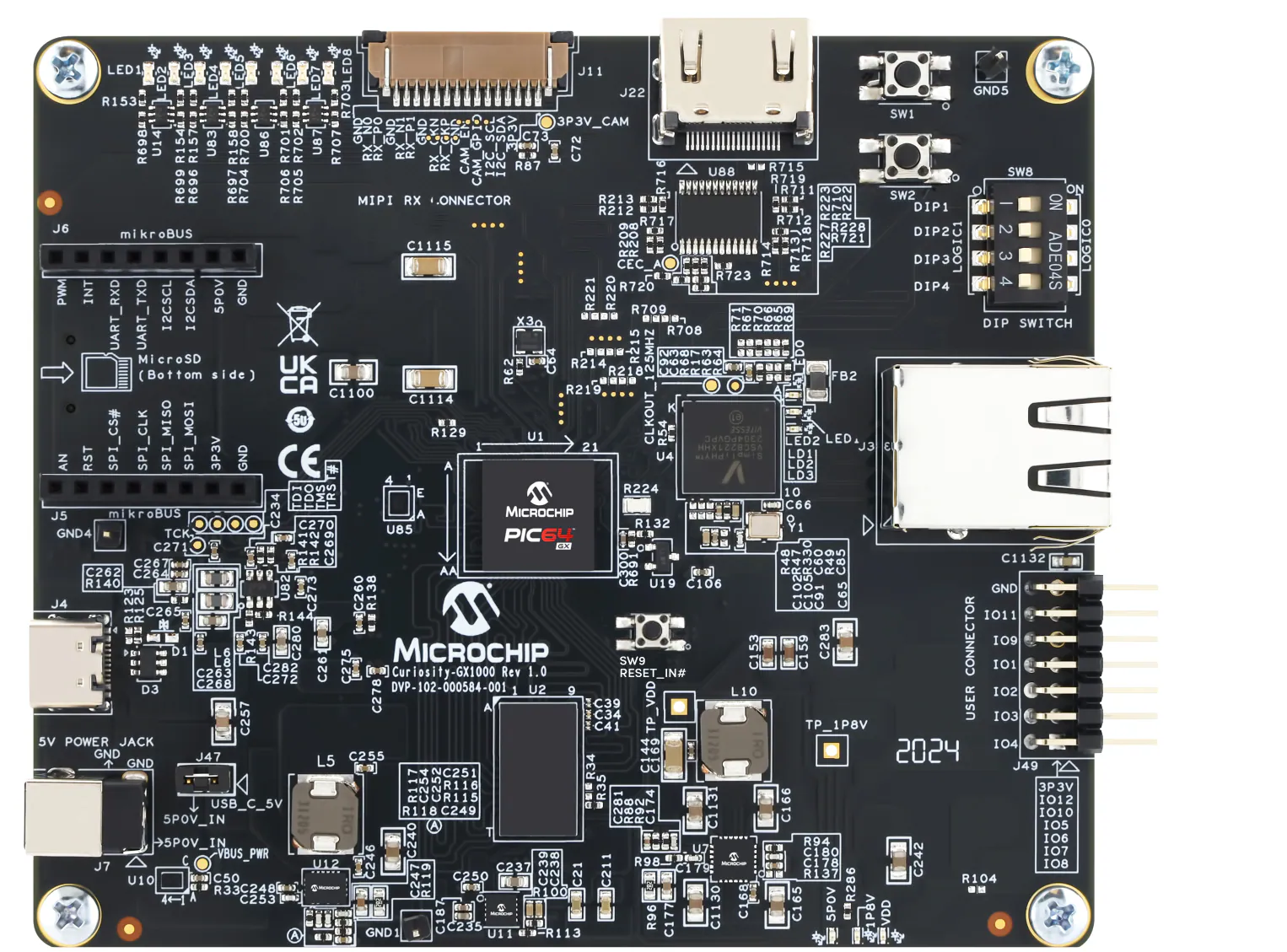
Microchip PIC64GX1000 Curiosity kit specification:
- Processor:
- 4x SiFive U54 RISC-V 64-bit application cores @ 600MHz
- 1x SiFive E51 RISC-V 64-bit monitor core @ 600MHz
- 3.125 CoreMarks/MHz, 1.714 DMIPS/MHz
- In-order 5-stage pipeline (not affected by Meltdown/Spectre)
- Supports Linux and real-time workloads (AMP-capable)
- Memory and Storage:
- 1GB LPDDR4 RAM (MT40A512M16TB-062E)
- 32GB pre-installed microSD card (bootable with Linux)
- Networking and Connectivity:
- VSC8221 Gigabit Ethernet PHY with RJ45 (10/100/1000 Mbps)
- 3x UART (via FT4232HL USB-to-UART bridge and USB Type-C)
- Display and Expansion:
- HDMI 1.4 video output
- MIPI CSI-2 Rx connector for camera modules
- mikroBUS headers for Click boards
- 14-pin User IO connector (12x GPIO, 3.3V/power rails)
- Debugging and Programming:
- On-board FlashPro5 debugger (USB-to-JTAG)
- 2x push buttons (SW1–SW2) for debugging
- 1x reset button (SW9)
- 4x DIP switches (SW8)
- 8x user-addressable debug LEDs (LED1–LED8)
- Power:
- 5V/3A via USB Type-C (J4) or 5V barrel jack (J7)
- Jumper selectable power source
- Dimensions: 104mm × 84mm
The PIC64GX1000 Curiosity Kit supports free, open-source development using Visual Studio Code with C/C++, Embedded Tools, and CMake extensions. Required tools include Git, Python 3.8+, and CMake 3.27.1+. Windows users need UsbDriverTool, while Linux users must install libusb, libftdi, libhidapi, and unzip. The kit supports Canonical’s official Ubuntu RISC-V builds (24.04 LTS and 25.04), enabling quick setup. However, using features like GPIO or mikroBUS requires building a custom OS image, as these are not supported in Microchip’s application notes.
The Curiosity Kit is available for purchase directly from Microchip for $150 and can also be ordered through Avnet. For more information, you can visit the product page and the official GitHub repository.
Thanks to Hackster.


