
Murata Unveils Type 1SC-iSIM Module With “Out-of-the-Box” Connectivity
Murata has directly integrated SIM functionality into its Type 1SC module, saving space and simplifying connectivity in compact, low-power IoT applications.
In a development for the cellular IoT market, Murata has launched the Type 1SC module with integrated SIM (iSIM) functionality, designed to simplify the development and deployment of devices in low-power wide-area (LPWA) networks. The new module features built-in cloud connectivity from 1NCE, serving as a compact, pre-provisioned, and globally compatible IoT solution.
For engineers building a new generation of low-power devices, such as asset trackers, smart meters, or industrial sensors, the complexities of cellular integration often extend beyond the hardware. Sourcing, provisioning, and managing physical SIM cards for thousands of devices can introduce significant logistical and manufacturing challenges. Murata’s new Type 1SC-iSIM module addresses these issues by embedding connectivity directly into the module, eliminating the need for a traditional SIM card slot and simplifying the supply chain.
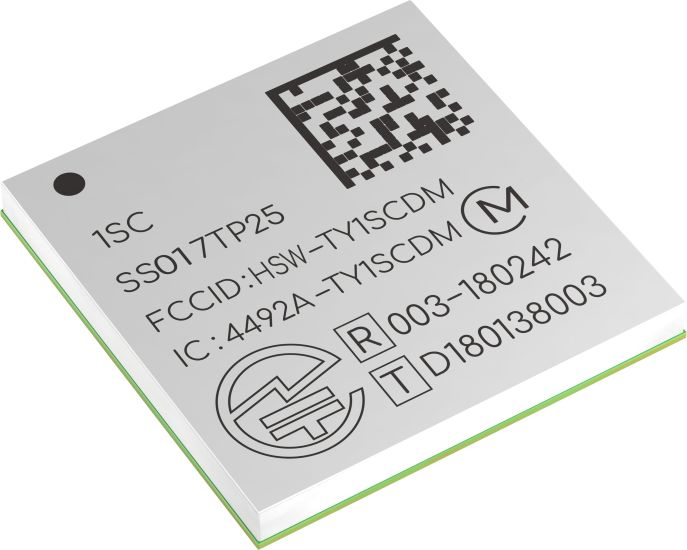
Murata’s Type 1SC iSIM-compatible LPWA module features pre-installed cloud-based connectivity from 1NCE. Image used courtesy of Murata
Type 1SC-iSIM IoT Module
The Type 1SC-iSIM module is built around the Altair ALT1250 chipset, supporting both LTE-M and NB-IoT standards. It has been engineered with a focus on space efficiency, enabling manufacturers to create smaller devices or free up board space for additional components.
A key feature is the integration of iSIM functionality. Unlike traditional SIM cards, the iSIM is a secure element built directly into the module’s hardware. This not only saves valuable board real estate but also streamlines the manufacturing process by removing a dedicated soldering step. This simplified process contributes to higher production yields and reduced costs, critical factors for mass-market IoT applications.
The module and its pre-integrated connectivity are optimized for low-power, low-data applications. It features a low-power mode with current draws of just 43 µA in eDRX and 1.4 µA in power saving mode (PSM), essential for devices that need to operate for years on a single battery. The host interface is a UART, making it a familiar and straightforward component for engineers to integrate into their microcontroller-based designs.
Key Technical Specifications
Here are some key specifications for the Type 1SC module (part number LBAD0XX1SC):
- Dimensions: 11.1 × 11.4 × 1.5 mm (max)
- Operating Temperature: −40 °C to 85 °C
- Supply Voltage: 2.85 V to 4.35 V
- Interface Voltage: 1.8 V
- Chipset: Altair ALT1250
- Modulation: LTE Cat.M1/NB-IoT Release 13 (upgradable to Release 14 via software)
- Antenna: Requires an external antenna
- Transmit Power: +23 dBm (max)
- Sleep Mode Current: 43 µA (eDRX) and 1.4 µA (PSM)
- Host Interface: UART
- Certifications: FCC, IC, RED, TELEC, KC, NCC, GCF, PTCRB
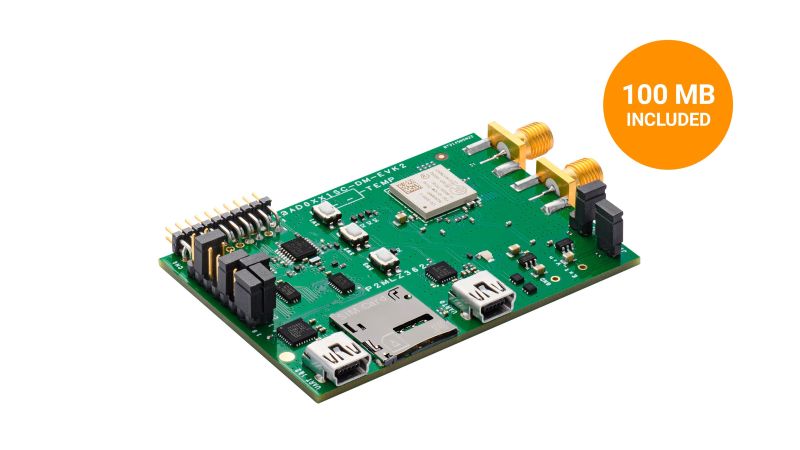
The LBAD0XX1SC-DMS-EVK-B evaluation board with Murata’s Type 1SC-iSIM module. Image used courtesy of Embedded Works
Streamlining the IoT Ecosystem
The collaboration with 1NCE provides a significant out-of-the-box solution. Each module is bundled with a pre-integrated, cloud-based connectivity plan that includes 50 MB of data, valid across 173 countries. This model is designed to dramatically reduce the complexity of deploying a global fleet of IoT devices, as engineers no longer need to manage complex carrier relationships or regional SIM card sourcing.
Murata has made the module and its evaluation kits available through Embedded Works. This indicates a focus on supporting developers from the initial design phase through to production. As the cellular IoT market continues to grow, solutions that streamline the path from prototype to mass production will become increasingly valuable. The Type 1SC-iSIM module represents a notable step in this direction, offering a compact, pre-certified, and globally connected solution for the next generation of LPWA devices.


