
Muzi Works R1 Neo Meshtastic Device with Dual GPS, IP68, and LoRa Connectivity
Portable water-resistant R1 Neo offers real-time location sharing, long-range LoRa messaging, and 3-day battery backup for off-grid communication.
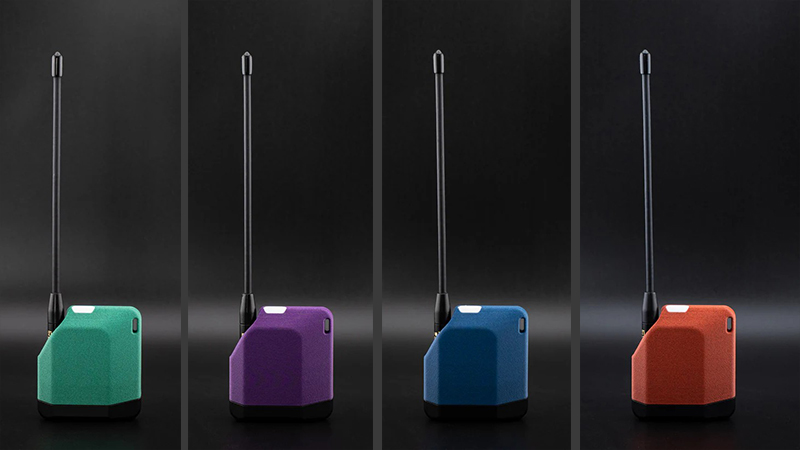
Muzi R1 Neo Meshtastic Device
Muzi Works R1 Neo is a diminutive, water-resistant Meshtastic portable device that lets you communicate over long distances and track your location using built-in dual GPS. The company made and put together this model in Atlanta. It is the first one to use a custom PCB with a dedicated I/O controller and built-in power management.
The R1 Neo is a portable lithium-ion polymer battery-powered LoRa wireless node that comes with the Meshtastic firmware bundled with it. This lets you send messages and share GPS coordinates when the device is not connected to the grid. The Nordic nRF52840 microcontroller and the Semtech SX1262 LoRa transceiver function in tandem to broadcast data through radio waves, supporting either the US/AU 915 MHz or UK/EU 868 MHz frequency bands. A dual-navigation GNSS module (GPS/BDS) provides assurance that the device is precisely at the right place, and an onboard RTC keeps track of time accurately even when the device is using less power. The R1 Neo is 16% smaller than the previous R1 generation. It has an aircraft-grade aluminum base and a PETG carbon fiber enclosure. The device encompasses sealing gaskets, a custom SMA connector with an O-ring, and an IP68-rated USB-C port, which makes it better at keeping water and dust out. A built-in buzzer lets user hear message alerts, and battery temperature sensing keeps the device safe while it’s powering up and when users use it for an extended period of time.
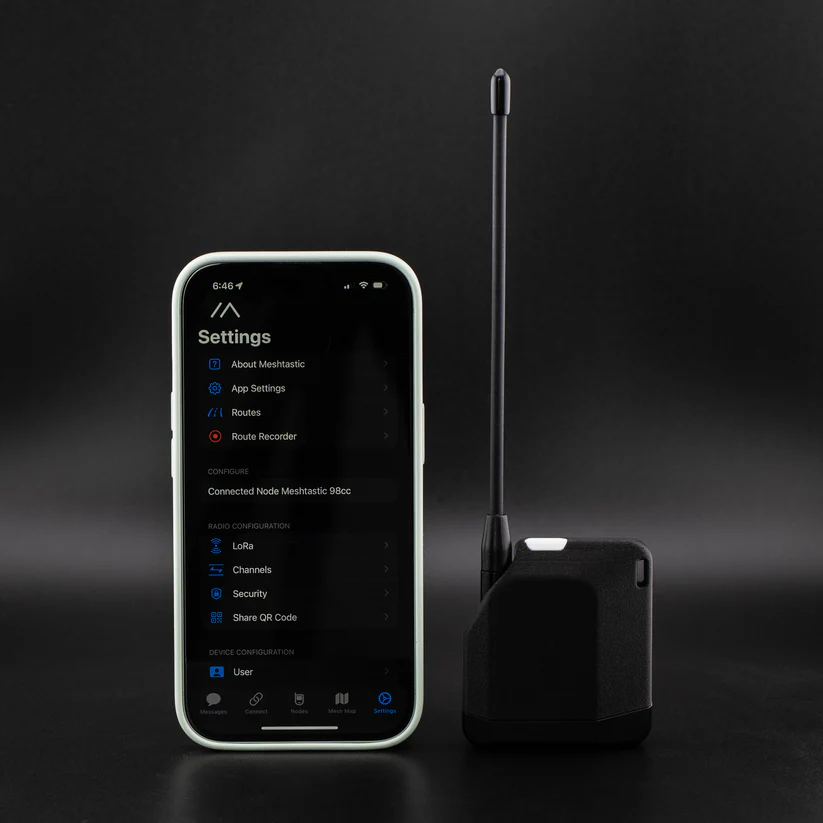
Muzi R1 Neo Meshtastic Device and App
Muzi Works R1 Neo specifications:
- SoC: Nordic Semiconductor nRF52840
- CPU: 32-bit Arm Cortex-M4F microcontroller @ 64 MHz
- Memory: 1 MB Flash
- Storage: 256 KB SRAM
- Wireless: Bluetooth 5.0, Thread, ANT, Bluetooth Mesh, 802.15.4 (Zigbee), 2.4 GHz proprietary connectivity
- Audio: Built-in buzzer for message notifications
- Wireless:
- Bluetooth 5 LE – Via nRF52840 SoC
- LoRa: Semtech SX1262 module (Wio-SX1262), 868–915 MHz (External Antenna support)
- Output Power: Up to +22 dBm
- Frequency Range: 868 MHz to 915 MHz
- Modulations: LoRa, (G)FSK, Long Range FHSS
- Sensitivity: Down to -148 dBm
- GNSS: AT6558 module supporting GPS + BDS BeiDou supporting A-GNSS
- Cold-start Acquisition Sensitivity: -148dBm
- Tracking Sensitivity: -162dBm
- Positioning Accuracy: 2.5m (CEP50, open field)
- up to 3-day battery life with GPS on
- Antenna: Rod-shaped rubber 2dBi LoRa Flexible Whip Antenna for 868–915 MHz
- USB:
- USB Type-C port for power and debugging/flashing
- IP68 rated USB-C connector with built-in gasket
- Expansion: Custom SMA connector with an O-ring
- Misc:
- Integrated Soft Touch Button for Power ON/OFF
- LED indicator
- Onboard RTC for accurate timekeeping
- Power:
- USB Type-C input: 5V/1A
- 1500mAh protected Lithium-ion polymer battery
- Features: Battery temperature safety sensing, Fast Charging within 2 Hours
- Enclosure:
- Aircraft grade aluminum base with 3D printed PETG Carbon Fiber
- Water resistant design
- Enclosure base sealed with a compression gasket
- Dimensions:
- Case: 58.0mm x 63.5mm x 17.8mm [2.3 in x 2.5 in x 0.7 in]
- Antenna length: 17cm [6.7in]
- Weight: 84g [2.96oz]
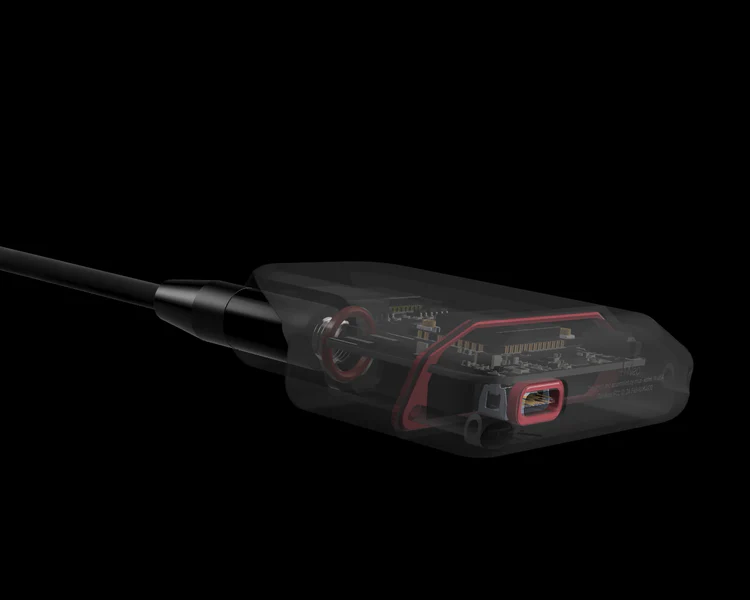
Muzi Works R1 Neo inside and tripple gasket settings
The R1-Neo LoRa device is fully compatible with Meshtastic backers and will continue to get software updates. Previously, we covered several Meshtastic-compatible devices such as the SenseCAP Indicator, XIAO ESP32S3, SenseCAP T1000-E, and more. However, the Muzi Works R1 Neo is a completely new product for us.
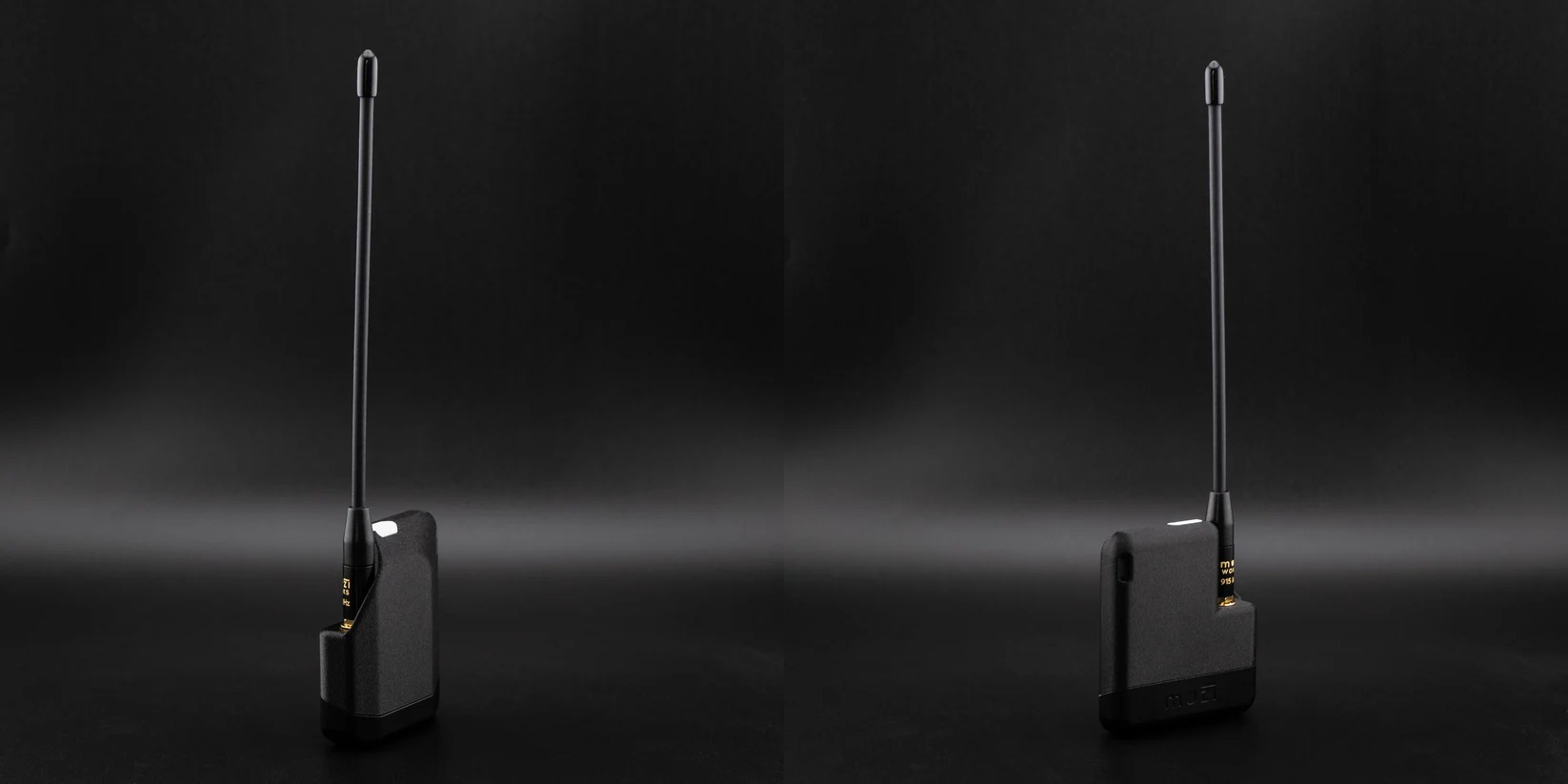
Muzi Works R1 Neo side view
The website for the product says that the R1 Neo is assembled and put together in the US and is covered by a one-year warranty. Users have the opportunity to pre-order for $89.00 USD. Shipments are scheduled to begin at the end of the month. The package comes with the R1 Neo device, a whip antenna (either 868 MHz or 915 MHz), a USB-C to USB-C cable, and a guide to commencing use quickly.
All images courtesy of Muzi Works


