
AGS Devices and Celus Accelerate End-to-End Design to Procurement
The Celus Design platform is now available through AGS Devices, featuring AI-powered application-ready schematic generation with AGS Devices’ real-time component sourcing.
AGS Devices has integrated the Celus Design platform into its service offering through a co-branding and licensing arrangement. The partnership aims to bridge the gap between early-stage circuit design and component procurement by combining Celus’s AI-powered design automation with AGS’s global distribution network.
Engineers accessing the platform through agsdevices.celus.io can now generate schematics and bill of materials (BOMs) based on functional requirements while simultaneously receiving component availability and lifecycle information.
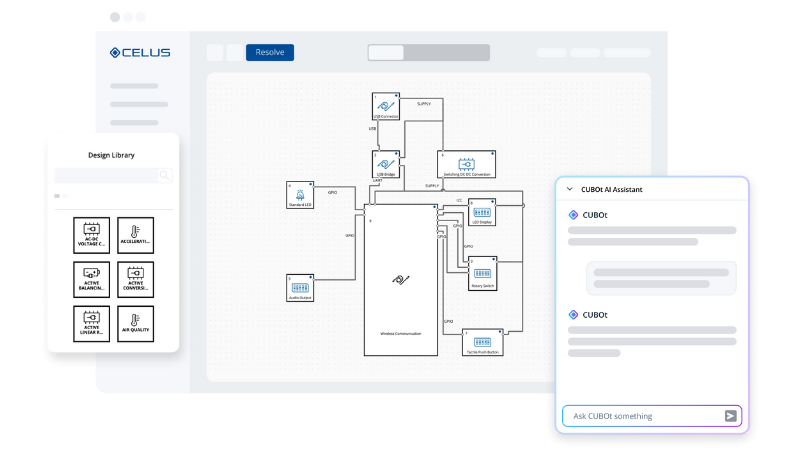
The Celus Design platform is now supported by AGS Devices’ knowledge in component sourcing. Image used courtesy of AGS Devices
Celus Design Platform
The Celus Design platform operates in the cloud and requires no local installation. Engineers define project requirements using either structured templates or the integrated AI design assistant, which can generate block diagrams and suggest component ecosystems. The system then evaluates options from the Celus CUBO component database, which contains information on millions of electronic components. According to the companies, the platform can produce application-ready schematics in under an hour, with some workflows completing in minutes.
Technical Workflow and EDA Integration
The design process begins with requirement capture, where engineers specify functional parameters rather than specific part numbers. The platform interprets these requirements and matches them to reusable circuit blocks from its database. For each functional block, Celus presents multiple schematic alternatives along with component recommendations, interface specifications, and electrical parameters.
The system includes what the companies term “BOM intelligence,” which provides real-time data on component pricing, stock levels across multiple distributors, and lifecycle status. This data layer updates dynamically as engineers modify their designs, allowing them to evaluate sourcing implications during the schematic phase rather than after completion. When component availability issues arise, the platform can suggest alternatives that maintain electrical equivalence within the circuit context.
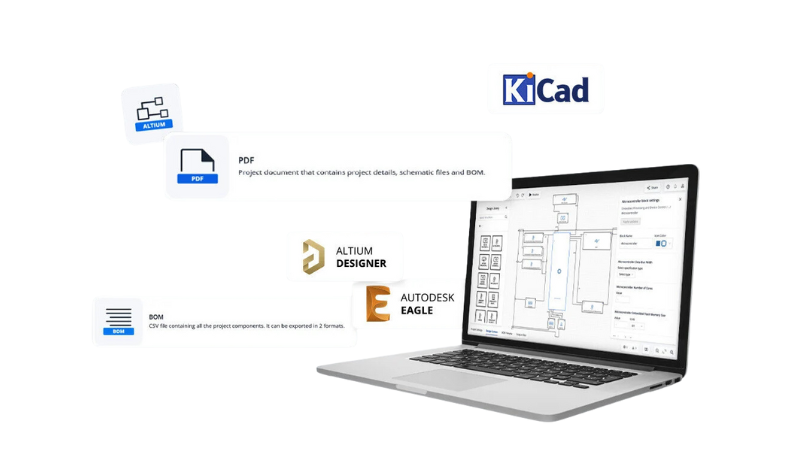
Projects can be directly exported to EDA tools, including Altium Designer, Autodesk EAGLE, and KiCad. Image used courtesy of Celus
Output files support direct integration with common EDA tools. The platform exports to Altium Designer, Autodesk EAGLE (Fusion), and KiCad formats, allowing engineers to import generated schematics for detailed layout work. BOMs export in standard formats compatible with procurement systems, maintaining component parameters, manufacturer part numbers, and reference designators.
Component Validation and Supply-Chain Management
AGS Devices’ role in the partnership centers on component validation and supply-chain management. The distributor’s inventory system connects to the Celus platform, providing visibility into component availability across AGS’s global network. When the platform suggests components, AGS validates these selections against current stock levels and can flag potential obsolescence issues or long-lead-time parts during the design phase.
The integration addresses a common engineering challenge: identifying component availability issues after schematic capture. By surfacing this information earlier, the workflow reduces the likelihood of design iterations caused by sourcing constraints. AGS can also suggest form-fit-function replacements when preferred components become unavailable, with the platform maintaining electrical context to evaluate whether substitutions are viable.
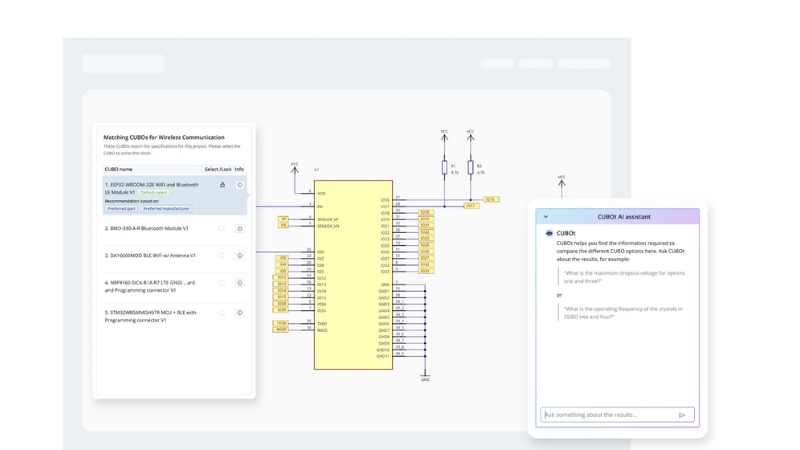
AGS Devices and Celsus’ partnership aims to simplify and accelerate the design-to-procurement process. Image used courtesy of Celus
Accelerating Design to Procurement
Celus’ integrated platform targets several engineering workflows. For prototype development, engineers can rapidly evaluate multiple design approaches by generating and comparing alternative schematics. In production environments, the BOM intelligence layer helps design teams account for component availability and pricing during architecture decisions rather than discovering constraints later. Organizations managing component obsolescence can use the lifecycle data to identify at-risk parts during the design phase.
The system supports a range of applications, including IoT devices, power management circuits, automotive electronics, and industrial control systems. Engineers working on multi-board systems can leverage the reusable circuit blocks to maintain consistency across designs while adapting functional parameters to specific requirements. The platform’s requirement-based approach may prove particularly useful for engineers working outside their core specialization, as it provides validated circuit topologies based on functional goals rather than requiring detailed component knowledge across all domains.


