
Nanomade and PolyIC Unveil Transparent Capacitive Touch and Force Sensing Foil
The new transparent film combines the companies’ proprietary technologies to enable capacitive touch and ultra-sensitive pressure sensing on human-machine interfaces across a wide range of industries.
In the current landscape of industrial and consumer design, there is a clear shift toward minimalistic, “hidden-until-lit” interfaces. While transparent capacitive touch technology is a staple of modern electronics, it historically could not detect pressure without sacrificing optical clarity. Standard capacitive sensors are also prone to false activations and often fail when used with gloves or in humid environments.
To address these limitations, Nanomade and PolyIC have developed a transparent film that integrates both capacitive touch and ultra-sensitive force sensing into a single, flexible stack. This innovation allows for seamless integration into displays and decorative surfaces without compromising aesthetics or light transmission.
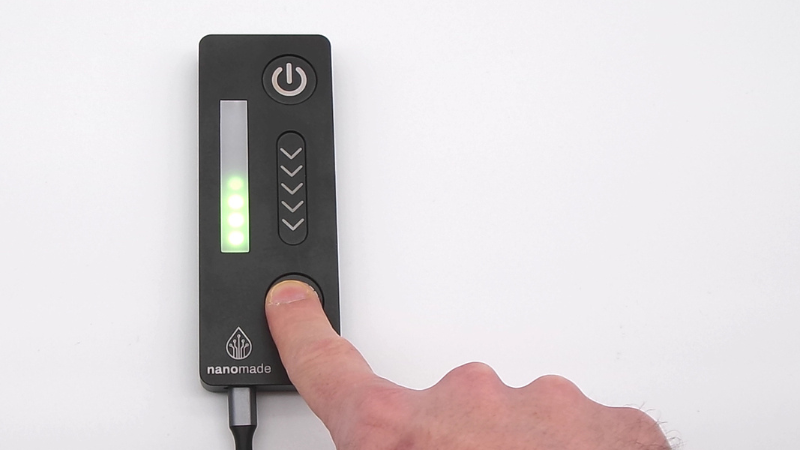
Nanomade utilizes quantum tunneling technology to combine capacitive and force sensing on a single sensor. Image used courtesy of Nanomade
Quantum Tunneling at the Nanoscale
The core of this new sensing capability is Nanomade’s proprietary nanoparticle-based ink, which operates on the principles of quantum tunneling technology. In a traditional strain gauge, resistance changes as a material is physically stretched or compressed. Nanomade’s sensors take this further by utilizing the “tunnel effect” at the atomic level.
When the nanoparticle ink is deposited onto a substrate, electrons can “jump” or tunnel between conductive nanoparticles separated by infinitesimal gaps. As the material undergoes micro-deformation from a user’s press, these gaps change in size. A slight compression narrows the gaps, significantly increasing the electron flow and lowering resistance. According to Nanomade’s internal benchmarks, this quantum-based approach is up to 75 times more sensitive than a standard strain gauge, allowing the sensor to detect forces as light as a few grams.
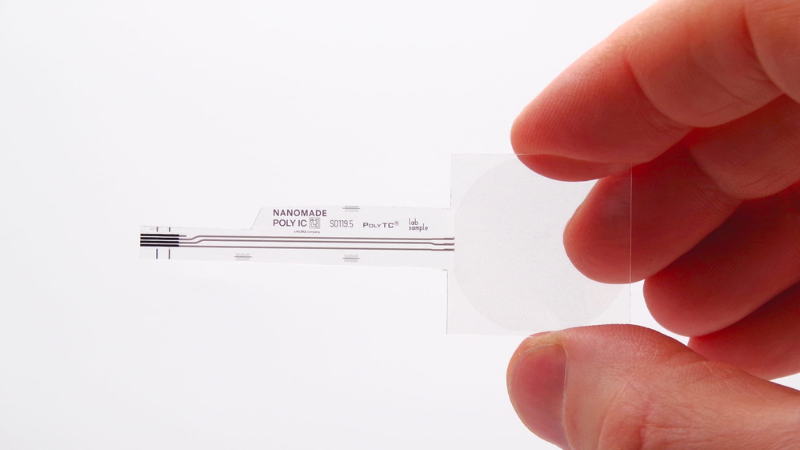
Nanomade has integrated its proprietary nanoparticle-based ink with PolyIC’s transparent flexible capacitive film. Image used courtesy of Nanomade
Robust Interaction in Real-World Conditions
Nanomade has layered its nanoparticle ink onto PolyIC’s transparent flexible capacitive film. The resulting transparent force and touch foil provides a multi-modal sensing experience. This combination allows systems to distinguish between a light hover, a soft touch, and a deliberate press. For engineers, this adds a critical layer of intentionality to user input, particularly in safety-critical applications.
Because force sensing relies on mechanical deformation rather than skin conductivity, the foil remains fully functional in conditions where capacitive sensors typically struggle. This includes reliable operation while wearing heavy gloves and robust performance in wet or humid environments. Additionally, the high sensitivity of the quantum sensors enables gradual haptic feedback, with the response intensity directly mapped to the force of the press.
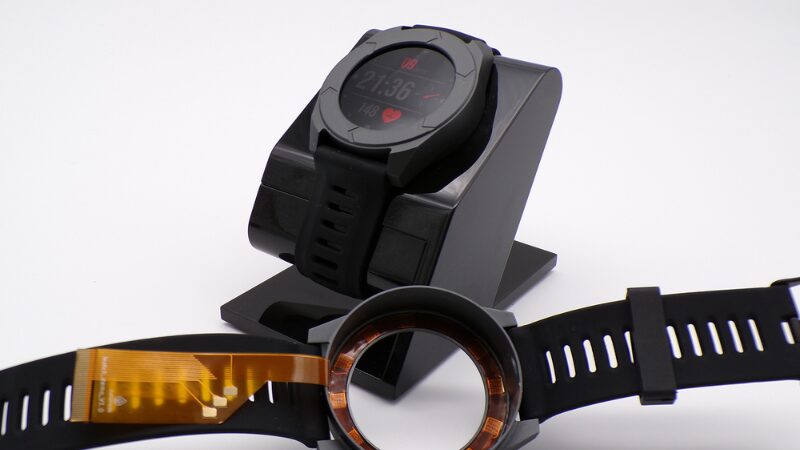
Nanomade and PolyIC’s transparent force and touch film targets a wide range of applications, including consumer electronics such as laptops and wearables. Image used courtesy of Nanomade
Design Flexibility and Industrial Integration
One of the primary advantages of Nanomade and PolyIC’s transparent foil is its thin, flexible architecture. The stack is designed to be laminated directly under existing display assemblies or decorative overlays, such as glass, plastic, or even curved 3D-shaped interfaces. This drop-in compatibility means manufacturers can upgrade existing HMI designs to include force sensing without requiring a total mechanical redesign.
The applications for this technology span multiple sectors. In automotive interiors, it enables interactive wood or metal dashboards and backlit center consoles. In consumer electronics, it facilitates edge-to-edge touch sensitivity for laptops and wearables. With the technology now entering the industrialization phase and samples expected in Q3 2026, the transition toward truly seamless, pressure-aware transparent surfaces is well underway.


