
Iridium 9604 Combines Satellite, LTE-M, and GNSS in One Module
The Iridium IoT module integrates SBD, Cat-M1, and multi-GNSS in a 16×26 mm form factor, reducing board space and enabling flexible hybrid connectivity for global deployments.
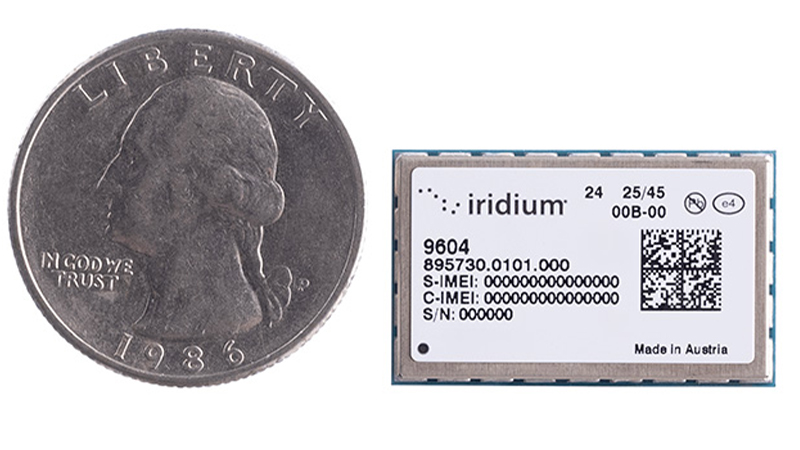
Iridium 9604 IoT module
Iridium Communications Inc. has launched the Iridium 9604, a compact three-in-one platform that combines satellite, cellular, and GNSS into a single hardware design. This new Iridium IoT module targets global deployments that require reliable connectivity beyond terrestrial networks. The company positions it as a cost-optimized hybrid solution for industrial, infrastructure, and mobility applications.
The Iridium IoT module integrates Iridium Short Burst Data (SBD), LTE-M (Cat-M1), and multi-constellation GNSS inside a 16 × 26 × 2.4 mm form factor. Instead of forcing designers to combine three separate modules, the 9604 consolidates everything into one platform built on the u-blox SARA-R5 architecture. This approach reduces board space, simplifies RF routing, and cuts BOM cost, making dual-mode IoT practical for high-volume products.
Previously, we covered several IoT modules including ST67W611M1, Murata Type 2FR/2FP, and Quectel BG770A-SN. Check those if you want to compare more options.
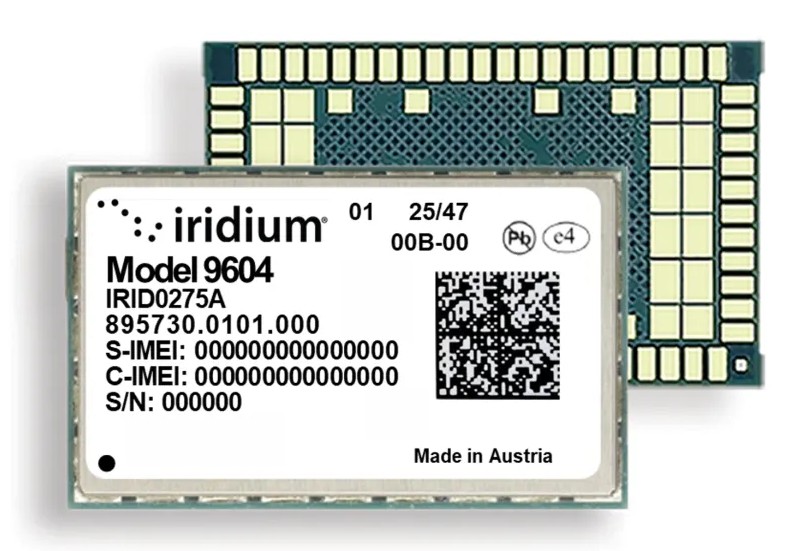
Iridium 9604 IoT module Top and Bottom
Iridium 9604 Specifications:
- Satellite: Iridium Short Burst Data (SBD)
- 340 bytes mobile-originated
- 270 bytes mobile-terminated
- Global LEO coverage
- Cellular:
- LTE-M (Cat-M1)
- Global band support
- Carrier certifications
- FirstNet certification (US)
- GNSS:
- GPS
- GLONASS
- Galileo
- BeiDou
- Hardware:
- 16 × 26 × 2.4 mm form factor (~400 mm² footprint)
- Dual RF ports (Iridium/GNSS + LTE-M)
- Two antennas (shared Iridium/GNSS + LTE-M)
- Operating temperature: −40°C to +85°C
- Optimized sleep modes for low-power IoT
- Integration:
- Unified power architecture
- Single host interface
- Independent control of satellite, cellular, and GNSS
The Iridium IoT module gives developers direct control over connectivity behavior. It does not enforce automatic switching between satellite and cellular networks. Designers can implement failover logic, cost-based routing, or location-aware network selection using GNSS input. This flexibility allows companies to optimize power consumption, coverage strategy, and operating costs according to their deployment model.

Integrate Iridium 9604 to simplify hardware, optimize connectivity, and scale globally
Iridium provides a unified AT command set that controls satellite, LTE-M, and GNSS functions through a single interface. Developers can access SDKs, documentation, and reference designs to accelerate integration. The module supports secure data transmission across both satellite and cellular networks and enables independent subsystem management. This architecture simplifies firmware development compared to managing three discrete radio modules.
Iridium plans to start commercial availability in June 2026 alongside a dedicated development kit for testing satellite and LTE-M connectivity. Interested customers can reserve priority access through the official product page. The company has not yet disclosed final pricing, but it targets cost-sensitive, high-volume IoT deployments where board space reduction and BOM consolidation drive overall system savings.
Images used courtesy of iridium.


