
MuseLab nanoCH32V317: Low-Cost RISC-V Development Board with Ethernet and Dual USB
A compact RISC-V board featuring a 144MHz CH32V317 MCU, Ethernet, dual USB, DVP, SDIO, and expansion headers, priced from $6.80 and supported by MounRiver Studio.
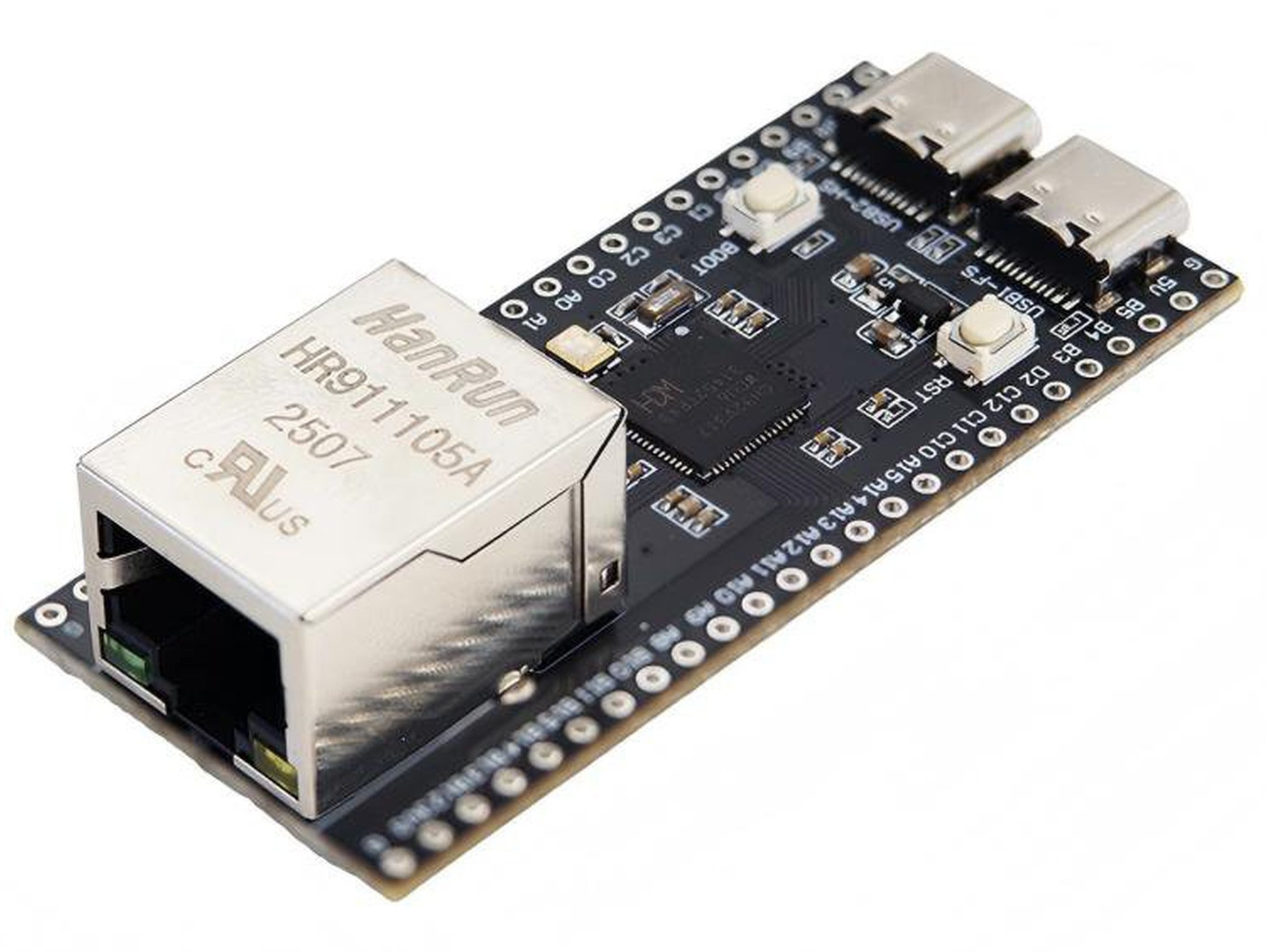
MuseLab nanoCH32V317 development board
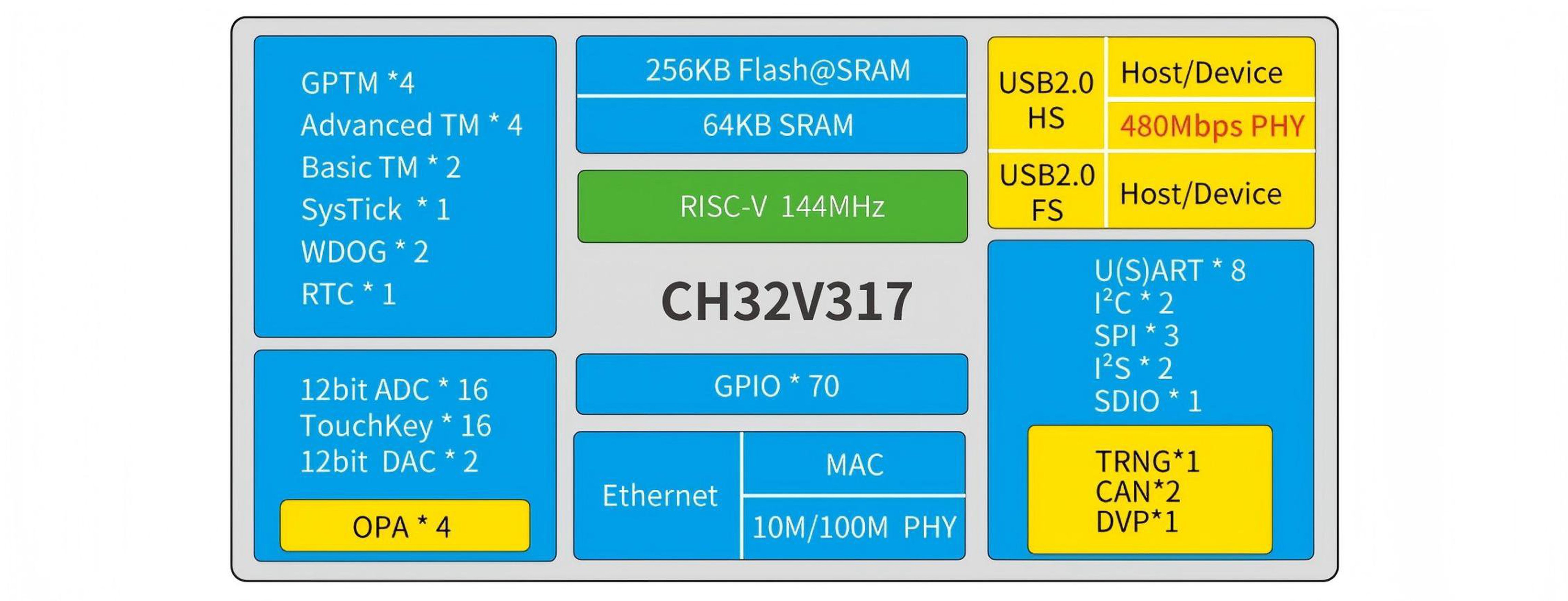
The nanoCH32V317 development board from MuseLab offers an affordable RISC-V platform built around the 144 MHz WCH CH32V317WCU6 MCU, making it suitable for rapid prototyping, IoT devices, automation projects, and embedded-system education. It integrates USB 2.0 high-speed and full-speed controllers, a 10/100 Mbps Ethernet MAC with PHY, SDIO support, a DVP interface for digital video input, and advanced motor-control PWM timers. The board also includes an 8 MHz main crystal and a 32.768 kHz RTC crystal for stable operation, along with dual USB Type-C ports for power and programming, USB-ISP support, and an SWD header for debugging.
Developers can use the nanoCH32V317 to test firmware, interface sensors and peripherals, build network-connected systems, or experiment with video and motor-control applications. Its low entry price—under $7 for the basic model—keeps it accessible for makers, hobbyists, and students while still offering the performance and flexibility needed for practical embedded projects.
Previously, we covered the nanoCH32V003, a RISC-V development board manufactured by QinHeng. It includes a reset button, an onboard LED, and a 24 MHz crystal oscillator for stable operation.
MSI EdgeXpert Internal View
MuseLab nanoCH32V317 development board Specification:
- MCU: WCH CH32V317WCU6 with 32-bit RISC-V core running up to 144 MHz
- Memory: Up to 64 KB SRAM
- Storage: Up to 256 KB Flash
- USB: Dual USB 2.0 controllers
- 1x High-Speed (HS)
- 1x Full-Speed (FS)
- 2x USB Type-C ports for power, programming, and peripherals
- Networking: 10/100 Mbps Ethernet MAC with integrated PHY and RJ45 port
- Video and I/O: DVP interface for digital video input
- External Storage: SDIO interface for SD cards and peripherals
- Motor and Control: Advanced motor-control PWM timers
- Clocking: On-board 8 MHz crystal and 32.768 kHz RTC crystal
- Expansion: Dual 25-pin headers providing GPIO, ADC, UART, SPI, I²C, PWM, +5 V, +3.3 V, and GND
- Programming and Debugging: USB-ISP support plus SWD header for debugging with tools like WCH-Link
- Indicators and Buttons: Blue GPIO LED, status LEDs, power LED, boot button, and reset button
- Power:
- 5 V input via USB Type-C
- On-board 3.3 V regulator (ME6211C33M5G)
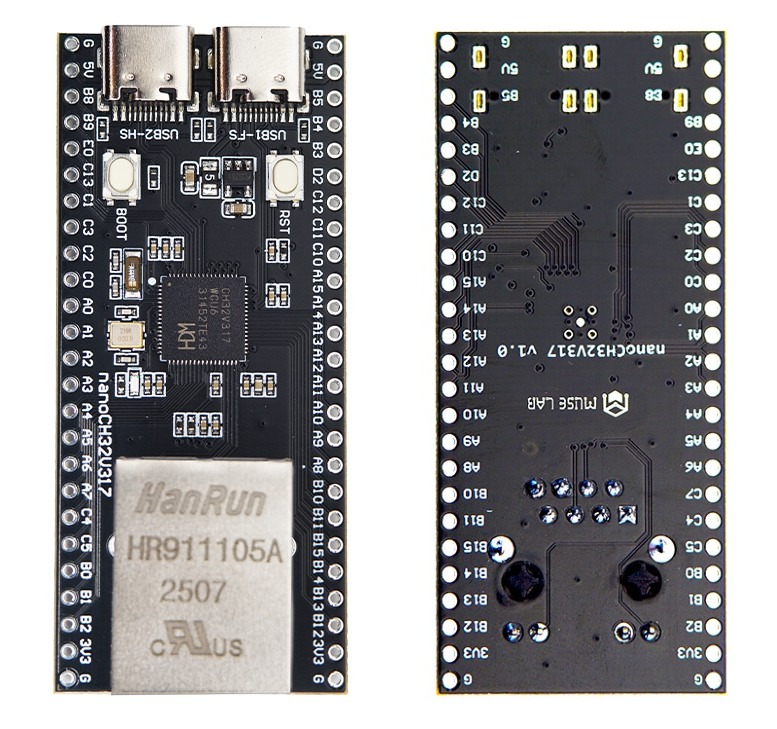
nanoCH32V317 development board top and bottom
Developers can use the MounRiver Studio IDE to compile and flash firmware for the CH32V317, with support for Windows, Linux, and macOS. The nanoCH32V317 accepts firmware through USB using USB-ISP or through the SWD interface when hardware debugging is required. Example projects—such as basic GPIO control—along with source code, schematics, and documentation are available on the project’s GitHub repository. This toolchain and documentation support make the board suitable for standard embedded RISC-V development using C/C++, peripheral interfacing, networking tasks, and simple video or SDIO-based applications.
The nanoCH32V317 is available on Tindie and AliExpress, starting at $6.80. You can buy the basic board or choose kits that add pin headers, a USB Type-C cable, or the WCH-LinkE debugger. All options are in stock and ship directly from China.
Images used courtesy of Tindie.


