
ROHM 5th Gen SiC MOSFETs Cut High-Temperature On-Resistance by 30%
New EcoSiC power devices target EV traction inverters, AI server PSUs, and industrial systems with improved efficiency and lower thermal losses.
As generative AI and electric vehicles (EVs) continue to grow, the demand for power semiconductors that can handle more power with less energy loss also grows along with it. That is why ROHM has introduced its 5th-Generation SiC MOSFETs as part of its EcoSiC family. The devices are designed to deliver higher efficiency in power-hungry applications like EV traction inverters and AI server power supplies.
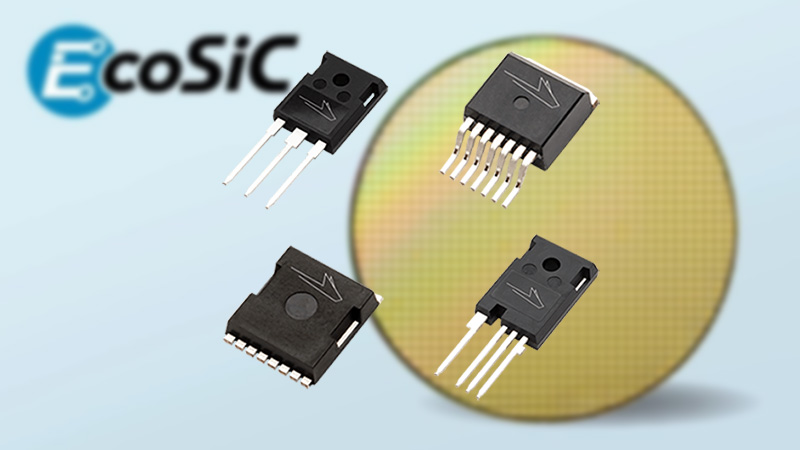
Could be newly developed 5th Gen SiC MOSFETs designed for high-efficiency power applications. Images used courtesy of ROHM and Wolfspeed
The company says this new generation reduces ON-resistance by about 30% at high temperatures (Tj = 175°C) compared to its previous version, under the same conditions. This helps lower heat, improve efficiency, and even reduce the size of cooling systems and power converters. These improvements come from better device design and optimized manufacturing, building on ROHM’s ongoing EcoSiC development.
ROHM, the first company to mass-produce SiC MOSFETs in 2010, uses its in-house production from wafer to packaging to ensure reliable supply and quality.
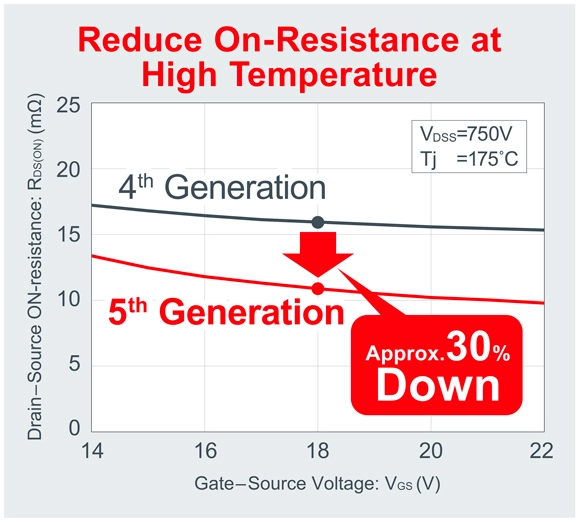
Graph showing ~30% lower ON-resistance at high temperature (Tj = 175°C) in 5th Gen SiC MOSFETs vs 4th Gen. Images used courtesy of ROHM
Key Features and Benefits:
- Reduced High-Temp Losses: 30% lower On-resistance at 175°C versus previous generations
- Increased Power Density: Enables smaller, more efficient inverters and chargers for next-gen EVs
- Established Reliability: Built on ROHM’s decade-long experience in automotive-grade (AEC-Q101) SiC production
- Scalable Portfolio: Future expansions will include various breakdown voltages and package types.
These SiC MOSFETs can be used in various high-power applications, including automotive systems, EV traction inverters, onboard chargers, and DC-DC converters. They’re also useful in industrial applications like AI server power supplies, data centers, and UPS systems. Beyond that, they support renewable energy systems such as solar inverters and energy storage, and can even be used in newer aerospace applications like eVTOL aircraft.
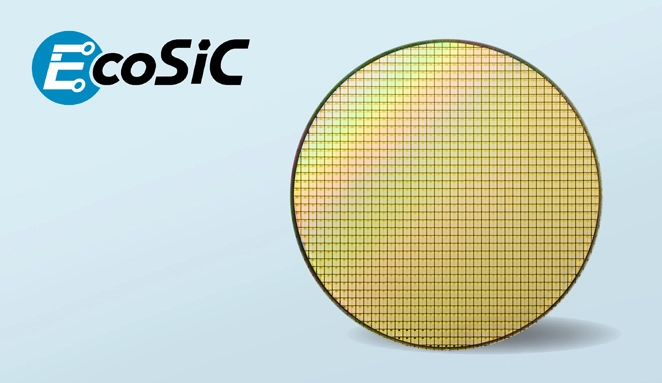
EcoSiC SiC wafer highlighting ROHM’s end-to-end in-house production. Images used courtesy of ROHM
ROHM started offering bare die versions of these 5th Gen devices in 2025, and plans to release samples of discrete devices and power modules using them from July 2026. For more information, visit the ROHM Newsroom.


