
Meshtastic BASE Board Adds Super IO and Dual-Band Mesh Support
Muzi Works pairs the Base Duo with the Super IO board to add display, GPS, IMU, and controls, creating a flexible dual-band Meshtastic mesh platform.
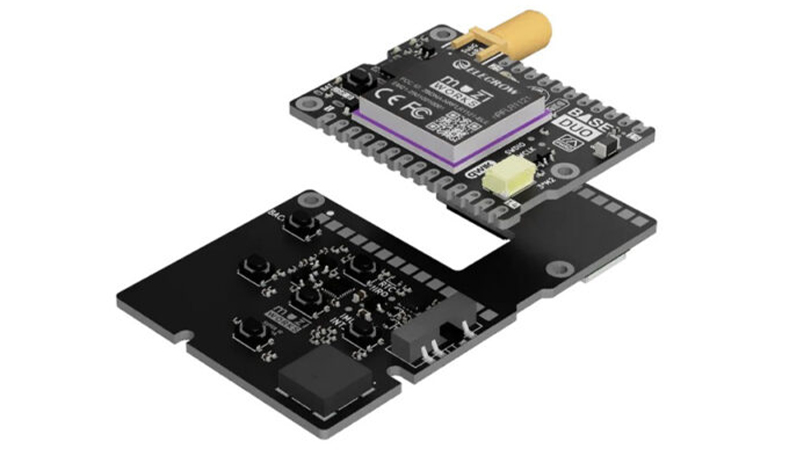
Super IO Board with Base DUO
The Meshtastic BASE board is a modular hardware platform designed for makers who want to build custom off-grid mesh communication devices. Developed by Muzi Works in collaboration with Elecrow, the system targets Meshtastic users who need flexible I/O, clean power design, and easy expansion. Instead of forcing a fixed layout, the BASE board lineup lets users choose the exact hardware combination that fits their project.
Muzi Works offers the Meshtastic BASE board in multiple variants, including Base Uno, Base Duo, and an optional Super IO expansion module. Each board focuses on low power operation and reliable wireless performance. The design supports DIY LoRa radios, portable communicators, and fixed mesh nodes without complex wiring or custom PCBs. This approach makes the platform useful for both beginners and experienced builders.
At the core of the Meshtastic BASE board design is Nordic Semiconductor’s nRF52840 microcontroller. This MCU provides low power consumption, integrated Bluetooth LE, and enough processing capability to handle Meshtastic firmware and peripheral control. The Base Uno targets single-radio setups, while the Base Duo adds support for dual-band LoRa configurations. The Super IO module expands GPIO, serial interfaces, and external device connectivity.
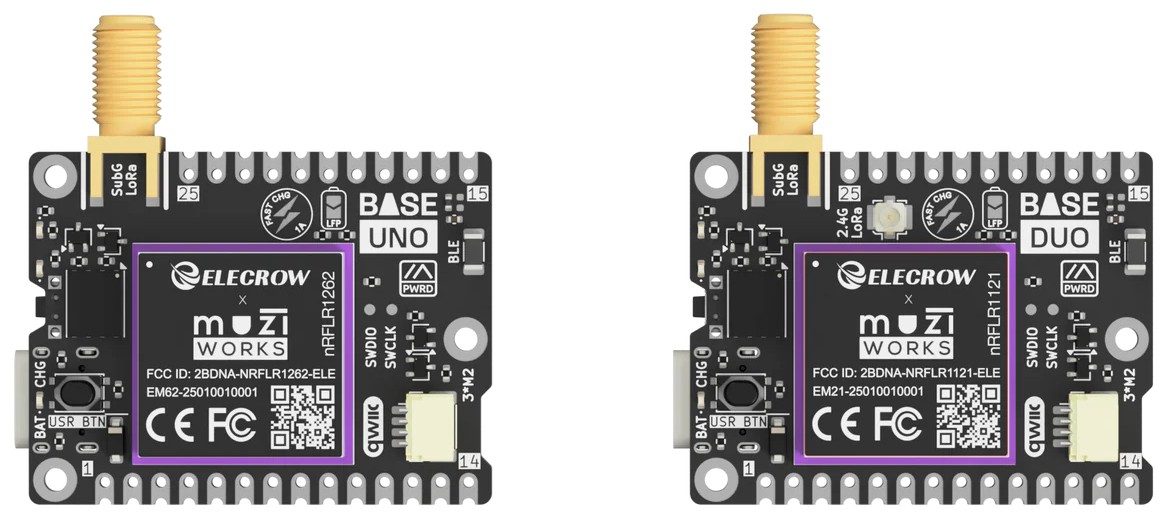
Base Uno and Base Duo Front Side
Base Uno and Base Duo Specifications:
- Microcontroller: Nordic Semiconductor nRF52840
- Meshtastic Firmware: Pre-flashed and licensed
- Memory:
- QSPI Flash:
- Base Uno: 2MB
- Base Duo: 8MB
- QSPI Flash:
- Wireless:
- Bluetooth Low Energy (BLE) with onboard antenna
- Sub-GHz LoRa support
- 2.4GHz LoRa support (Base Duo only)
- LoRa Radio:
- Base Uno: Semtech SX1262 (Sub-GHz)
- Base Duo: Semtech LR1121 (Sub-GHz + 2.4GHz)
- Connectivity:
- USB-C: Power and data
- Battery Connector: 3-pin Molex PicoBlade
- Antenna Interfaces:
- Sub-GHz LoRa: SMA connector
- 2.4GHz LoRa: U.FL connector (Base Duo only)
- Buttons: User button + Reset button
- Expansion and I/O:
- QWIIC / STEMMA QT connector
- Flexible I/O includes:
- 8× GPIO
- 2× Power I/O
- UART
- I2C
- Power:
- Supported Battery Chemistry:
- Li-ion
- LFP (LiFePO4)
- Solar Power Input: Supported with VDPM
- USB-C Power:
- 500mA default charging
- 1A fast charging option
- Powerpath Management: Prevents battery discharge when external power is available
- Advanced Charger: Texas Instruments BQ28185
- Supported Battery Chemistry:
- Dimension: 42 × 32 mm
- Weight: 10g
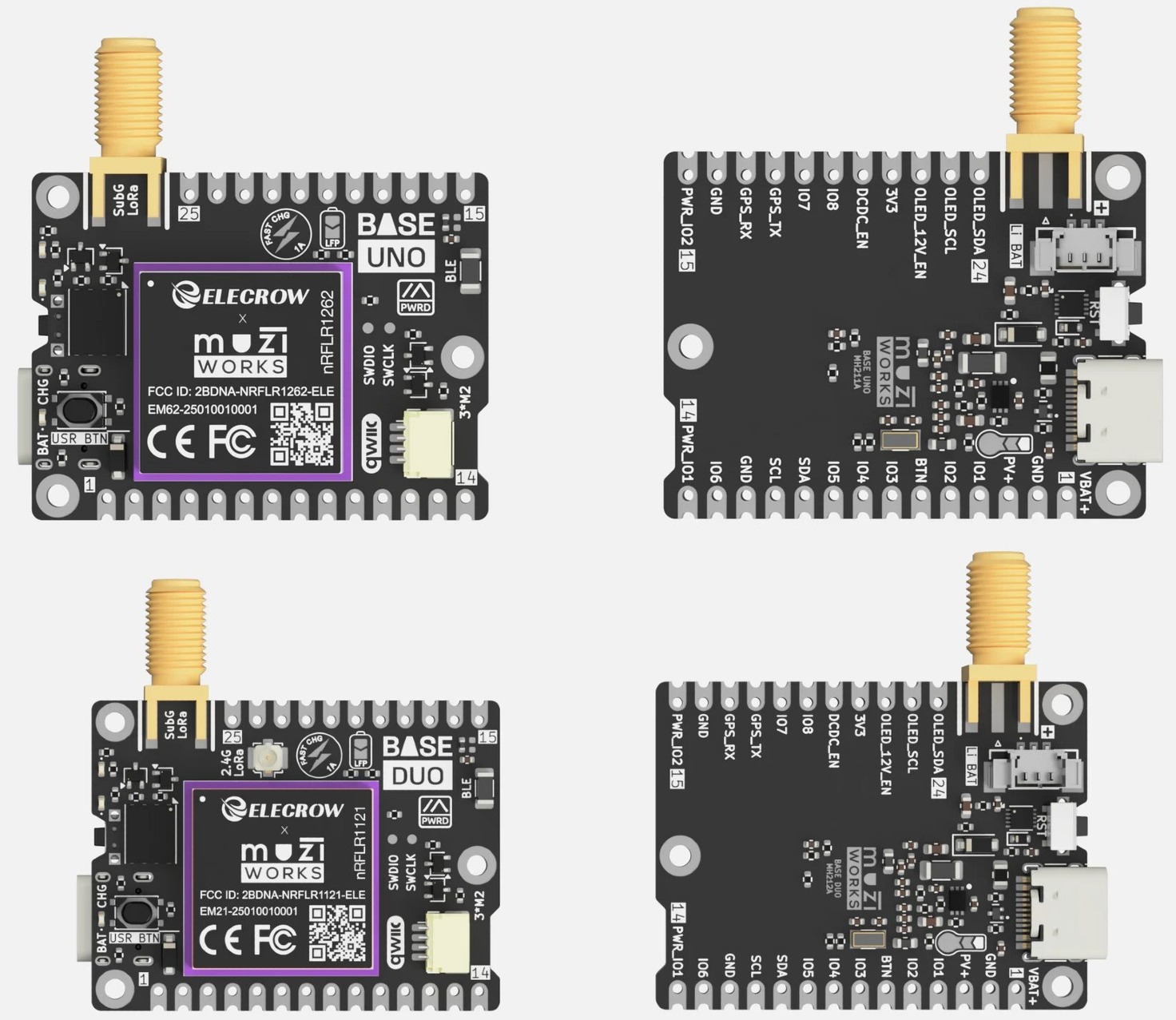
Base Uno and Base Duo Front and back Side
Super IO Specifications:
- 1.12-inch 128 × 128 OLED display, optimized for BaseUI
- GPS module with ceramic antenna
- Seiko real-time clock (RTC)
- 9-axis inertial measurement unit (IMU)
- 3-axis gyroscope
- 3-axis accelerometer
- 3-axis compass
- Navigation pad with directional buttons, OK, and Back
- Power slide switch with two programmable user modes
- Default configuration: GPS ON / GPS OFF
- Integrated buzzer for alerts and feedback
- Board dimensions: 42 × 67.5 mm
- Weight: 16 g
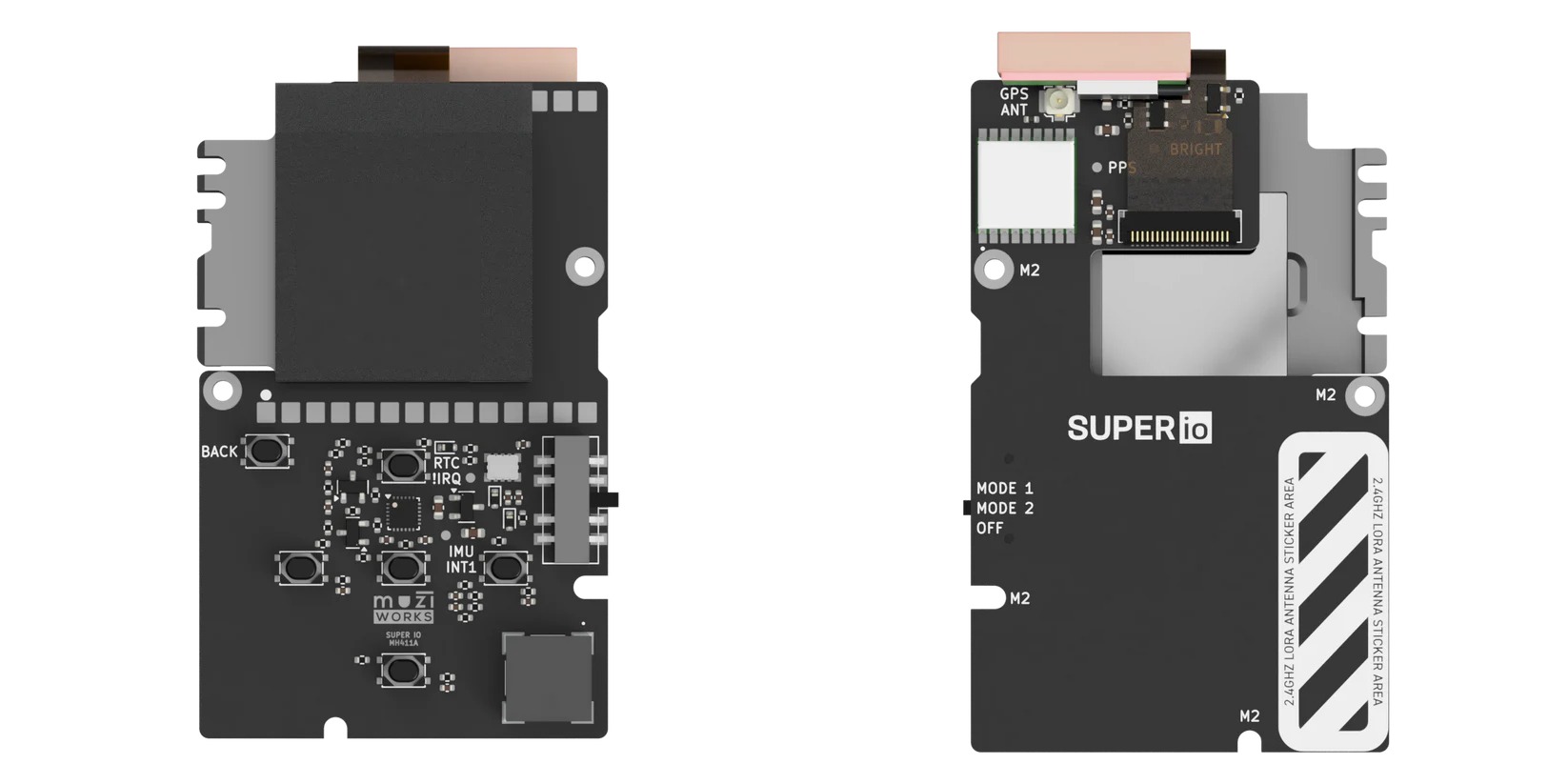
Super IO board front and back
The Meshtastic BASE board runs the standard Meshtastic firmware without modification. Users can configure nodes using the Meshtastic mobile app or desktop tools over Bluetooth LE or USB. The platform supports routing, encryption, GPS integration, and text messaging features provided by Meshtastic. Developers can also build custom firmware using Nordic’s SDK and open-source Meshtastic codebase. A few days earlier, we covered another Meshtastic device from the same company, the Muzi R1 Neo, a portable node that supports long-range communication and location tracking using built-in dual GPS.
Muzi Works sells the Meshtastic BASE board series directly through its online store. The Base Uno is priced at around $25, while the Base Duo costs $35, depending on availability and region. The Super IO expansion module sells separately for about $32. Users can purchase each board individually or combine them to build a complete modular mesh radio system. Purchase links are available on the Muzi Works official website and partner stores.
Ιmages used courtesy of Muzi Works


