
Romu is a Tiny RP2354A USB Development Board for Embedded Projects
A keychain-sized USB Type-A board built around the RP2354A MCU with MicroPython support, RGB LED, capacitive touch input, and debugging features.
An India-based engineering firm, Bitmerse, is preparing to launch a very Tiny development board called Romu. The board is very similar to other plug-in boards like Tomu, Somu, and Fomu, but it is built around the Raspberry Pi RP2354A microcontroller. What’s interesting about this board is its size; it is so compact that it can fit inside a standard USB Type-A port, making it easy to carry and use anywhere.
The operation of this device is very simple, and you don’t need any additional cables to use it. You can just plug it into a USB port and start programming using MicroPython. Although it is very small (just 15.5 × 12 mm), the company enabled various features, including a capacitive-touch button and an RGB LED on the board.
These features make Romu useful not only for learning and prototyping but also for everyday tasks. It can be programmed as a custom USB macro key for video calls, a one-touch password injector, or even a mouse jiggler to keep your PC active.
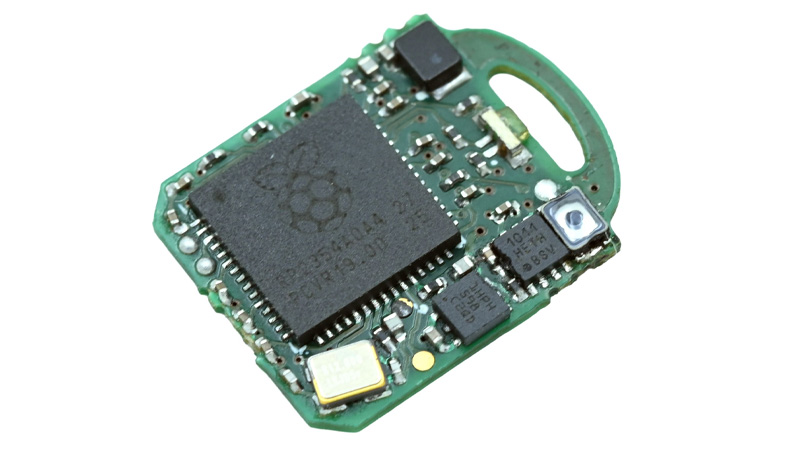
The Romu development board with Raspberry Pi RP2354A MCU, RGB LED, and capacitive touch button
Romu Specifications:
- MCU: Raspberry Pi RP2354A (Dual-core Arm Cortex-M33 @ 150 MHz)
- Memory: 520 KB SRAM, 2 MB Flash
- USB: Native USB 2.0 Full-Speed interface (via PCB Type-A connector)
- Power: 5V from USB, regulated to 3.3V onboard
- User I/O: 1x RGB LED, 1x Capacitive touch button, 1x Boot button (for firmware flashing)
- Debugging: USB DFU, SWD test points, and UART TX/RX test points
- Dimensions:5 mm × 12 mm × 1.65 mm
- Enclosure: Preinstalled 3D-printed shim for a snug USB fit
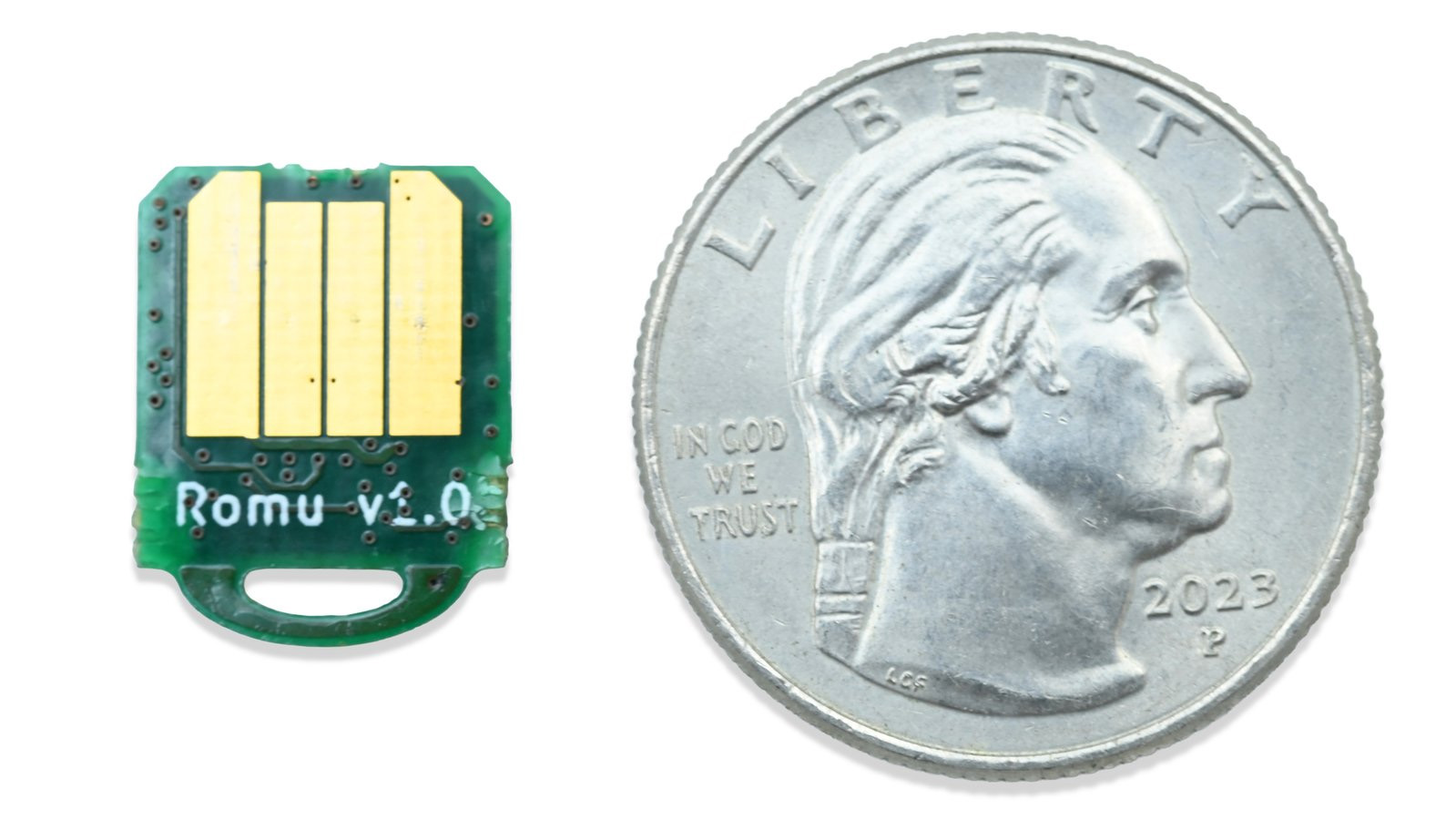
The back of the Romu board shows its USB Type-A contacts, pictured next to a US quarter to highlight its ultra-compact 15.5 mm × 12 mm footprint
In terms of software support, the device can be programmed with MicroPython it also supports USB DFU for direct firmware flashing. It also works with standard SWD tools for low-level programming, and the company also offers an optional programming and debugging jig for advanced users who need deeper hardware access. You simply place the board onto the jig and lock it in place, where small pogo pins connect to the board’s test points.
The jig provides access to the RP2354A’s SWD interface via a standard 20-pin JTAG connector for external debugging, as well as UART (RX/TX) pins for serial communication. It also includes a USB Type-C port, allowing power and data access without plugging Romu directly into a USB Type-A port.
Romu is fully open-source hardware, and the company plans to release schematics, PCB files, BOM, 3D enclosure and jig designs, and example MicroPython code on GitHub before shipping. At the time of writing, no Git account is available.
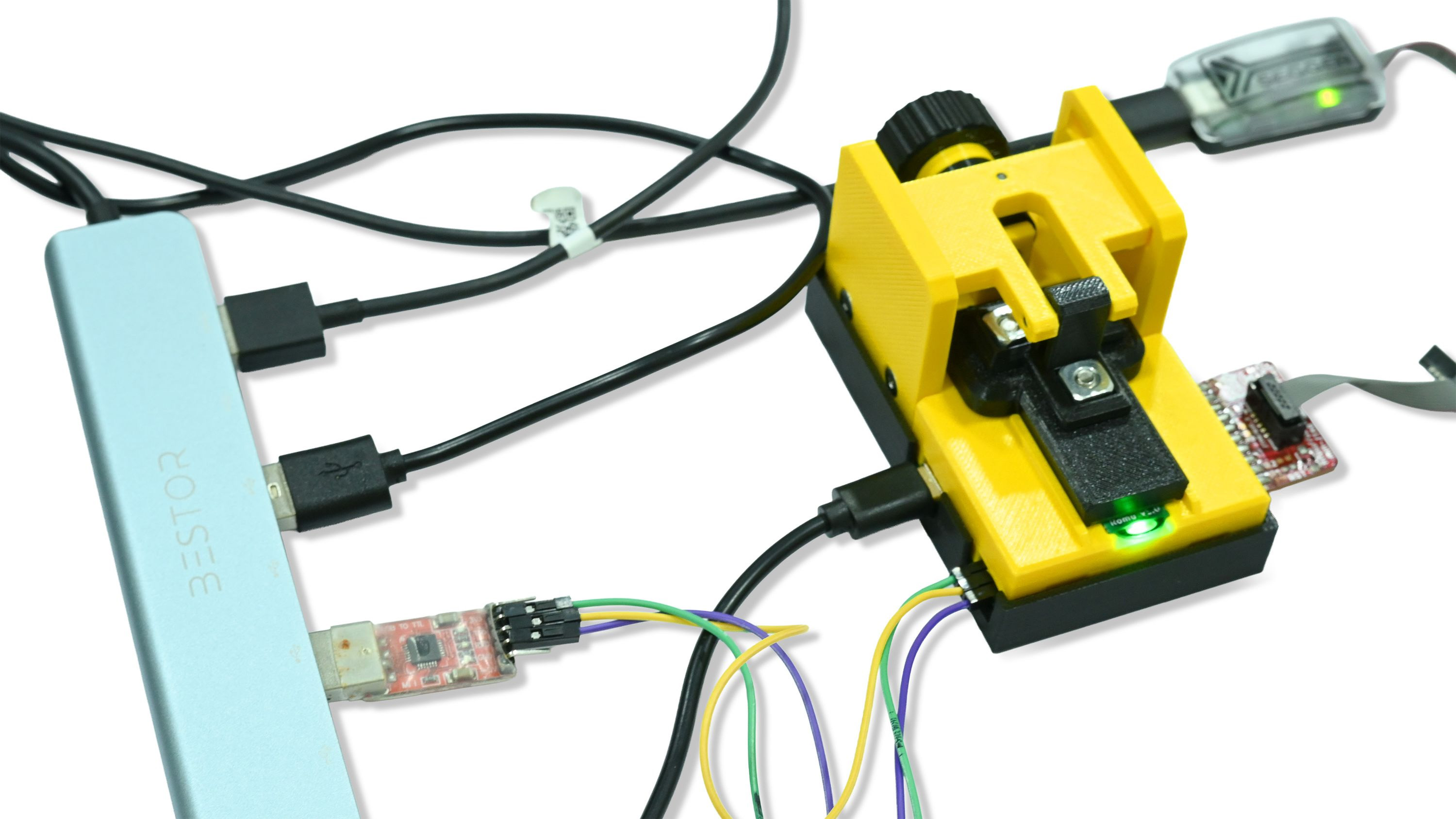
The custom jig holds the Romu board in place and provides USB Type-C, SWD debugging, and UART access for development.
The project is currently in the pre-launch phase. If you are interested in backing the board, you can sign up for notifications on the Romu Crowd Supply campaign page.
Images used courtesy of CrowdSupply


