Join the Community
Main Menu
Qorvo QPX0252 Targets Crowded X-Band Radar Arrays
SECO Launches Industrial HMI and SBC Powered by Dragonwing IQ-2390
Makerfabs nRF52840 Board Brings Bluetooth and UWB Tracking Together
Microchip Expands 10BASE-T1S Lineup With New Transceivers and Endpoints
Polyimide Tape for PCB Masking: Avoiding Edge Lift and Residue
Prevent Post-Launch Application Failures with Real-World Network Simulation
The Approach to AI Infrastructure Is the Real Bubble
Mastering the Curve: Layout Strategies for FPC Bend Radius and Reliability
Single Pair Ethernet: One Twisted Pair, Full Ethernet Performance
Analog To Digital Conversion - Sampling and Quantization
Positive Feedback in Electronic Circuits
Temperature Sensors
High Current Half Bridge with Over-Current Shutdown
3-Wire Electret Microphone Pre-Amplifier
12W Step Up DC-DC Converter using MAX1771
Sound to Light Color Shield for OLEDUINO v2
An Introduction to RF Theory, Practices, and Components: The Ins and Outs of RF
The Growing Decentralization of Power Grids
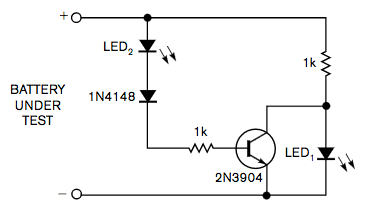
Fritz Weld @ edn.com proposes a simple circuit to check li-ion battery health.
Boost Converters and Buck Converters: Power Electronics – [Link]
It seems evident that the Raspberry Pi and its clones have filled an enormous hidden need.
Jakub designed and built a programmable electronic load for Arduino, the MightyWatt R3: MightyWatt R3 is a programmable...
Lukas Fässler from Soldernerd has been working on revised version of his MPPT Solar charger project: Over the last few weeks I ...
The LT8641 is a monolithic, constant frequency, current mode synchronous (external schottky diode is not necessary) step-down...
by Graham Prophet @ eedesignnewseurope.com: Maxim Integrated has posted details of the MAX17290/MAX17292 high-efficiency,...
by Pesky Products @ tindie.com: This is a small (0.5 x 0.5 inch) breakout board for Texas Instrument’s BQ25504 Ultra Low Power B...
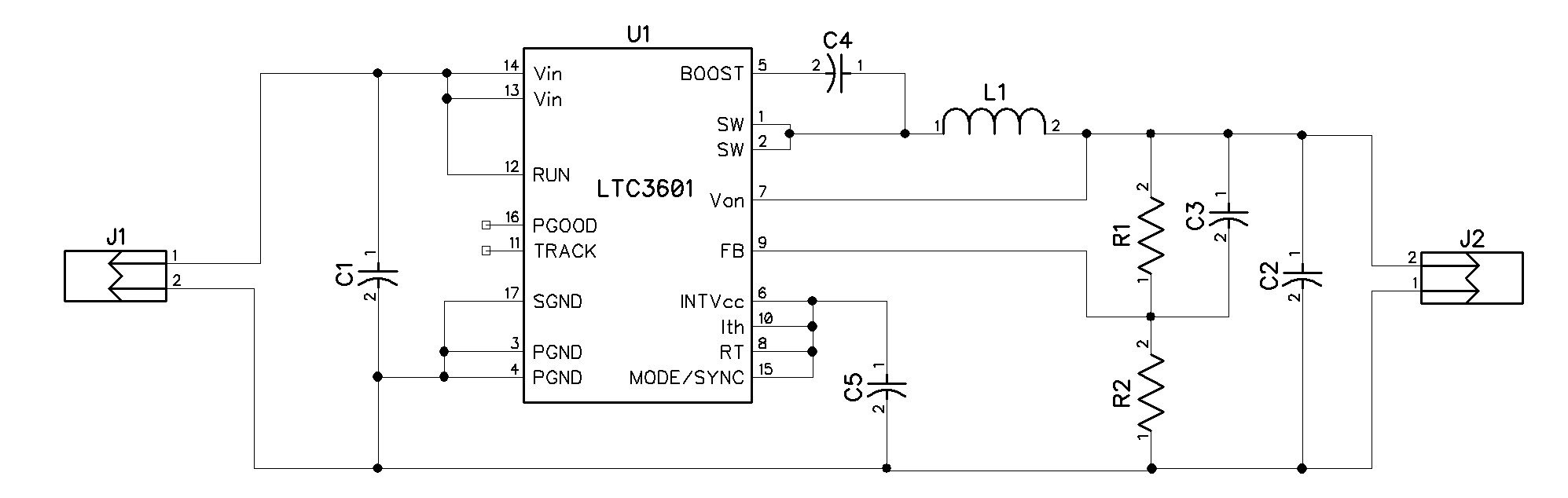
The circuit presented here is based on LTC3601, a high efficiency, monolithic synchronous buck regulator from Linear Technology.
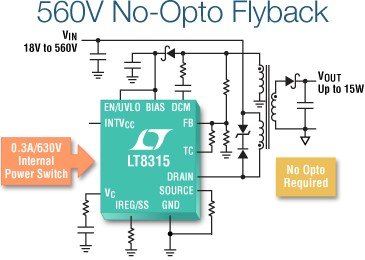
The LT8315 is a high voltage monolithic flyback regulator that simplifies the design of an isolated DC/DC converter.
The circuit presented here is about a boost converter based on LM2698.
Patrick Van Oosterwijck @ hackaday.io writes: Solar power is not trivial, especially if it needs to be reliable and have a long...