Join the Community
Main Menu
Makerfabs nRF52840 Board Brings Bluetooth and UWB Tracking Together
Microchip Expands 10BASE-T1S Lineup With New Transceivers and Endpoints
Seeed XIAO 1.47-inch IPS Touch Display Packs BLE, IMU and MicroSD
MINIX N304-AI Mini PC Packs Intel Core 3 304 SoC and 24 TOPS AI
Polyimide Tape for PCB Masking: Avoiding Edge Lift and Residue
Prevent Post-Launch Application Failures with Real-World Network Simulation
The Approach to AI Infrastructure Is the Real Bubble
Mastering the Curve: Layout Strategies for FPC Bend Radius and Reliability
Single Pair Ethernet: One Twisted Pair, Full Ethernet Performance
Analog To Digital Conversion - Sampling and Quantization
Positive Feedback in Electronic Circuits
Temperature Sensors
High Current Half Bridge with Over-Current Shutdown
3-Wire Electret Microphone Pre-Amplifier
12W Step Up DC-DC Converter using MAX1771
Sound to Light Color Shield for OLEDUINO v2
An Introduction to RF Theory, Practices, and Components: The Ins and Outs of RF
The Growing Decentralization of Power Grids
danielrp @ instructables.com writes: This is an accurate milliohm meter with a maximum resolution of 0.1mOhm.
Small, versatile, fun, and inexpensive!
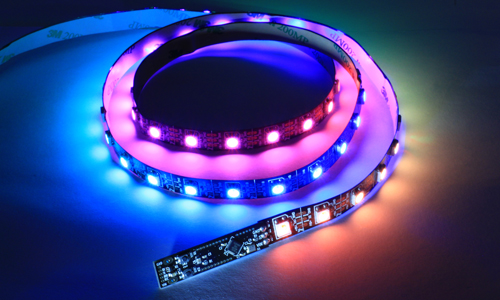
LED strips provide users with multi-color and flexible illumination which can be fit into tight spacing.
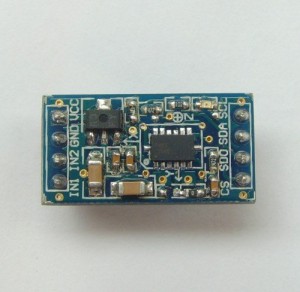
by shedboy71 @ microproducts.net discuss how to use MMA7455 accelerometer with ESP32 board.
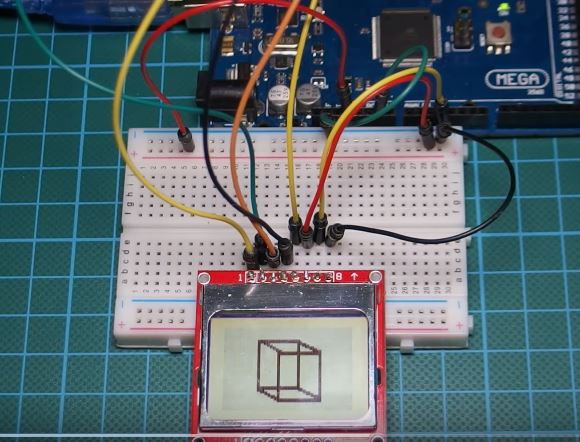
In one of our previous tutorials we did an introduction on how to use the Nokia 5110 LCD with the Arduino, the tutorial covered...
A MAX7219 driven Display, controlled by an ESP8266 SoC and MQTT This project describes how to connect a MAX7219 to an ESP8266...
A convincing artificial fire effect for the holiday season, using NeoPixel LEDs, an Arduino UNO, and a cool mist module.
Patrick Fenner @ deferredprocrastination.co.uk shows us how to reduce the power consumption of Arduino UNO.
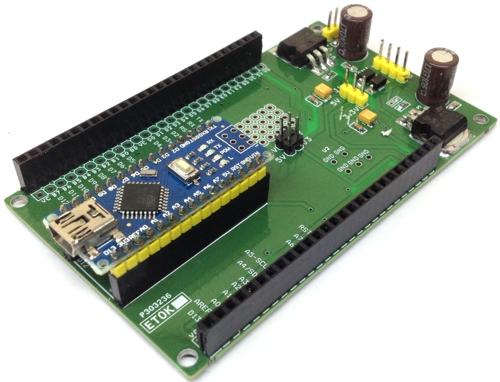
Arduino Nano to PIC40/28 PIN development shield is an extension for Arduino Nano.
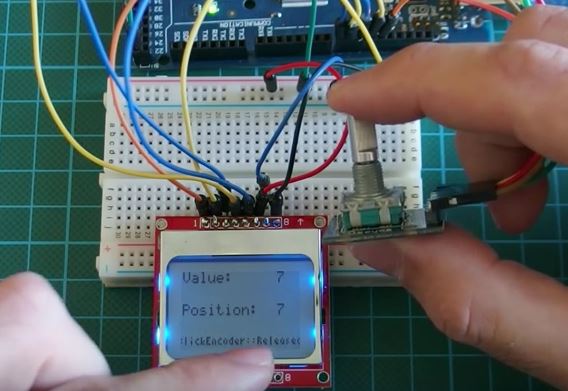
Today we will take a look at using a rotary encoder with Arduino and displaying rotation data on the Nokia 5110 LCD display.
xaVNA is a simple and cheap vector network analyzer that allows you to easily tune up antennas, filters, and amplifiers by plugin...
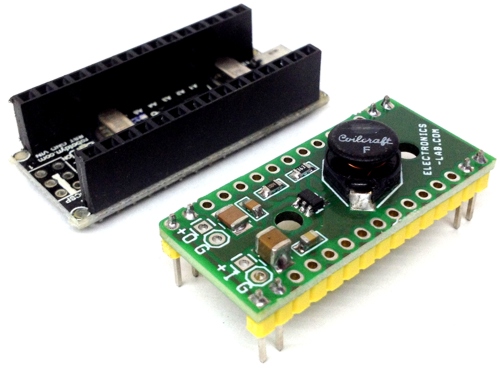
This project is simple solution to power Arduino Nano from two 1.5V batteries.